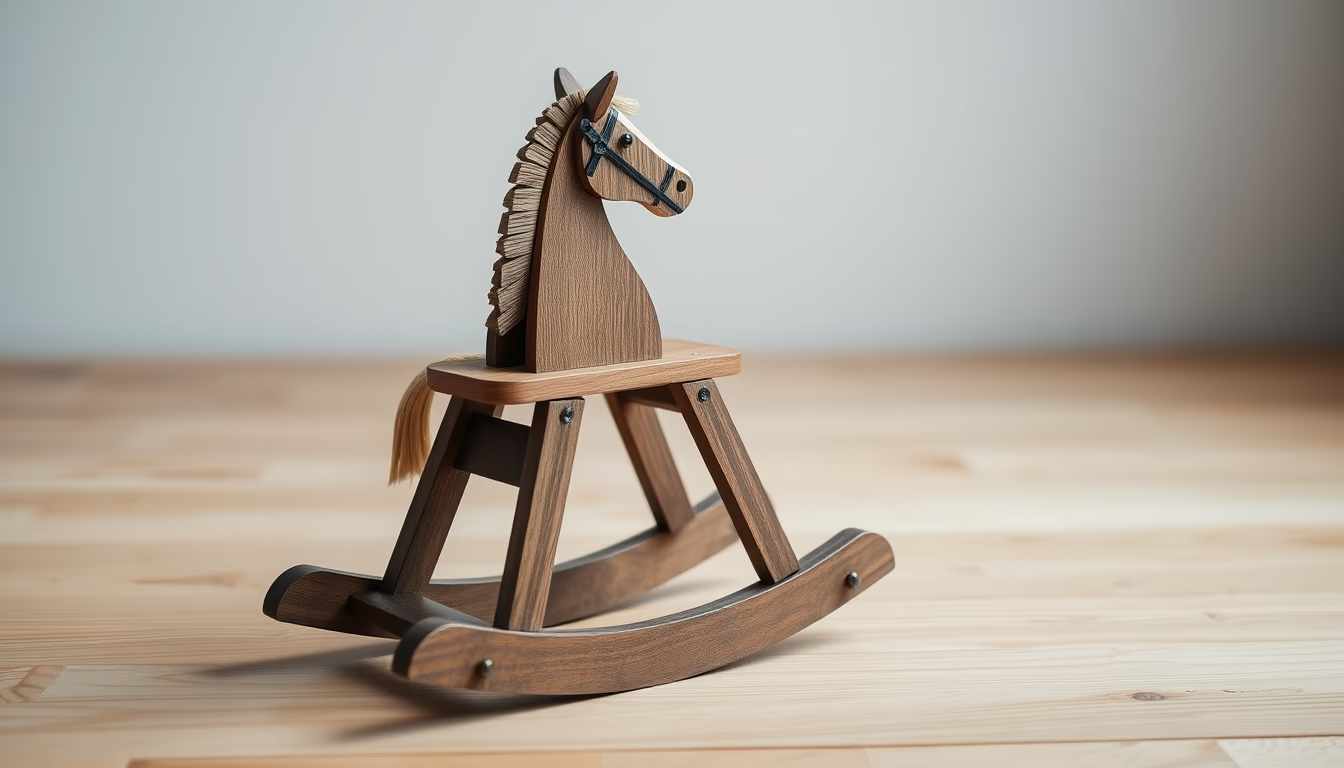
Jack in the box
1344×768 · AVIF · CC BY 4.0

Discover the history of the Jack in the box, a classic toy that has delighted children for centuries with its musical surprise.
About this subject
The Jack in the box is a toy consisting of a decorated box with a side crank. When the crank is turned, a melody plays from an internal music cylinder. When the music stops, the lid pops open and a spring-loaded figure, often a clown, jumps out, surprising the user. While its exact origins are unclear, spring-loaded toys appeared in Europe as early as the 16th century, but the modern Jack in the box became popular in the 19th century, especially in Germany and France. The name 'Jack' was a generic term for a puppet, similar to the use of 'John' in English.
The classic mechanism uses a compressed coil spring inside the box, attached to the figure. The crank turns a shaft that activates both the music and a locking system. When the melody ends, the lock is released and the spring pushes the figure out. Early versions were made of wood and metal with hand-painted figures. Over time, materials like plastic and fabric were incorporated, and licensed characters, such as Mickey Mouse and circus clowns, became common.
Culturally, the Jack in the box symbolizes surprise and childhood joy, but it also appears in suspenseful contexts, like horror films, where the figure can be menacing. For collectors, antique pieces from the 19th and early 20th centuries can fetch hundreds of dollars, especially if in good condition with a working mechanism. The basic design has remained virtually unchanged for over a century, proving the effectiveness of its simplicity.
Frequently Asked Questions
How does the Jack in the box mechanism work?
Turning the crank rotates a shaft that activates a music cylinder and compresses a spring attached to the figure. When the melody ends, a lock is released and the spring pushes the figure out of the box.
What is the historical origin of this toy?
Spring-loaded toys appeared in Renaissance Europe, but the Jack in the box as we know it became popular in the 19th century in Germany and France. The name 'Jack' was a generic term for puppets.
Why does the Jack in the box remain popular?
Its simplicity and element of surprise have delighted children for generations. Licensed versions with famous characters and nostalgic appeal for collectors keep the toy relevant.
Direct URL
https://pub-c7d6a6ea828543ac903a74a341ccb2e1.r2.dev/imagens/jack-in-the-box-film-grain-authentic-fresh0.avifHow to credit
Include a visible link back to UtilizAí. Copy one of the snippets below:
<a href="https://xn--utiliza-eza.com/en/midia/imagens/jack-in-the-box-film-grain-authentic-fresh0">Jack in the box</a> by <a href="https://xn--utiliza-eza.com">UtilizAí</a>, licensed under <a href="https://creativecommons.org/licenses/by/4.0/">CC BY 4.0</a>.
[Jack in the box](https://xn--utiliza-eza.com/en/midia/imagens/jack-in-the-box-film-grain-authentic-fresh0) by [UtilizAí](https://xn--utiliza-eza.com), CC BY 4.0
License: CC-BY-4.0