Islamic geometric pattern
1344×768 · AVIF · CC BY 4.0
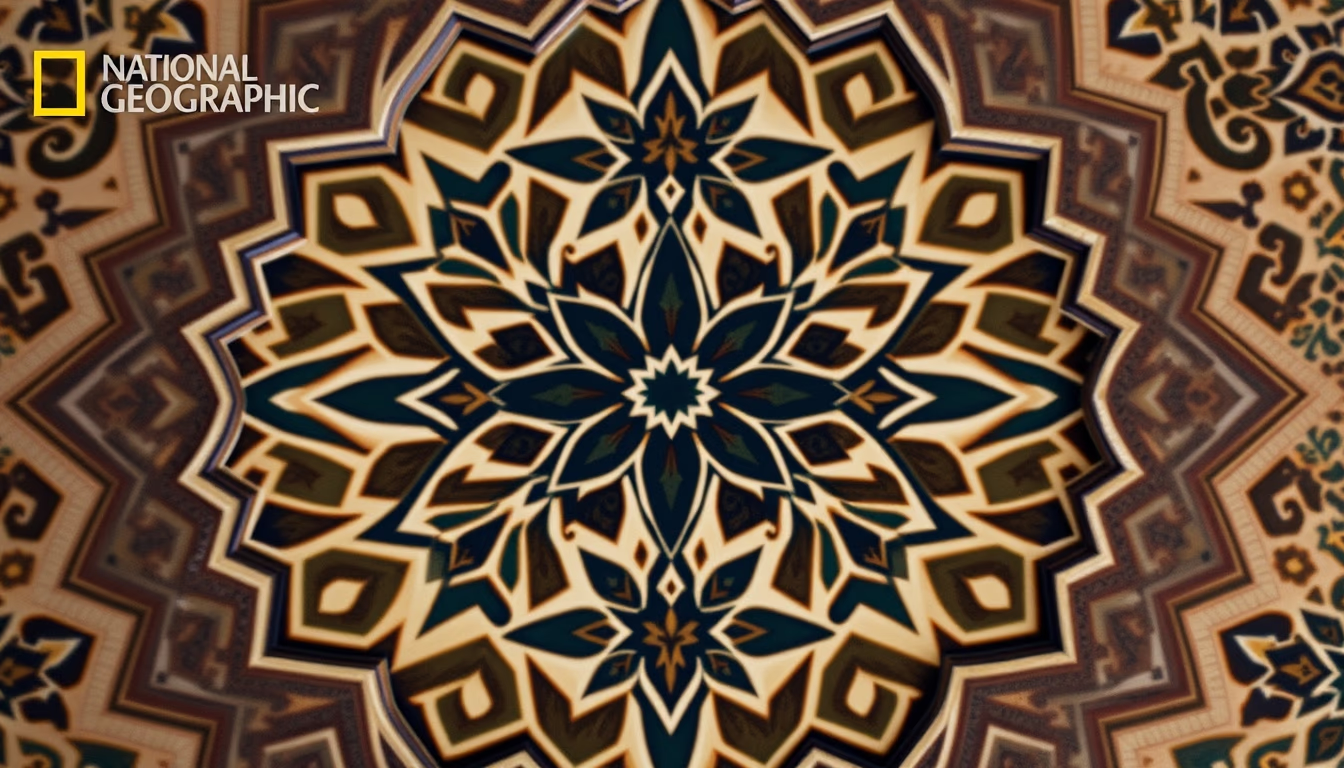
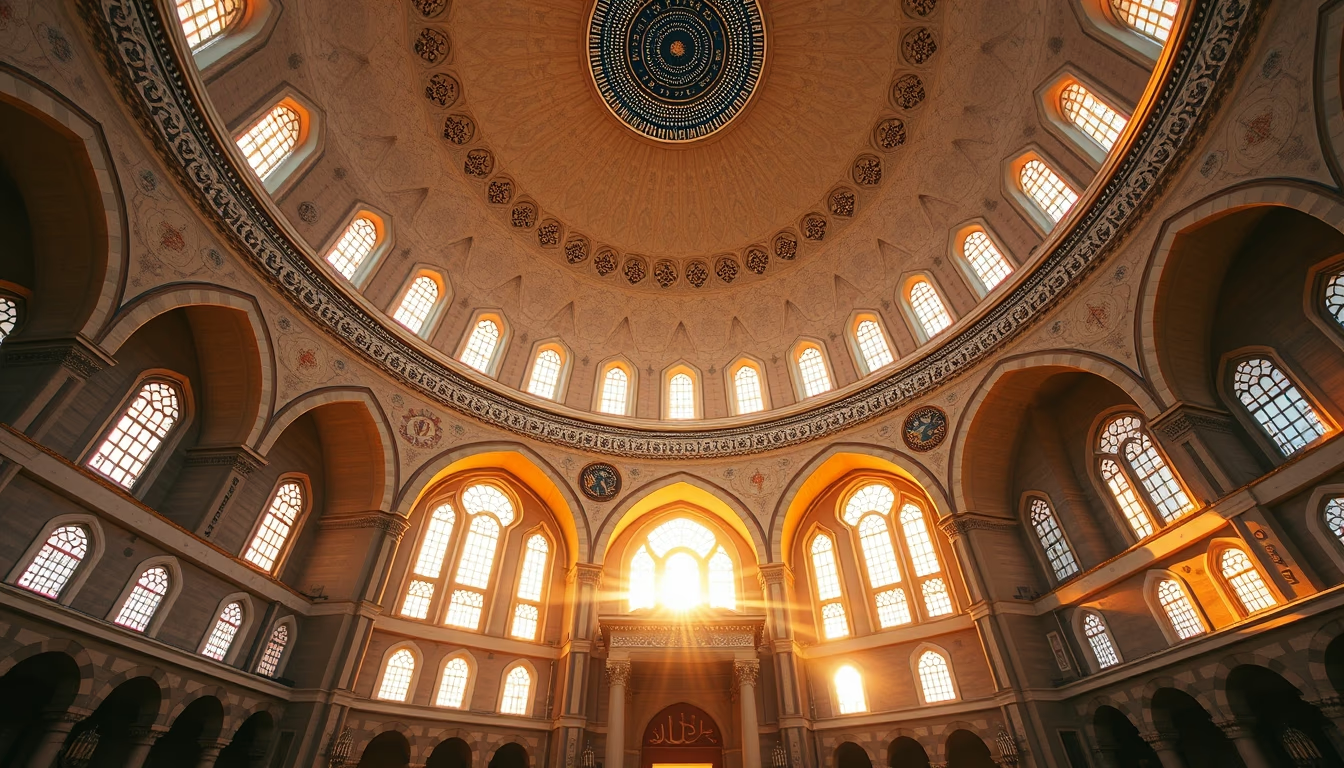
Islamic geometric patterns combine mathematical precision and spiritual symbolism, adorning mosques and palaces for centuries.
About this subject
Islamic geometric patterns are a form of abstract art that flourished in the Islamic world from the 8th century onward. Their origin is tied to interpretations of Quranic verses that discourage figurative representation of living beings, especially in religious contexts. As an alternative, Islamic artists and craftsmen developed a rich vocabulary of repetitive geometric forms, creating compositions of infinite complexity.
The mathematical foundation of these patterns is remarkable. They are constructed from circles, stars, polygons, and interlacing shapes, often using radial and translational symmetries. The use of golden ratios and precise geometric relationships reflects the influence of Arabic mathematics, which advanced significantly during the Islamic Golden Age. These patterns were believed to represent the divine order of the universe, with repetition symbolizing eternity and the oneness of God.
Iconic examples can be found across the Islamic world. The Alhambra complex in Granada, Spain, displays a profusion of tiles with intricate geometric patterns. The Great Mosque of Córdoba, also in Spain, features arches and columns that create mesmerizing repetitions. The Taj Mahal in India incorporates geometric designs into its marble and mosaics. These patterns also influenced Western art, especially modernism and graphic design.
Interestingly, Islamic geometric patterns are precursors to modern fractals. Contemporary scholars use algorithms to generate variations of these designs, which continue to inspire architects, designers, and mathematicians. Their presence in design trends for 2026 reflects a revival of interest in traditional arts and cultural sustainability.
Frequently Asked Questions
What are Islamic geometric patterns?
They are artistic compositions based on repetitive geometric shapes such as circles, stars, and polygons. They adorn mosques, palaces, and books, and carry spiritual meanings related to divine order.
Why are living beings not depicted in Islamic art?
Due to interpretations of the Quran that prohibit idolatry. In religious contexts, depicting human or animal figures is avoided to focus on the oneness of God. Thus, Islamic art developed abstract patterns and calligraphy.
Where can I see famous examples of these patterns?
Sites like the Alhambra in Spain, the Great Mosque of Córdoba, the Taj Mahal in India, and the Blue Mosque in Turkey feature Islamic geometric patterns. They can also be found in museums and books on Islamic art.
Direct URL
https://pub-c7d6a6ea828543ac903a74a341ccb2e1.r2.dev/imagens/islamic-geometric-pattern-national-geographic-style-p3.avifHow to credit
Include a visible link back to UtilizAí. Copy one of the snippets below:
<a href="https://xn--utiliza-eza.com/en/midia/imagens/islamic-geometric-pattern-national-geographic-style-p3">Islamic geometric pattern</a> by <a href="https://xn--utiliza-eza.com">UtilizAí</a>, licensed under <a href="https://creativecommons.org/licenses/by/4.0/">CC BY 4.0</a>.
[Islamic geometric pattern](https://xn--utiliza-eza.com/en/midia/imagens/islamic-geometric-pattern-national-geographic-style-p3) by [UtilizAí](https://xn--utiliza-eza.com), CC BY 4.0
License: CC-BY-4.0