Islamic geometric pattern
1344×768 · AVIF · CC BY 4.0
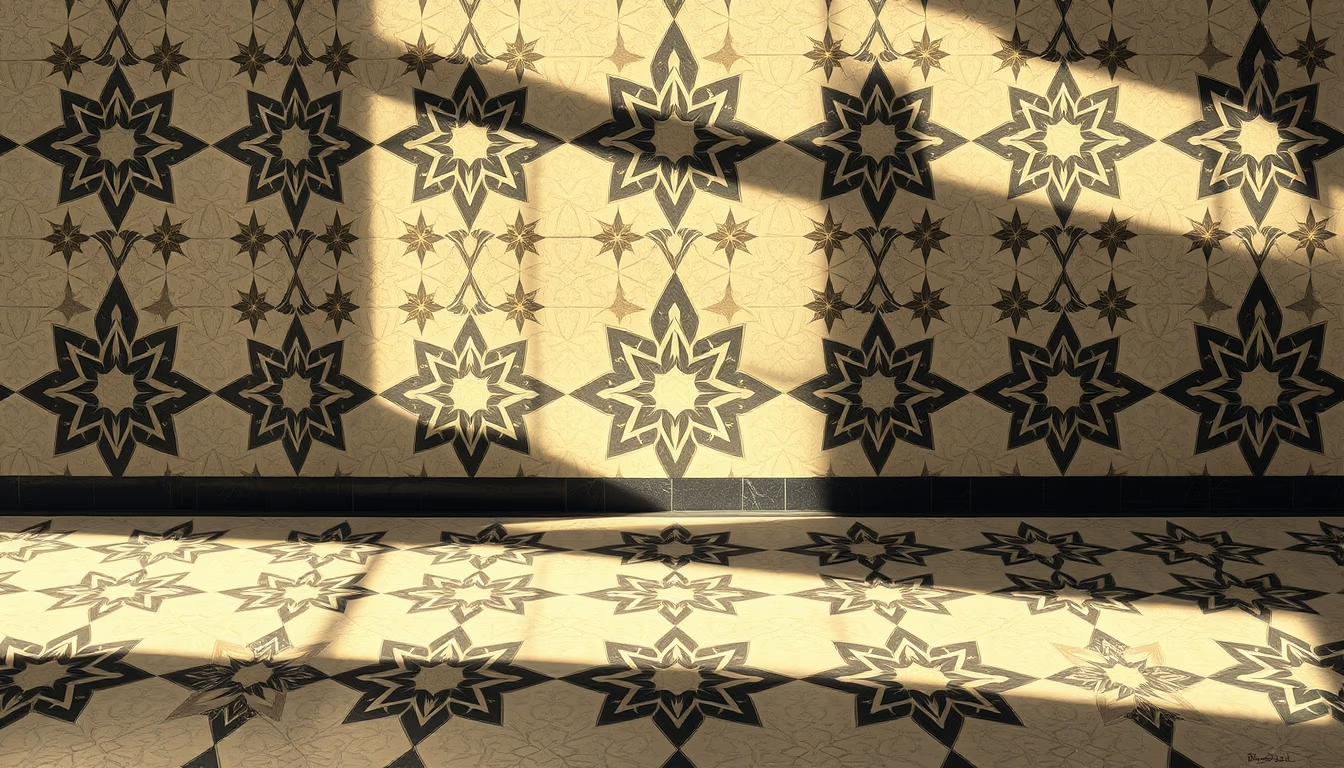
Islamic geometric patterns are artistic expressions based on repetition of shapes, symmetry, and mathematical complexity, found in mosques and palaces.
About this subject
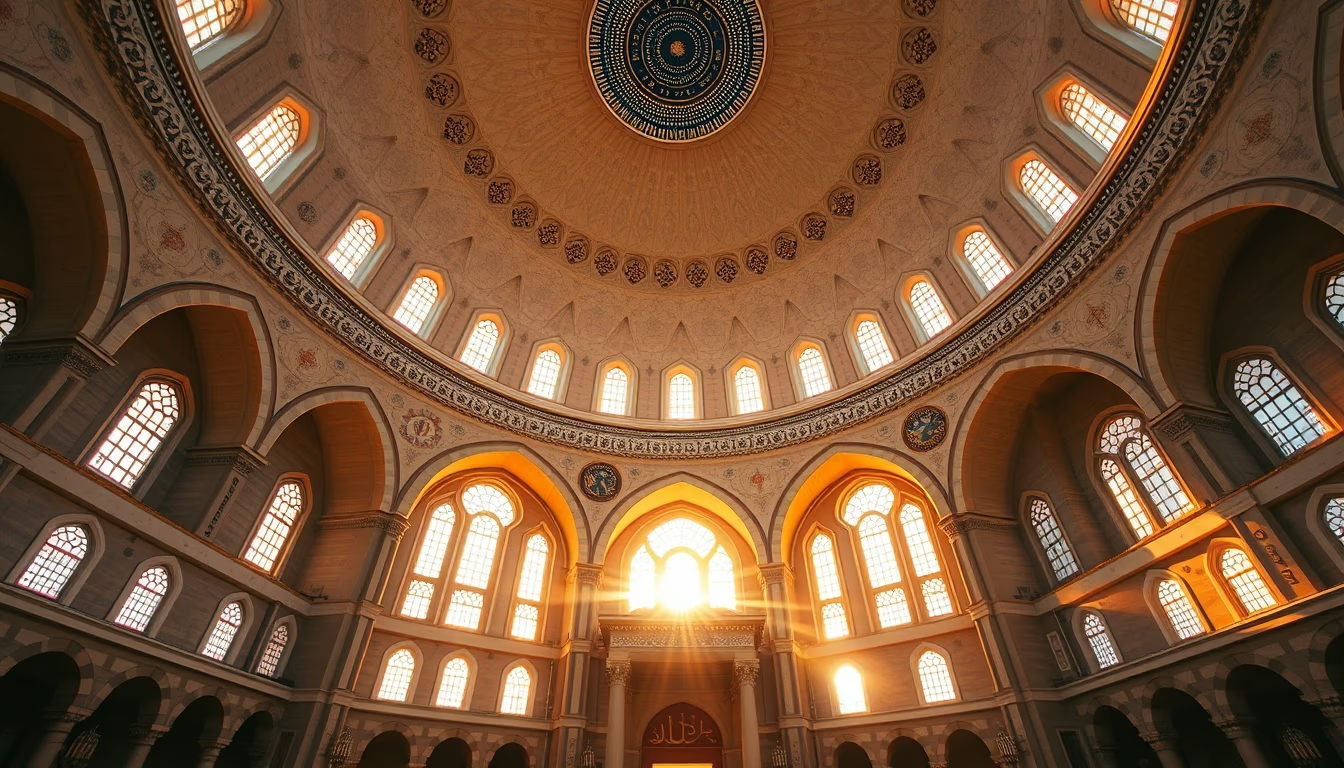
Islamic geometric patterns are a non-figurative art form widely used in the architecture and decoration of religious and civil buildings in the Islamic world since the 8th century. They derive from a tradition that combines mathematical knowledge, such as Euclidean geometry and algebra, with aesthetic and spiritual principles. They avoid depictions of living beings due to aniconism in several interpretations of Islam, and therefore developed a visual repertoire based on abstract shapes: eight-pointed stars, interlocking polygons, arabesques, and stylized floral motifs. These compositions are often arranged in periodic repetitions that create a sense of infinity, symbolizing the eternal nature of God.
An iconic example is the Alhambra in Granada, Spain, where tiles with geometric patterns cover walls and ceilings, creating a hypnotic effect. Another highlight is the Dome of the Rock in Jerusalem, whose exterior displays geometric mosaics with Byzantine and Sassanid influences. In Iran, the mosques of Isfahan and Shiraz feature iwans and minarets covered with intricate tile patterns, often combining cobalt blue, turquoise, and gold. The production technique involves the use of compass and ruler, but also precise calculations of radial symmetry and translation, allowing the creation of patterns that repeat at multiple scales.
The importance of these patterns goes beyond aesthetics: they also function as an element of cultural and religious identity. During the medieval period, Islamic artisans developed algorithms for designing these forms, transmitted through treatises and manuals. In the 20th and 21st centuries, artists such as M.C. Escher drew inspiration from Islamic patterns for their works, and today they are revived in contemporary design trends, both in the Arab world and the West. The preservation of these motifs is also the subject of academic studies in mathematics, art history, and architecture, demonstrating their interdisciplinary relevance.
Frequently Asked Questions
Why do Islamic geometric patterns avoid human or animal figures?
Because of the principle of aniconism, which discourages the depiction of living beings in religious contexts to avoid idolatry. Geometric patterns offer a form of artistic expression that respects this tradition.
What is the origin of these patterns?
They developed from the 8th century onward, influenced by Roman, Byzantine, and Persian traditions, but gained their own identity through intense use of geometry and symmetry. They flourished particularly in the medieval period in places like the Iberian Peninsula, Persia, and India.
Where can I see examples of Islamic geometric patterns today?
In historic mosques such as the Blue Mosque in Istanbul, the Alhambra in Spain, and the Sheikh Lotfollah Mosque in Isfahan. They also appear in palaces, madrasas, and contemporary crafts, and influence modern designs.
Direct URL
https://pub-c7d6a6ea828543ac903a74a341ccb2e1.r2.dev/imagens/islamic-geometric-pattern-magazine-editorial-p0.avifHow to credit
Include a visible link back to UtilizAí. Copy one of the snippets below:
<a href="https://xn--utiliza-eza.com/en/midia/imagens/islamic-geometric-pattern-magazine-editorial-p0">Islamic geometric pattern</a> by <a href="https://xn--utiliza-eza.com">UtilizAí</a>, licensed under <a href="https://creativecommons.org/licenses/by/4.0/">CC BY 4.0</a>.
[Islamic geometric pattern](https://xn--utiliza-eza.com/en/midia/imagens/islamic-geometric-pattern-magazine-editorial-p0) by [UtilizAí](https://xn--utiliza-eza.com), CC BY 4.0
License: CC-BY-4.0