Islamic geometric pattern
1344×768 · AVIF · CC BY 4.0

Islamic geometric patterns are mathematical ornaments adorning mosques, palaces, and manuscripts since the 8th century, blending art and science.
About this subject
Islamic geometric patterns represent one of the world's most sophisticated decorative traditions, rooted in mathematical and spiritual principles. They emerged in the 8th century during the Umayyad period and flourished between the 13th and 16th centuries, especially in Persian, Ottoman, and Mughal contexts. These patterns are formed by repetitions of polygons, stars, and rosettes, created using compass and straightedge. The absence of figurative representation in Islamic religious art encouraged the development of this abstract art, which symbolizes divine order and the infinity of the cosmos.
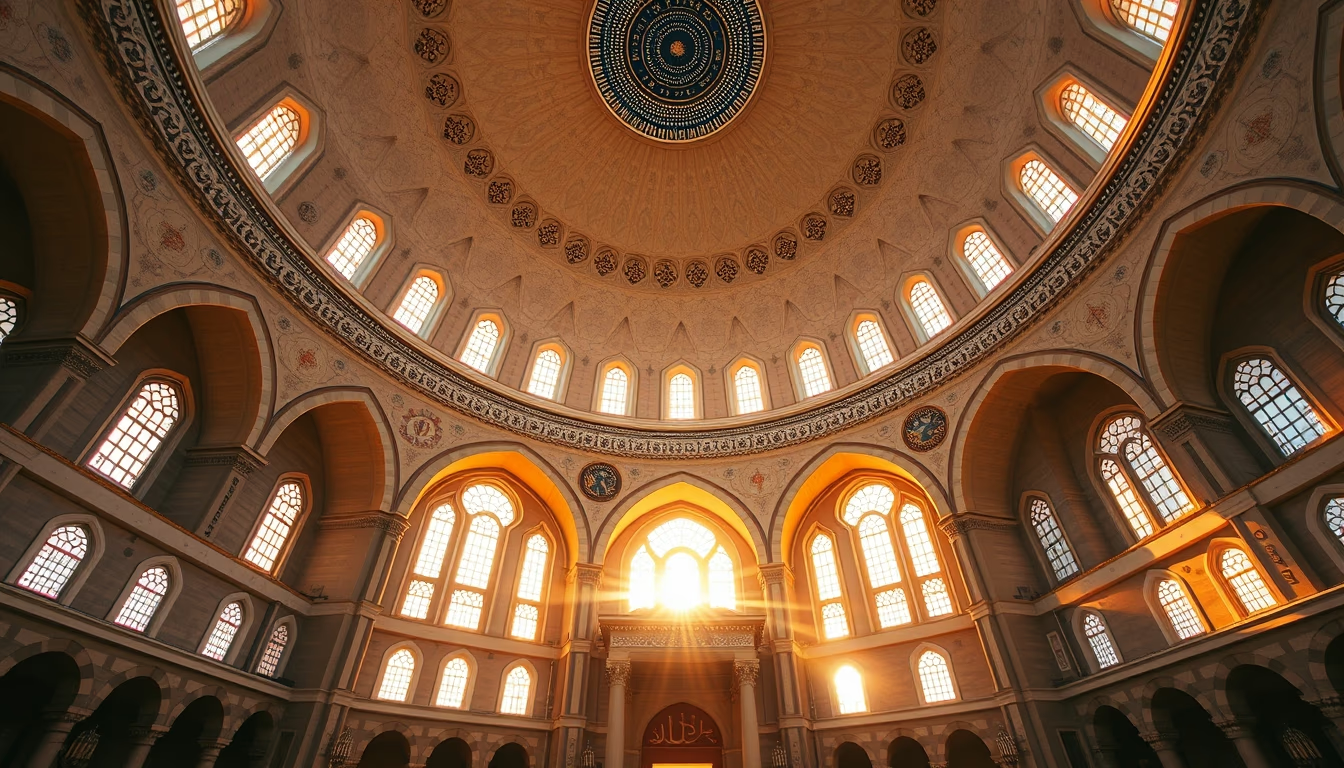
In architecture, geometric patterns appear on tile panels, plaster arabesques, mosaics, and stained glass. Iconic examples include the Alhambra in Granada (Spain), the Blue Mosque in Istanbul, and the Taj Mahal in India. Each pattern is built on an underlying grid, often based on triangles, squares, or hexagons, expanded through symmetrical repetition. Many patterns incorporate the eight-pointed star, known as "khatam" in Iran, representing the eight paradises of the Quran.
Islamic geometric patterns influenced Western art, particularly through the Alhambra School, inspiring artists like M.C. Escher. Today, they are studied by mathematicians and designers, and continue to be used in contemporary architecture and interior design, including commercial product decoration. The precision and beauty of these patterns reflect the search for harmony between the material and the spiritual.
Frequently Asked Questions
What is the origin of Islamic geometric patterns?
They emerged in the 8th century during the Umayyad period, influenced by Byzantine, Persian, and Sasanian traditions, and fully developed between the 13th and 16th centuries.
Where can I see famous examples of these patterns?
At the Alhambra (Spain), the Blue Mosque (Turkey), the Taj Mahal (India), and many other palaces and mosques across the Islamic world.
What is the spiritual meaning of these patterns?
They represent divine order, the infinity of the universe, and the oneness of God, avoiding figurative representation in religious contexts.
Direct URL
https://pub-c7d6a6ea828543ac903a74a341ccb2e1.r2.dev/imagens/islamic-geometric-pattern-commercial-product-photography-p1.avifHow to credit
Include a visible link back to UtilizAí. Copy one of the snippets below:
<a href="https://xn--utiliza-eza.com/en/midia/imagens/islamic-geometric-pattern-commercial-product-photography-p1">Islamic geometric pattern</a> by <a href="https://xn--utiliza-eza.com">UtilizAí</a>, licensed under <a href="https://creativecommons.org/licenses/by/4.0/">CC BY 4.0</a>.
[Islamic geometric pattern](https://xn--utiliza-eza.com/en/midia/imagens/islamic-geometric-pattern-commercial-product-photography-p1) by [UtilizAí](https://xn--utiliza-eza.com), CC BY 4.0
License: CC-BY-4.0