Islamic geometric pattern
1344×768 · AVIF · CC BY 4.0
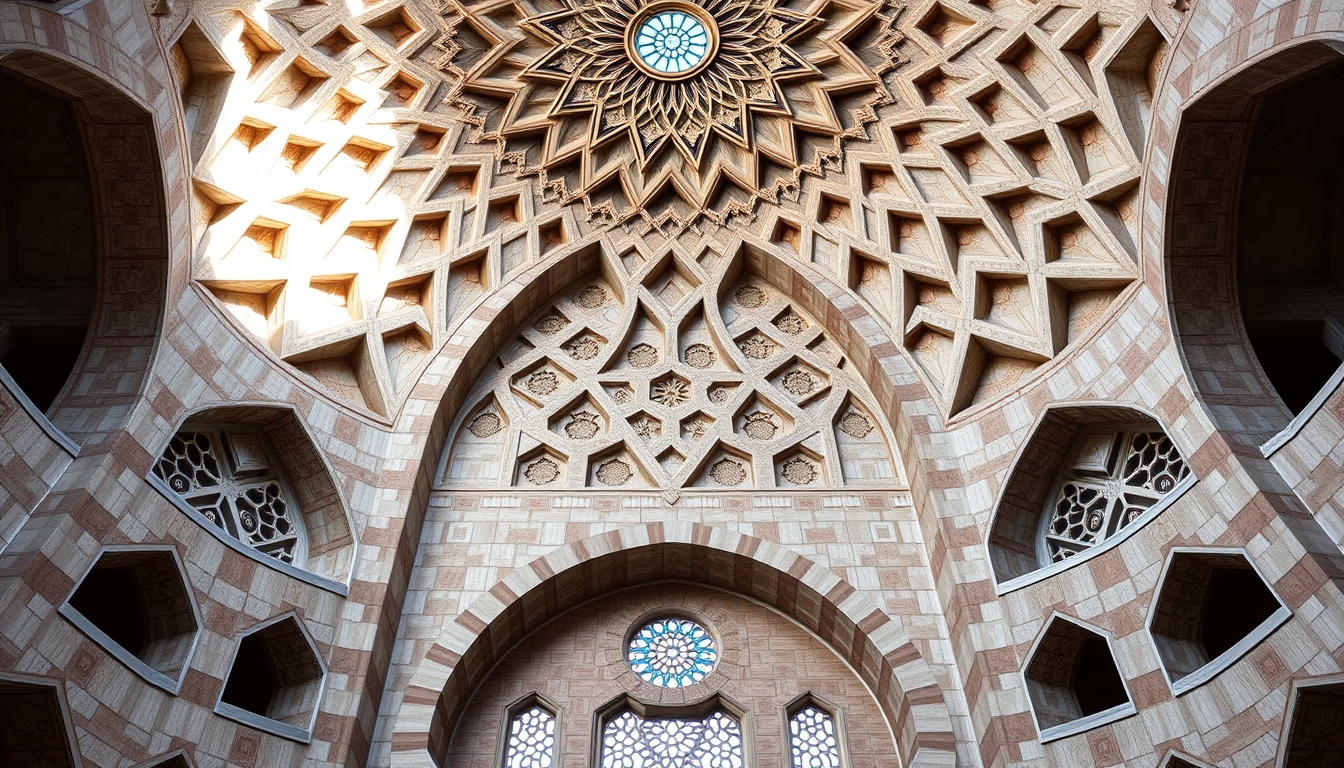
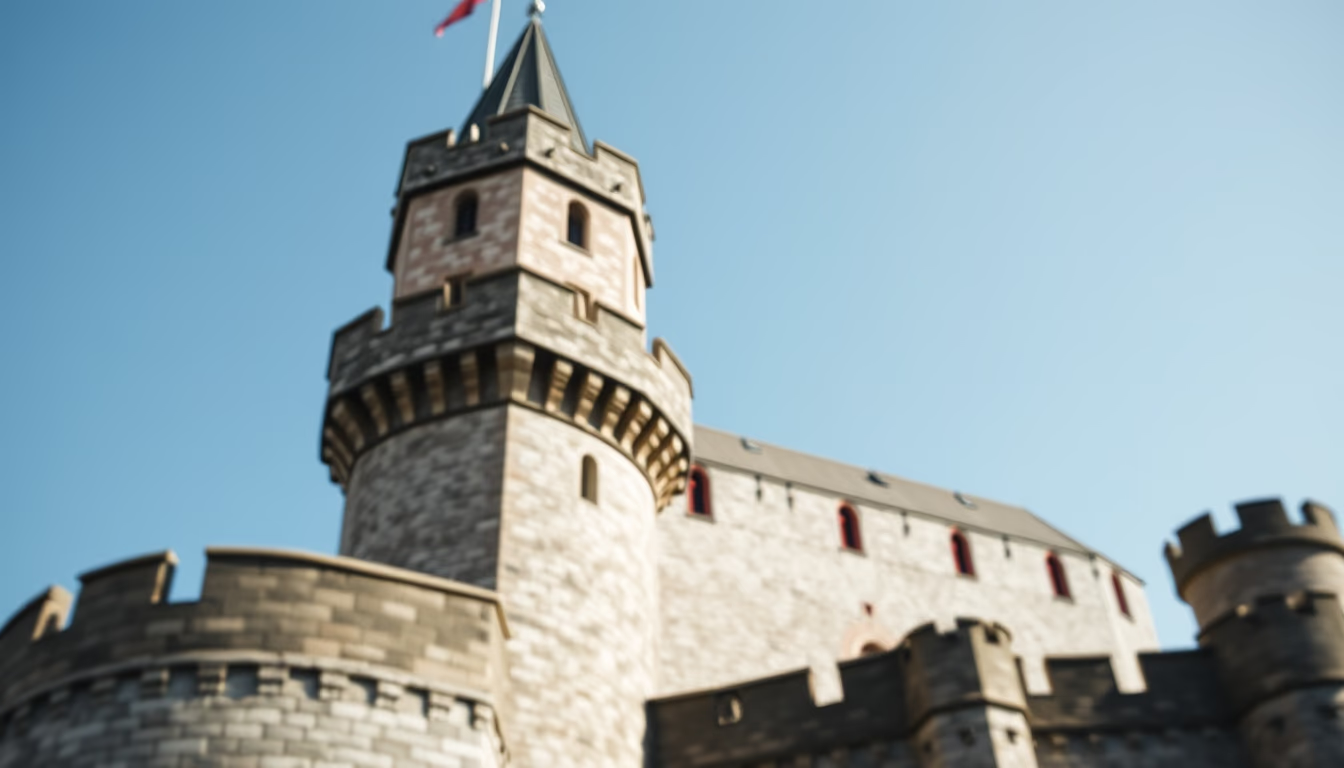
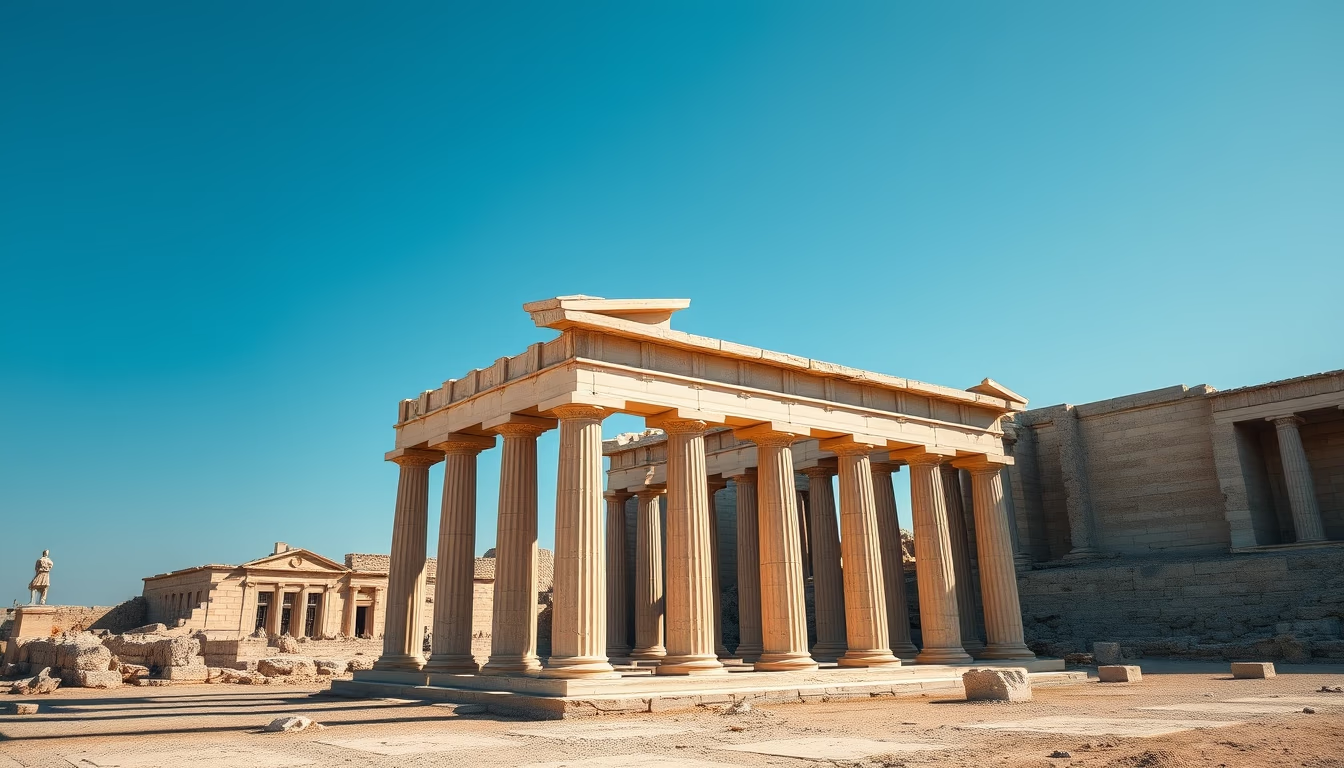
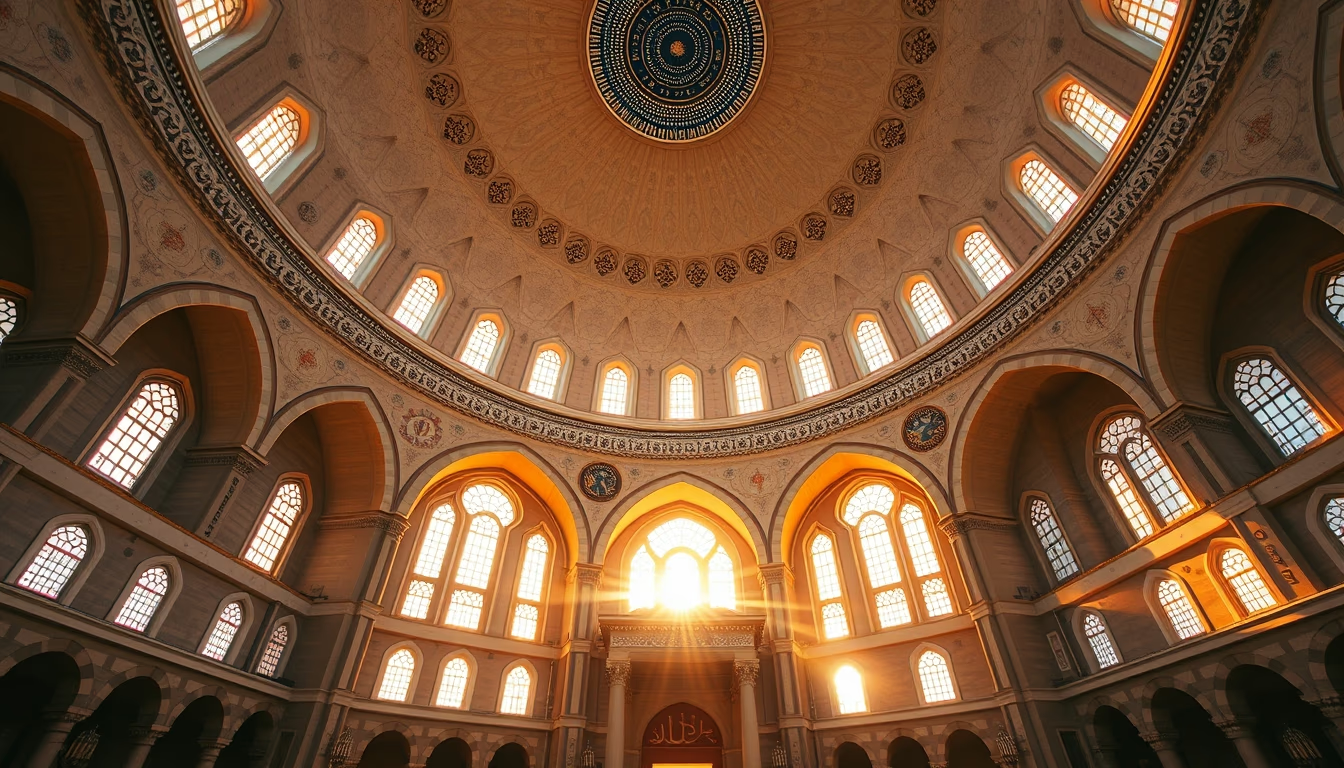
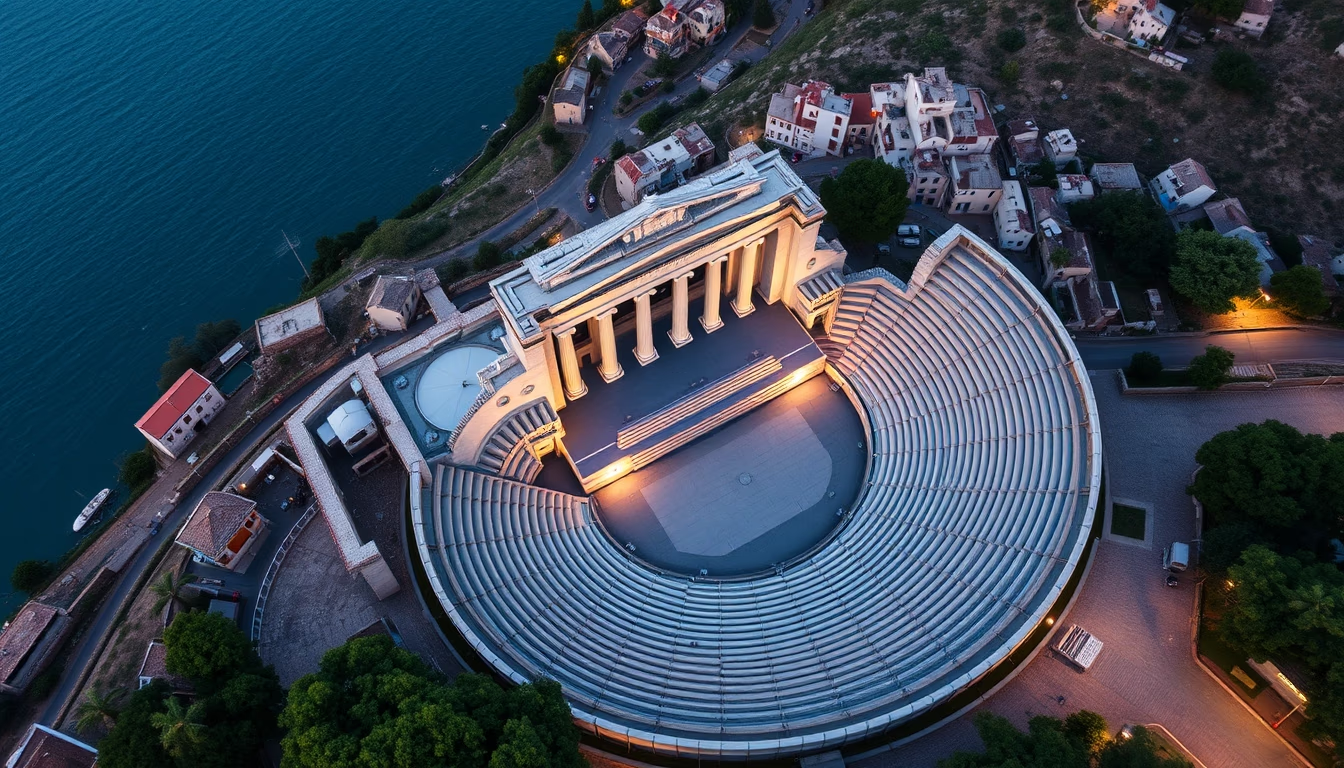
Islamic geometric patterns are a decorative art form combining mathematics, spirituality, and aesthetics in mosques and palaces.
About this subject
Islamic geometric patterns represent one of the most striking artistic expressions of Islamic civilization, developing from the 7th century onward. For religious reasons that discourage the depiction of human or animal figures in sacred contexts, Islamic artists channeled their creativity into mathematical abstraction. These patterns are composed of geometric shapes such as circles, squares, and star polygons that repeat and interlock into infinite compositions. The technique uses ruler and compass to create complex designs that symbolize divine order and the unity of the cosmos. Radial symmetry, repetition, and the golden ratio are often employed, and each pattern can be expanded infinitely without losing visual coherence.
One of the most famous examples is the Alhambra in Granada, Spain, a 14th-century palace and fortress that displays an impressive variety of mosaics and tiles. The zellij tilework in the Alhambra demonstrates the technical mastery of Islamic artisans, who also applied these patterns to stucco, wood, and stone. In contemporary architecture, the Arab World Institute in Paris, designed by Jean Nouvel, reinterprets these patterns with motorized facades that control light entry. The influence also extends to Western art, inspiring artists such as M.C. Escher, who studied the Alhambra mosaics to create his own tessellations.
Islamic geometric patterns are not merely decorative: they carry symbolic meanings. The circle, for example, represents the unity and eternity of God, while eight-pointed stars symbolize the four pillars of Islam. The infinite repetition suggests the idea that the universe is a continuous manifestation of divine creation. The construction of these patterns follows precise rules, often based on divisions of the circle into multiples of 5, 8, or 12. Today, scholars and designers use geometry software to analyze and recreate these patterns, which continue to be studied in universities worldwide. UNESCO has recognized the art of zellij and Islamic calligraphy as Intangible Cultural Heritage of Humanity.
Although primarily associated with Islamic religious architecture, these patterns also appear in palaces, fountains, and everyday objects. They represent a bridge between art, mathematics, and spirituality, appreciated not only by Muslims but also by design and architecture enthusiasts globally. Their ability to transcend cultures and eras makes them a fascinating subject for architectural photography, capturing the interplay of light, shadow, and geometry.
Frequently Asked Questions
How are Islamic geometric patterns constructed?
They are built with a ruler and compass from basic shapes like circles and squares. By dividing circles into equal parts (5, 8, 12), stars and polygons are created that repeat into infinite mosaics.
Where can I see famous examples of these patterns?
Notable examples include the Alhambra in Granada (Spain), the Great Mosque of Cordoba, and the Taj Mahal in India. Modern examples include the Arab World Institute in Paris.
What is the spiritual meaning of these patterns?
They symbolize divine order and the oneness of God. The infinite repetition represents continuous creation, and each shape has symbolism; for example, the circle represents eternity.
Direct URL
https://pub-c7d6a6ea828543ac903a74a341ccb2e1.r2.dev/imagens/islamic-geometric-pattern-architectural-photography-p5.avifHow to credit
Include a visible link back to UtilizAí. Copy one of the snippets below:
<a href="https://xn--utiliza-eza.com/en/midia/imagens/islamic-geometric-pattern-architectural-photography-p5">Islamic geometric pattern</a> by <a href="https://xn--utiliza-eza.com">UtilizAí</a>, licensed under <a href="https://creativecommons.org/licenses/by/4.0/">CC BY 4.0</a>.
[Islamic geometric pattern](https://xn--utiliza-eza.com/en/midia/imagens/islamic-geometric-pattern-architectural-photography-p5) by [UtilizAí](https://xn--utiliza-eza.com), CC BY 4.0
License: CC-BY-4.0