Irrigation drip system
1344×768 · AVIF · CC BY 4.0
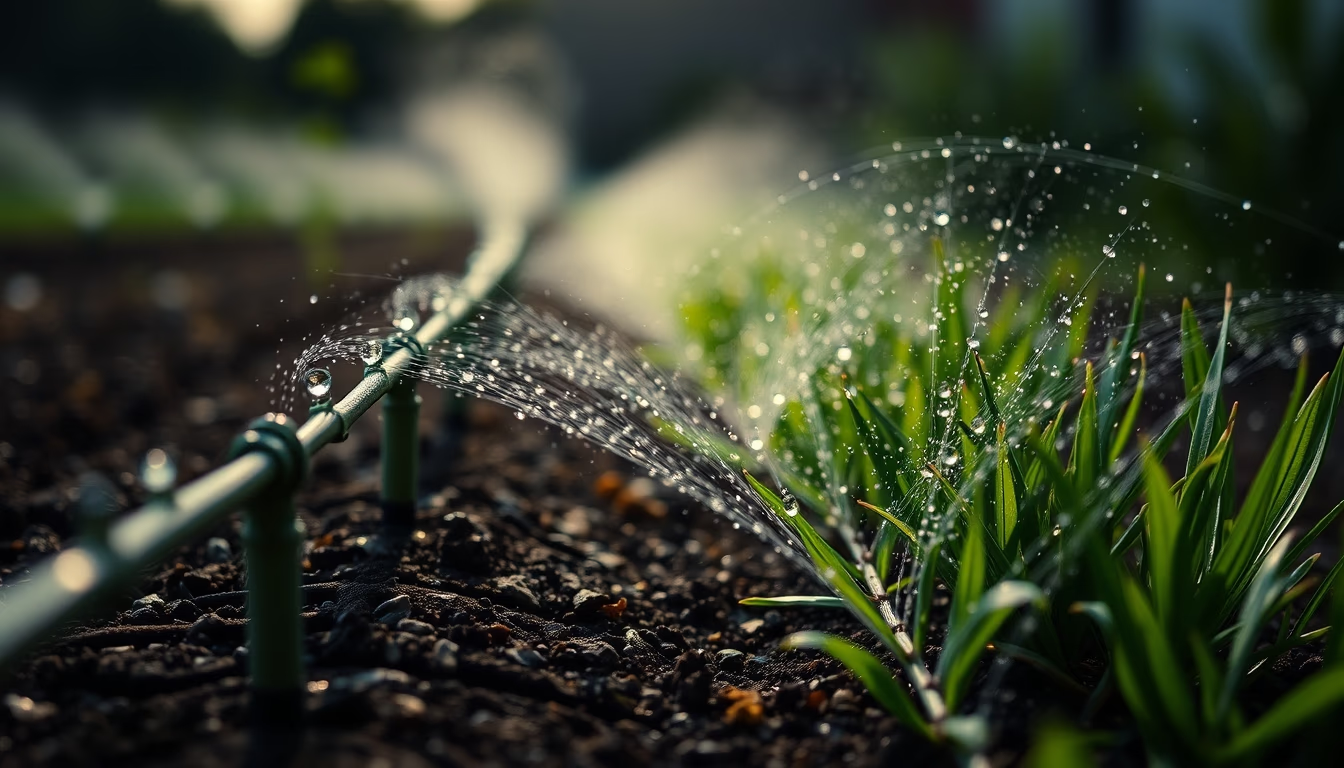
Drip irrigation system that optimizes water use and boosts agricultural productivity, especially in water-scarce regions.
About this subject
Drip irrigation is a method of applying water directly to the root zone of plants through emitters (drippers) that release small amounts of water slowly and regularly. Commercially developed in Israel in the 1960s, the technique became essential for agriculture in arid and semi-arid regions, such as the Brazilian Northeast, where water scarcity is a constant challenge. In Brazil, the system is widely used for fruits, vegetables, and coffee crops, saving up to 60% of water compared to sprinkler or furrow irrigation.
Besides water savings, drip irrigation reduces nutrient leaching and weed growth, as water is applied only where needed. The technique also allows fertigation, application of dissolved fertilizers in the water, increasing nutritional efficiency. In regions like the São Francisco Valley in Brazil, drip irrigation enabled the production of fine grapes and mangoes for export, transforming the local economic landscape.
Global adoption of the system has grown, driven by climate change and the need to produce more food with fewer resources. According to FAO, drip irrigation can boost productivity by up to 90% in some crops compared to traditional irrigation. However, the initial installation cost and maintenance requirements (to prevent clogging) remain barriers for small farmers. Low-cost initiatives, such as using PET bottles as homemade drippers, have been spread in family farming projects in Africa and Latin America.
Interestingly, the earliest drip technique dates back to 1866 in Germany, using porous clay pipes. But it was Israeli engineer Simcha Blass who, after noticing a tree growing larger due to a slow leak, patented the modern system. Today, drip irrigation is considered one of the most efficient technologies for food security and water sustainability worldwide.
Frequently Asked Questions
How does a drip irrigation system work?
It works through tubes with emitters that release water drop by drop directly at the plant base, keeping the soil moist in the root zone and minimizing losses from evaporation or runoff.
Which crops benefit most from drip irrigation?
Vegetables, fruits (such as tomatoes, melons, grapes), coffee, and sugarcane benefit greatly. The system is ideal for high-value crops and regions with limited water.
How much water does drip irrigation save compared to other methods?
It can save 30% to 60% of water compared to sprinkler irrigation and up to 70% compared to furrow irrigation, depending on climate and management.
Direct URL
https://pub-c7d6a6ea828543ac903a74a341ccb2e1.r2.dev/imagens/irrigation-drip-system-fine-art-photography-p6.avifHow to credit
Include a visible link back to UtilizAí. Copy one of the snippets below:
<a href="https://xn--utiliza-eza.com/en/midia/imagens/irrigation-drip-system-fine-art-photography-p6">Irrigation drip system</a> by <a href="https://xn--utiliza-eza.com">UtilizAí</a>, licensed under <a href="https://creativecommons.org/licenses/by/4.0/">CC BY 4.0</a>.
[Irrigation drip system](https://xn--utiliza-eza.com/en/midia/imagens/irrigation-drip-system-fine-art-photography-p6) by [UtilizAí](https://xn--utiliza-eza.com), CC BY 4.0
License: CC-BY-4.0