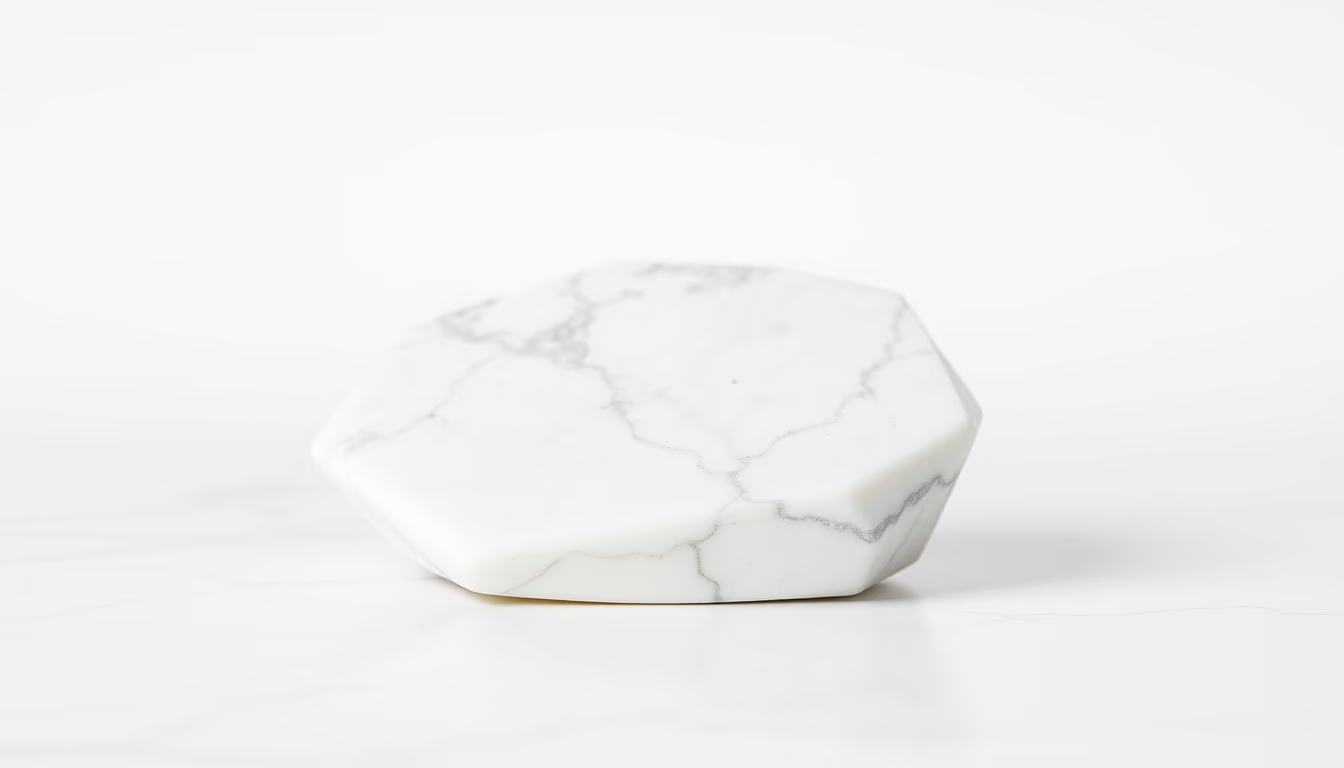
Iridescent holographic foil
1344×768 · AVIF · CC BY 4.0

Iridescent holographic foil is a material that creates dynamic visual effects with shifting colors, widely used in graphic design and packaging.
About this subject
Iridescent holographic foil is a thin metallized film that produces a rainbow-like optical effect when exposed to light. Its manufacturing involves vacuum deposition of microscopic layers of metals, such as aluminum, onto a polyester substrate, followed by an embossed pattern that diffracts light. This process creates colors that shift according to the viewing angle and lighting, a phenomenon known as iridescence. The material is widely used in cosmetics packaging, magazine covers, invitations, and security labels, where its sheen attracts attention and conveys sophistication.
In the graphic arts industry, holographic foil is applied via hot stamping or cold lamination. Hot stamping uses a heated die to transfer the film onto paper or plastics, enabling precise details. Cold lamination is faster and suitable for large areas. The material's versatility allows combination with special inks and varnishes, resulting in pieces with high visual impact. Due to its popularity, holographic foil has become a recurring element in design collections, especially in album covers and advertising campaigns that aim for a futuristic look.
The iridescent effect is not limited to design: it is inspired by nature, such as in butterfly wings and seashells. However, synthetic foil offers precise control over the final appearance, enabling the creation of geometric or abstract patterns. The editorial design trend for 2026 points to using this material in combination with minimalism, generating contrast between smooth surfaces and shifting gloss. Additionally, holographic foil is recyclable if properly separated, though many disposal processes remain complex.
Interestingly, Brazil has a strong hot stamping industry, especially for perfume and beauty product packaging. São Paulo city concentrates several specialized printing shops, serving from small designers to large brands. The cost of holographic foil varies according to the complexity of the embossment and the covered area, but it is considered a premium material. For designers, understanding the foil's properties is essential to avoid issues like misalignment or poor adhesion. In summary, iridescent holographic foil combines optical science, materials engineering, and visual art.
Frequently Asked Questions
How does the iridescent effect of holographic foil work?
The iridescent effect occurs by light diffraction on microstructures embossed into the foil. These structures separate white light into its constituent colors, which vary with the viewing angle, creating a dynamic rainbow.
What are the most common applications of holographic foil?
It is common in cosmetics and perfume packaging, magazine covers, wedding invitations, security labels, business cards, and premium product labels. It is also used in scenography and conceptual editorial designs.
Can holographic foil be recycled?
Yes, but it depends on the separation between the foil and the substrate (paper or plastic). Generally, foil is a composite material that can be recycled in specialized facilities, but not all conventional recycling systems accept it easily.
Direct URL
https://pub-c7d6a6ea828543ac903a74a341ccb2e1.r2.dev/imagens/iridescent-holographic-foil-magazine-editorial-p2.avifHow to credit
Include a visible link back to UtilizAí. Copy one of the snippets below:
<a href="https://xn--utiliza-eza.com/en/midia/imagens/iridescent-holographic-foil-magazine-editorial-p2">Iridescent holographic foil</a> by <a href="https://xn--utiliza-eza.com">UtilizAí</a>, licensed under <a href="https://creativecommons.org/licenses/by/4.0/">CC BY 4.0</a>.
[Iridescent holographic foil](https://xn--utiliza-eza.com/en/midia/imagens/iridescent-holographic-foil-magazine-editorial-p2) by [UtilizAí](https://xn--utiliza-eza.com), CC BY 4.0
License: CC-BY-4.0