Iridescent holographic foil
1344×768 · AVIF · CC BY 4.0
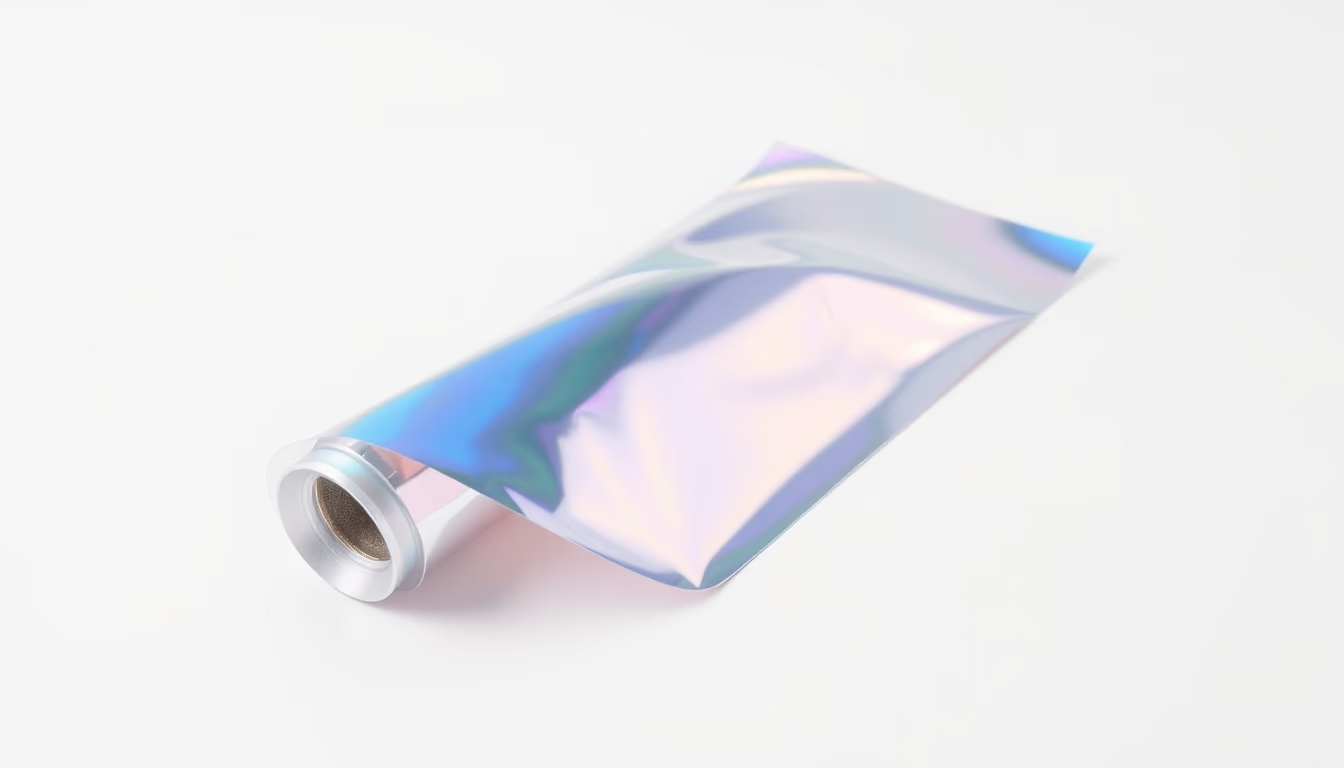
Iridescent holographic foil is a plastic material that refracts light into rainbow colors, used in packaging, arts, and security.
About this subject
Iridescent holographic foil, also known as holographic film, is a thin polymer sheet (e.g., PET) with microstructures that diffract white light into its spectral colors. This iridescent effect changes with viewing angle and lighting. Invented in the 1960s as a security feature for credit cards, it is now mass-produced by companies like Crown Roll Leaf or API (Applied Products Inc.).
In industry, foil is applied via heat and pressure onto paper, plastic, or fabric, commonly used in cosmetic packaging, beverage labels, wedding invitations, and notebook covers. Its popularity surged with cyberpunk and vaporwave aesthetics, and it remains a favorite for customizing objects and digital art. In 2026, design trends such as "digitally enhanced" and "metallic gradients" keep holographic foil in high demand, especially for phone cases and sneakers.
Culturally, foil evokes transience and retro-futurism. Brazilian artist Cildo Meireles has used reflective materials in his works, and foil appears frequently in pop art exhibitions. A curious fact: the same optical principle occurs in butterfly wings and seashells, a natural phenomenon that materials engineering seeks to mimic. Foil production requires precise micro-reliefs made by laser engraving or electroplating, and its disposal is problematic because it is non-biodegradable, spurring research into eco-friendly alternatives.
Frequently Asked Questions
How is iridescent holographic foil manufactured?
It is made by vacuum-depositing aluminum onto a plastic film, then laser-engraving microstructures that diffract light. The aluminum reflects light, and the grooves create the rainbow effect.
Can holographic foil be recycled?
Usually not, because it is a composite material (plastic + metal). Initiatives exist to develop biodegradable versions, but traditional recycling cannot separate the layers.
What are the most common uses of holographic foil?
Luxury packaging, security seals, art pieces, invitations, phone cases, trading cards, and event decorations. It is also used to prevent counterfeiting on documents.
Direct URL
https://pub-c7d6a6ea828543ac903a74a341ccb2e1.r2.dev/imagens/iridescent-holographic-foil-commercial-product-photography-p3.avifHow to credit
Include a visible link back to UtilizAí. Copy one of the snippets below:
<a href="https://xn--utiliza-eza.com/en/midia/imagens/iridescent-holographic-foil-commercial-product-photography-p3">Iridescent holographic foil</a> by <a href="https://xn--utiliza-eza.com">UtilizAí</a>, licensed under <a href="https://creativecommons.org/licenses/by/4.0/">CC BY 4.0</a>.
[Iridescent holographic foil](https://xn--utiliza-eza.com/en/midia/imagens/iridescent-holographic-foil-commercial-product-photography-p3) by [UtilizAí](https://xn--utiliza-eza.com), CC BY 4.0
License: CC-BY-4.0