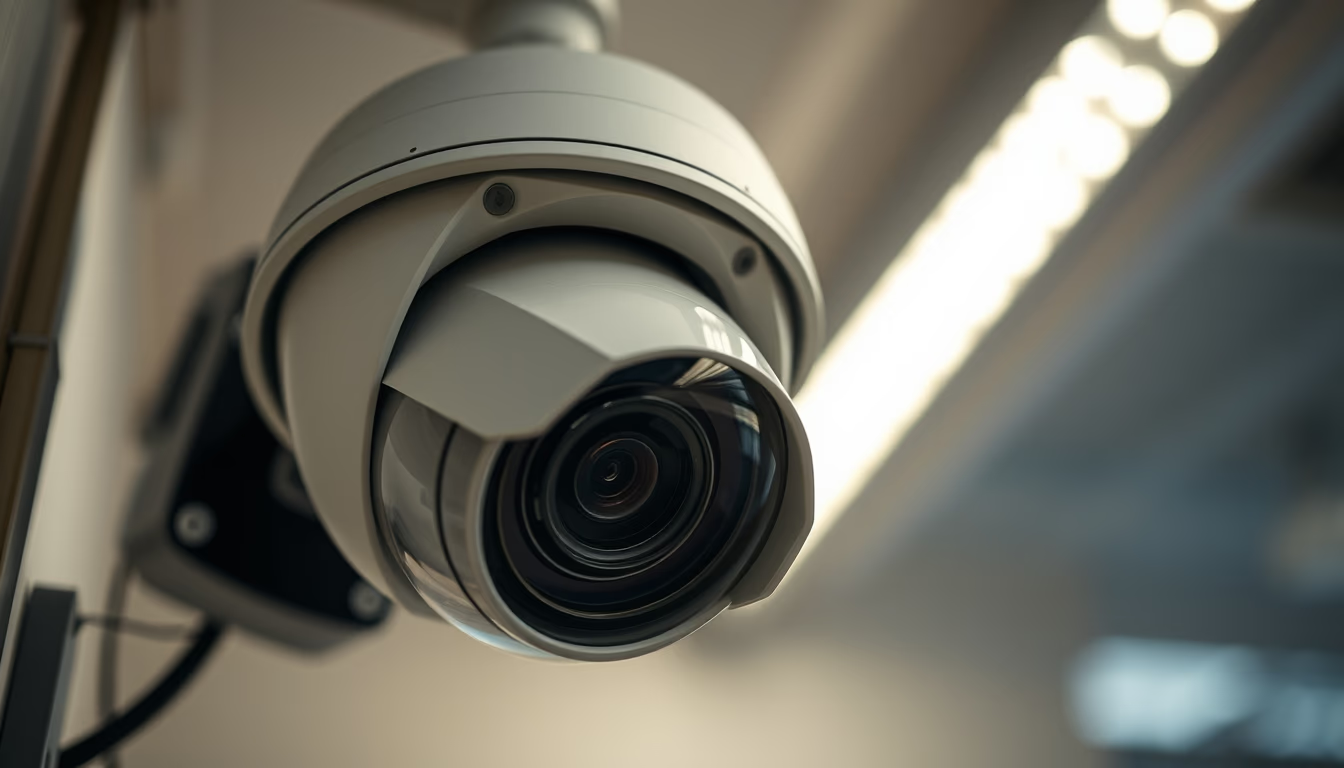
Iot sensor industrial
1344×768 · AVIF · CC BY 4.0

Industrial IoT sensor is a connected device that collects data from machines and factory environments, enabling remote monitoring and intelligent automation in Industry 4.0.
About this subject
Industrial IoT sensors are essential components of the so-called Industry 4.0, the fourth industrial revolution. They convert physical quantities such as temperature, pressure, vibration, humidity, and energy consumption into electrical or digital signals, which are transmitted via wireless networks to supervision and control systems. Unlike conventional sensors, IoT models have local processing capability and bidirectional communication, allowing them to act as intelligent nodes in a data mesh.
These devices are widely used in sectors such as manufacturing, oil and gas, energy, logistics, and precision agriculture. In a factory, for example, IoT sensors monitor the performance of conveyor belts, welding robots, and electric motors, sending real-time alerts about wear or imminent failures. This reduces unplanned downtime by up to 40%, according to studies by Deloitte. Integration with big data platforms and artificial intelligence enables predictive maintenance, optimizing equipment lifecycles.
Communication uses protocols such as MQTT, CoAP, and LoRaWAN, which consume little power and cover long distances. Many industrial IoT sensors are powered by long-life batteries or harvest energy from the environment, such as waste heat or vibration. Cybersecurity is a growing concern: in 2023, an estimated 20 billion IoT devices were in operation globally, requiring end-to-end encryption and robust authentication to prevent intrusions.
In Brazil, the adoption of IoT sensors in industry has grown driven by programs such as Industry 4.0 from CNI and financing lines from BNDES. Companies in the automotive, steel, and pulp and paper sectors are pioneers. The global industrial IoT sensor market is expected to exceed US$ 30 billion by 2027, according to MarketsandMarkets. This technology not only increases productivity but also contributes to sustainability goals by optimizing resource use and reducing waste.
Frequently Asked Questions
What differentiates an industrial IoT sensor from a common sensor?
Industrial IoT sensors have network communication capability, local processing, and real-time data transmission to remote systems, while common sensors only generate analog or digital signals without connectivity.
What are the main communication protocols used by industrial IoT sensors?
The most common protocols are MQTT, CoAP, LoRaWAN, and Modbus TCP. They are chosen for low power consumption, range, and suitability for factory environments.
Is security a concern for industrial IoT sensors?
Yes, security is critical. Measures such as end-to-end encryption, device authentication, and firmware updates are essential to prevent cyberattacks that could compromise production.
Direct URL
https://pub-c7d6a6ea828543ac903a74a341ccb2e1.r2.dev/imagens/iot-sensor-industrial-fine-art-photography-p4.avifHow to credit
Include a visible link back to UtilizAí. Copy one of the snippets below:
<a href="https://xn--utiliza-eza.com/en/midia/imagens/iot-sensor-industrial-fine-art-photography-p4">Iot sensor industrial</a> by <a href="https://xn--utiliza-eza.com">UtilizAí</a>, licensed under <a href="https://creativecommons.org/licenses/by/4.0/">CC BY 4.0</a>.
[Iot sensor industrial](https://xn--utiliza-eza.com/en/midia/imagens/iot-sensor-industrial-fine-art-photography-p4) by [UtilizAí](https://xn--utiliza-eza.com), CC BY 4.0
License: CC-BY-4.0