Index cards stacked
1344×768 · AVIF · CC BY 4.0
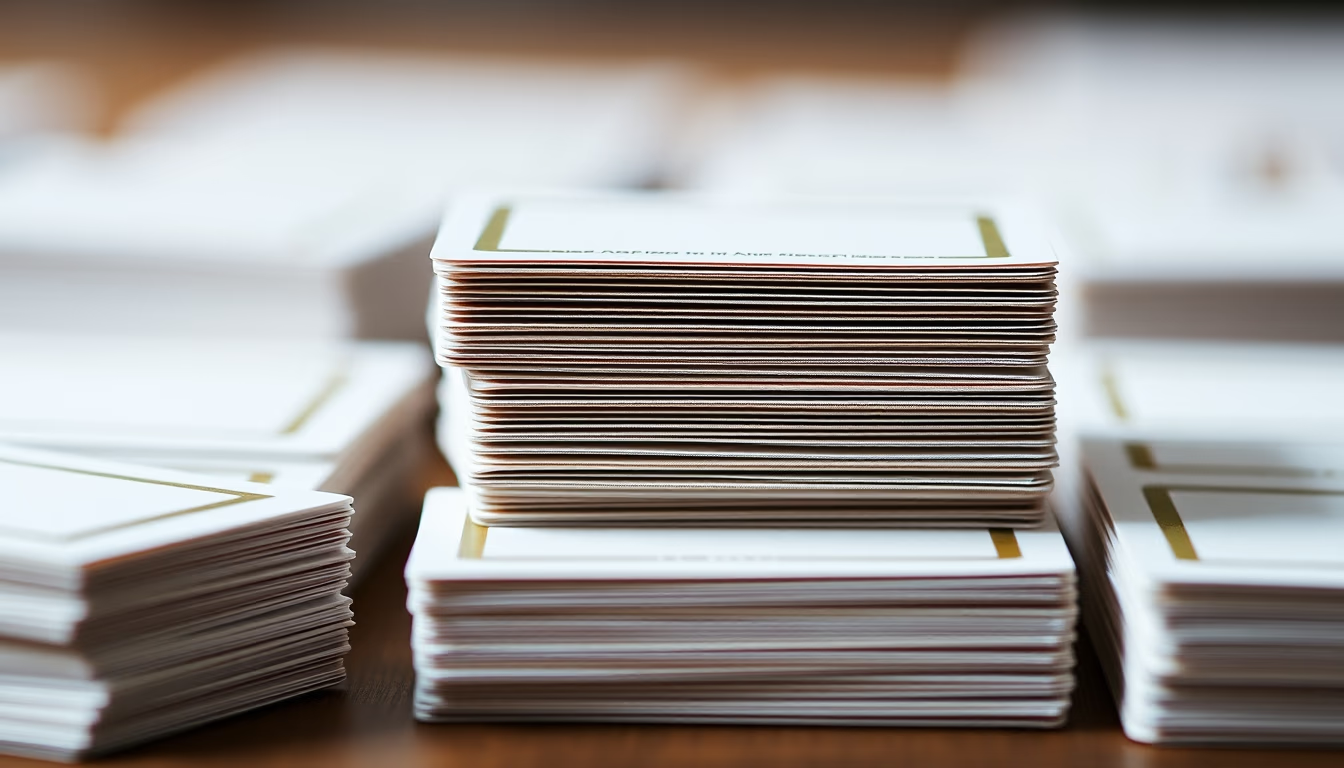
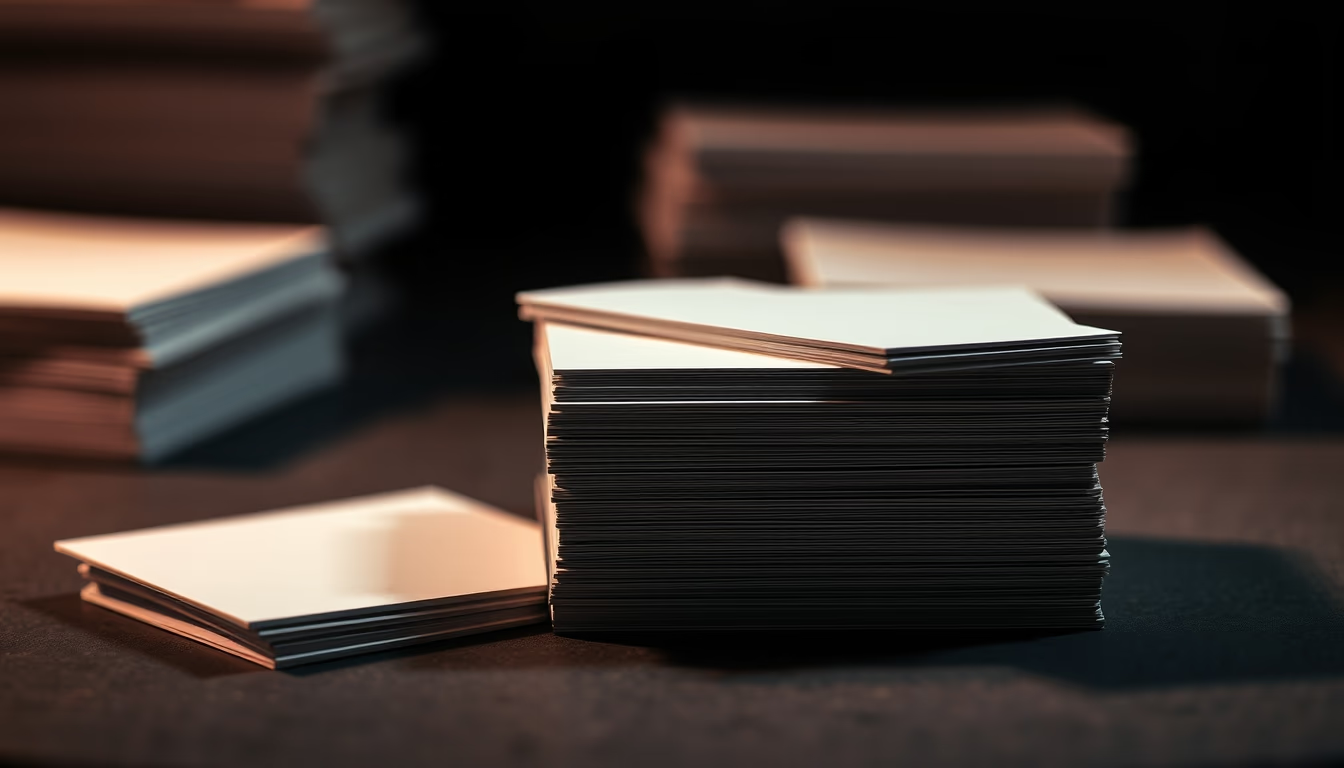
Stacks of index cards, also known as note cards, are organizational tools dating back to the 18th century, used for manual cataloging and as an active study method.
About this subject
Index cards, also known as note cards, have a history dating back to the 18th century, when Swedish naturalist Carl Linnaeus used them to classify plant and animal species. This system of individual records made it easy to reorganize and retrieve information, revolutionizing scientific cataloging. In the 19th and early 20th centuries, libraries adopted card catalogs with standardized cards for book cataloging, a system that persisted until the digital age. Writers like Vladimir Nabokov and researchers used stacks of these cards to organize quotes and ideas, a method still valued for its flexibility and tangibility.
Despite the prevalence of digital tools, index cards remain popular across various fields. Designers and writers use them for brainstorming and visual planning, while students employ the flashcard method for active learning and spaced repetition memorization. The Zettelkasten technique, which involves connecting ideas through numbered cards, also maintains followers. The texture of paper, the ability to write by hand, and the physical arrangement of cards offer a sensory experience that many find superior to digital alternatives.
The tilt-shift miniature effect in the photograph enhances the three-dimensionality of the stacked cards, creating a visual composition that invites detailed observation. The slight perspective distortion and selective blur emphasize edges, colors, and paper textures, transforming an everyday object into something that seems to belong to a miniature world. This type of image is common in product photography and artistic representations of office supplies, as it highlights materiality and organization.
Frequently Asked Questions
What are index cards?
Index cards are rectangular pieces of thick paper, often lined, used for writing short pieces of information. They serve organization, memorization, and cataloging.
How to use index cards for studying?
Write a question on one side and the answer on the other. Study in short sessions, reviewing cards you get wrong more often. This method is called flashcards and relies on spaced repetition.
What is the origin of index cards?
Swedish naturalist Carl Linnaeus is credited with creating the first index cards in the 18th century to classify plants. Later, libraries adopted card catalogs for book organization.
Direct URL
https://pub-c7d6a6ea828543ac903a74a341ccb2e1.r2.dev/imagens/index-cards-stacked-tilt-shift-miniature-fresh10.avifHow to credit
Include a visible link back to UtilizAí. Copy one of the snippets below:
<a href="https://xn--utiliza-eza.com/en/midia/imagens/index-cards-stacked-tilt-shift-miniature-fresh10">Index cards stacked</a> by <a href="https://xn--utiliza-eza.com">UtilizAí</a>, licensed under <a href="https://creativecommons.org/licenses/by/4.0/">CC BY 4.0</a>.
[Index cards stacked](https://xn--utiliza-eza.com/en/midia/imagens/index-cards-stacked-tilt-shift-miniature-fresh10) by [UtilizAí](https://xn--utiliza-eza.com), CC BY 4.0
License: CC-BY-4.0