Index cards stacked
1344×768 · AVIF · CC BY 4.0
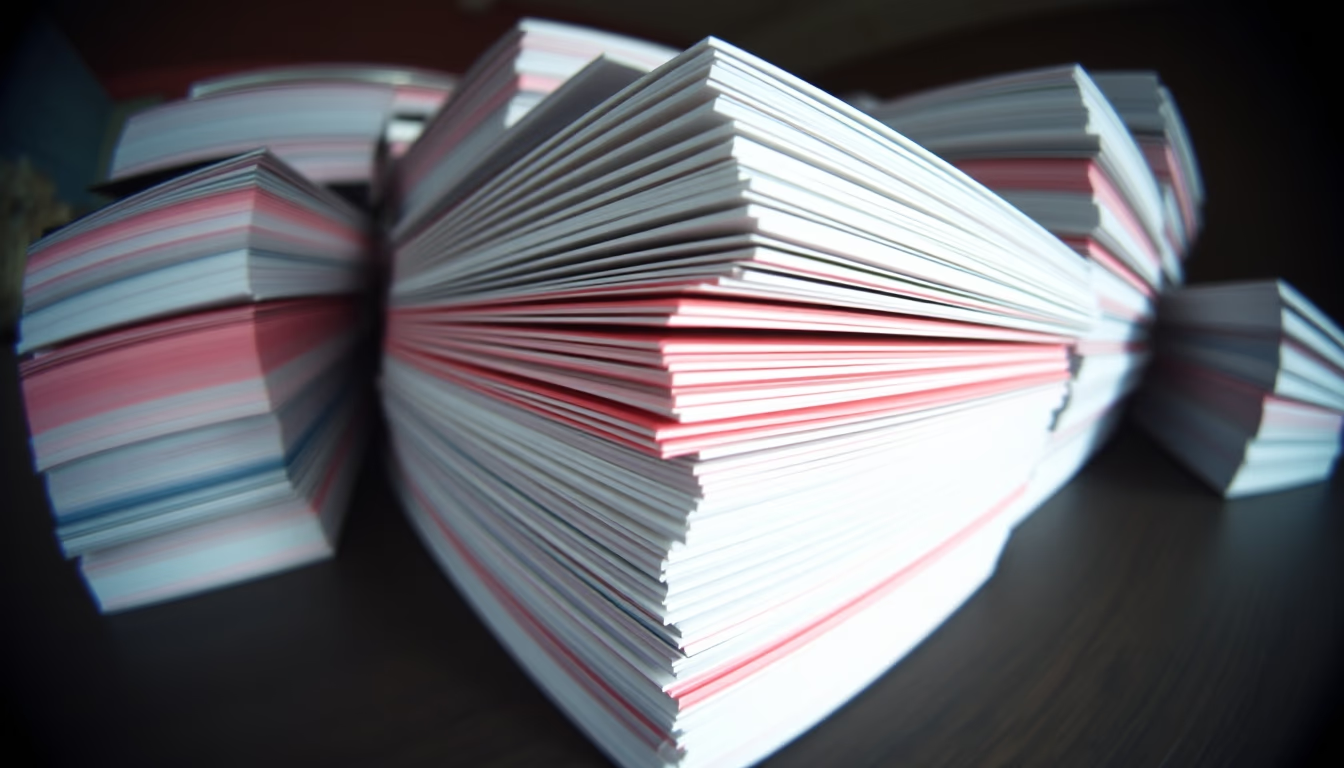
Stacks of index cards represent a classic method of information organization, used by libraries and researchers for decades.
About this subject
Index cards are small standardized paper cards, typically measuring 3 by 5 inches (7.6 x 12.7 cm). They emerged in the 19th century as an efficient solution for cataloging growing library collections, replacing handwritten ledger books. The system allowed inserting, removing, and reorganizing information without rewriting entire catalogs. The Bibliotheca Britannica and other major institutions adopted the format, which quickly spread to schools, archives, and offices.
The significance of index cards goes beyond physical organization. They were essential to the development of classification systems like the Dewey Decimal and Universal Decimal Classification, which hierarchically organize human knowledge. Renowned writers such as Vladimir Nabokov used cards to compose their novels, cutting and pasting handwritten passages. Vannevar Bush's 1945 Memex project envisioned a mechanical device based on index cards for information retrieval, serving as a conceptual precursor to the internet.
With digitization, physical cards lost ground but did not vanish. Methods like Zettelkasten (slip box) revived their use as productivity and creativity tools. Researchers and students still use them to structure theses, build arguments, and brainstorm. The aesthetics of stacked cards evoke tangibility and method, contrasting with the ephemerality of digital files. Moreover, the term "index card" has become a metaphor for discrete information units in interface design and databases.
Today, index cards are sold in various colors and rulings, catering to niches of personal organizers, artists, and educators. Their simple, modular design continues to inspire digital note-taking apps like Notion and Obsidian, which adopt the "card" concept to represent interconnected ideas. The image of a stack of index cards, captured with a fish-eye lens, emphasizes the depth and density of knowledge stored within, harkening back to an era when information was physical and tangible.
Frequently Asked Questions
What are index cards?
Index cards are small standardized paper cards, usually 3x5 inches, used for recording and organizing information. They were widely employed in libraries, archives, and by scholars for cataloging and note-taking.
What is the origin of index cards?
They emerged in the 19th century to meet the need for cataloging growing collections. The 3x5 inch size was popularized by systems like the Bibliotheca Britannica. Previously, information was recorded in bound books, lacking flexibility.
Are index cards still used today?
Yes, though less commonly. They are used in study methods like Zettelkasten, personal organization projects, and by artists and writers. They also inspired digital designs like the cards in note-taking apps.
Direct URL
https://pub-c7d6a6ea828543ac903a74a341ccb2e1.r2.dev/imagens/index-cards-stacked-fish-eye-wide-angle-fresh9.avifHow to credit
Include a visible link back to UtilizAí. Copy one of the snippets below:
<a href="https://xn--utiliza-eza.com/en/midia/imagens/index-cards-stacked-fish-eye-wide-angle-fresh9">Index cards stacked</a> by <a href="https://xn--utiliza-eza.com">UtilizAí</a>, licensed under <a href="https://creativecommons.org/licenses/by/4.0/">CC BY 4.0</a>.
[Index cards stacked](https://xn--utiliza-eza.com/en/midia/imagens/index-cards-stacked-fish-eye-wide-angle-fresh9) by [UtilizAí](https://xn--utiliza-eza.com), CC BY 4.0
License: CC-BY-4.0