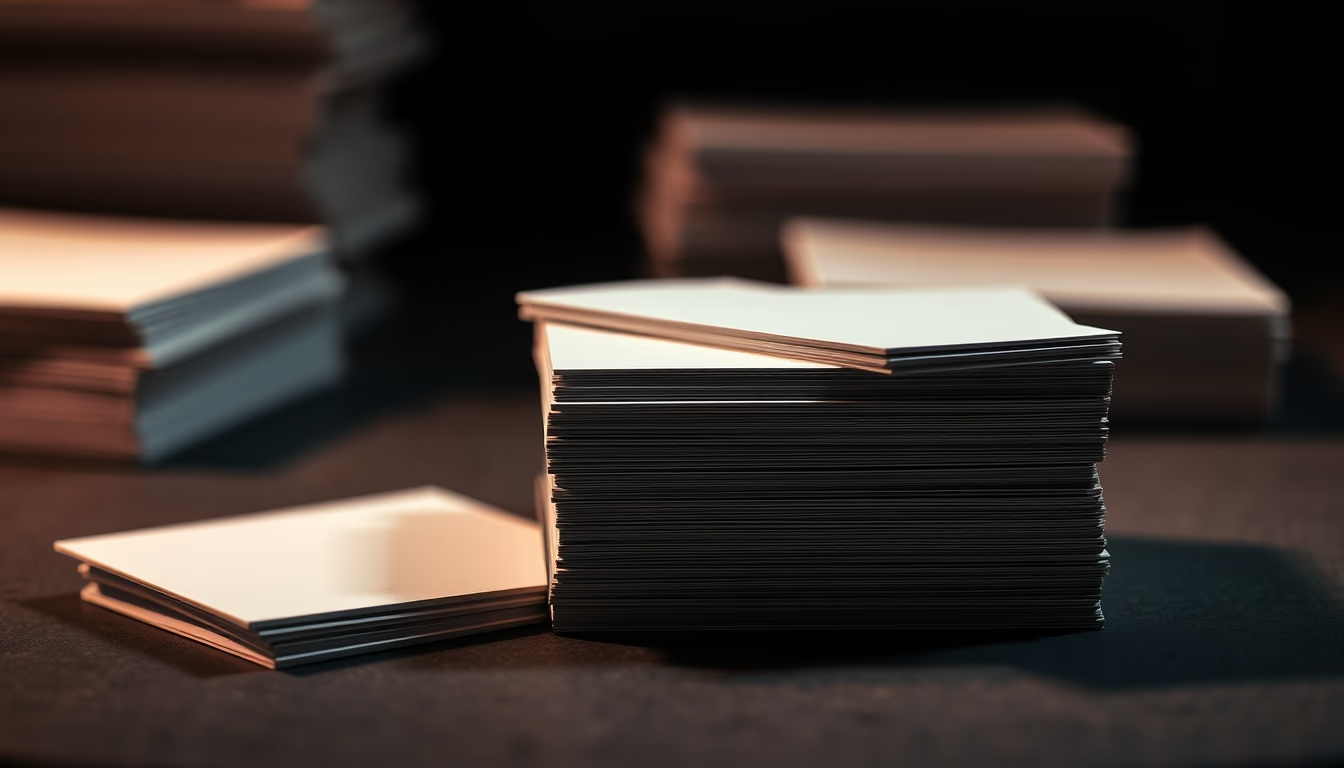
Index cards stacked
1344×768 · AVIF · CC BY 4.0

Stacks of index cards, a classic manual organization tool used in studies and offices.
About this subject
Index cards are rectangular pieces of cardstock, typically 3x5 inches (7.6 x 12.7 cm) in size. Invented in the 18th century by botanist Carl Linnaeus for species cataloging, they became widespread in the 20th century as a manual information organization tool, especially before the digital age. They are sold in packs with lines or grids, enabling orderly handwritten notes.
In English-speaking countries, index cards are commonly used by students for memorization, as in the spaced repetition method, and by researchers for note-taking. Each card usually holds a single fact or quote, allowing easy manual reordering. Libraries and archives have long used catalog cards for book location. Despite digitization, many professionals still prefer physical cards for brainstorming and project planning.
Trivia: The term "flashcard" evolved from index cards used in memorization systems. Standardized sizes enable storage in boxes or binders with dividers. Mass production began in the 1920s in the United States, with brands like Oxford Index Cards. Variations now include music staff, graph, or colored cards for different uses.
The cardstock weight (180, 250 g/m²) ensures durability for frequent handling. Cards can be written on with pencil, pen, or even printed, and are easily filed in drawers or binders. Even with note-taking apps, physical index cards remain popular for methods like Zettelkasten and educational memory games.
Frequently Asked Questions
What is the standard size of an index card?
The most common size is 3x5 inches (7.6 x 12.7 cm). Other popular sizes include 4x6 inches (10.2 x 15.2 cm) and 5x8 inches (12.7 x 20.3 cm).
What is the purpose of ruled index cards?
The lines help keep handwriting straight and organized. They are primarily used for study notes, bibliographic referencing, and lists.
How do index cards help in studying?
They enable the spaced repetition method: write a question on one side and the answer on the other, then review the cards periodically to reinforce memory.
Direct URL
https://pub-c7d6a6ea828543ac903a74a341ccb2e1.r2.dev/imagens/index-cards-stacked-film-grain-authentic-fresh4.avifHow to credit
Include a visible link back to UtilizAí. Copy one of the snippets below:
<a href="https://xn--utiliza-eza.com/en/midia/imagens/index-cards-stacked-film-grain-authentic-fresh4">Index cards stacked</a> by <a href="https://xn--utiliza-eza.com">UtilizAí</a>, licensed under <a href="https://creativecommons.org/licenses/by/4.0/">CC BY 4.0</a>.
[Index cards stacked](https://xn--utiliza-eza.com/en/midia/imagens/index-cards-stacked-film-grain-authentic-fresh4) by [UtilizAí](https://xn--utiliza-eza.com), CC BY 4.0
License: CC-BY-4.0