Incan terraces
1344×768 · AVIF · CC BY 4.0
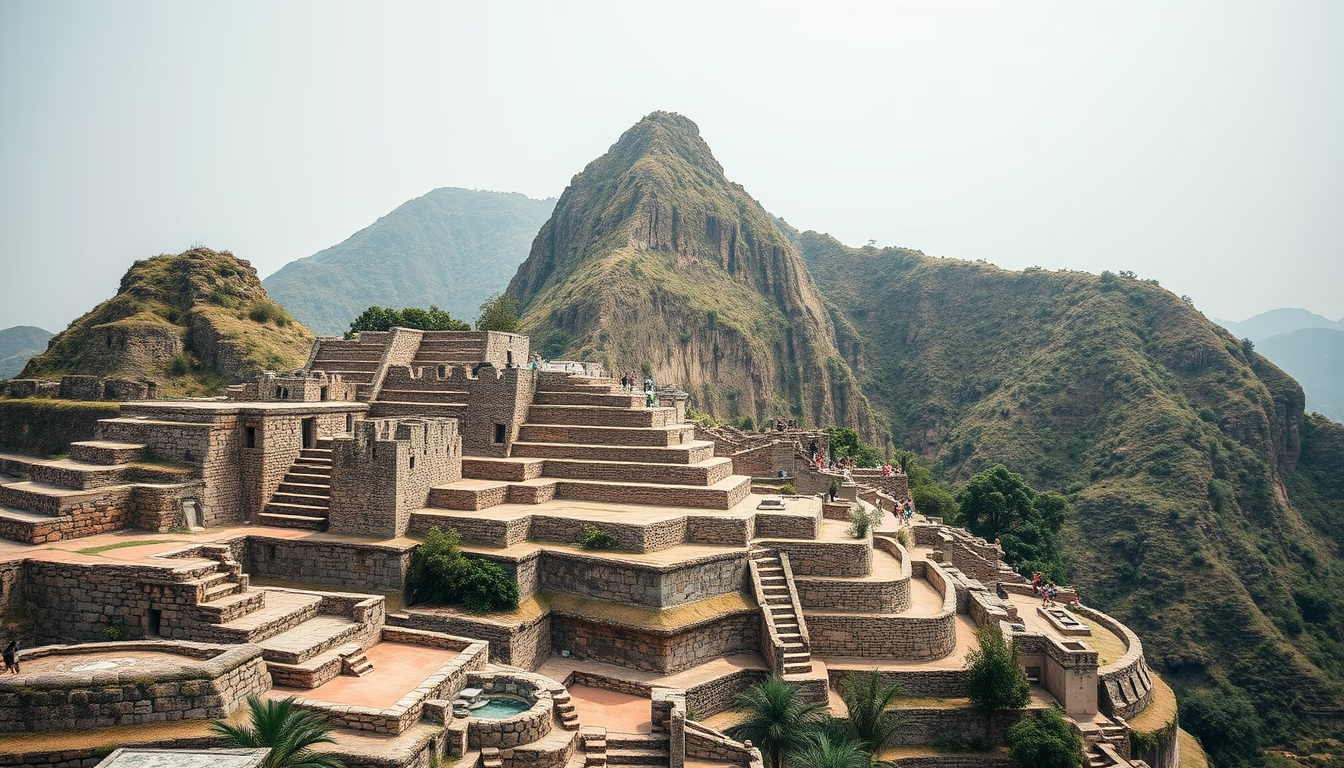
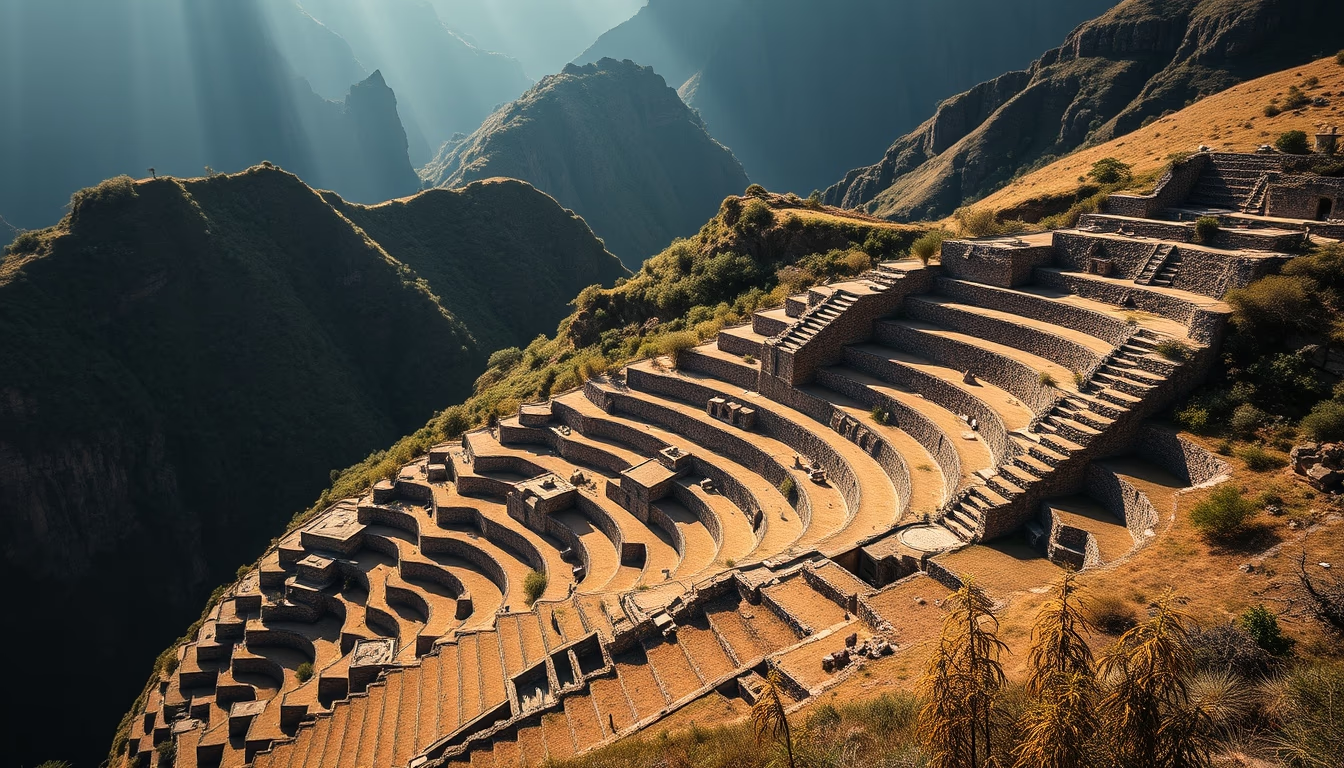
Incan terraces are ingenious agricultural structures that transformed the Andes mountains into fertile cultivation areas centuries ago.
About this subject
Incan terraces, known as andenes, represent one of the most impressive agricultural innovations of the Inca civilization. Built on steep slopes of the Andes, these terraces enabled farming at altitudes ranging from 2,000 to 4,000 meters. The Inca Empire, which flourished between the 13th and 16th centuries, used these structures to maximize food production in a challenging mountainous terrain.
The construction of terraces involved carving flat platforms supported by dry stone walls, without mortar. Each terrace had an efficient drainage system, with channels that carried rainwater and glacial meltwater to irrigate the crops. This system prevented soil erosion and allowed continuous cultivation. The Incas grew maize, potatoes, quinoa, and other vegetables adapted to high-altitude conditions.
The importance of terraces goes beyond agriculture. They also helped regulate temperature, creating microclimates that protected plants from nighttime frosts. Archaeological sites like Machu Picchu and Moray showcase remarkable examples. At Moray, circular terraces form concentric rings that simulate different altitudes, functioning as an experimental agricultural laboratory.
Today, many Incan terraces are still used by Andean communities, keeping an ancient tradition alive. They are recognized as a UNESCO World Heritage site and attract tourists from around the world, who marvel at the engineering and sustainability of these centuries-old structures.
Frequently Asked Questions
How did the Incas build the terraces?
The terraces were built by carving flat platforms into slopes and supporting them with dry stone walls without mortar. They also installed drainage systems with channels for irrigation and erosion control.
What crops were grown on Incan terraces?
Main crops included maize, potatoes, quinoa, beans, and other vegetables adapted to high altitudes. Each terrace could have a specific microclimate for different plantings.
Where can I see preserved Incan terraces today?
The most famous examples are at Machu Picchu, in the Sacred Valley of the Incas, and at Moray in Peru. Many terraces are still used by local communities in the Peruvian Andes.
Direct URL
https://pub-c7d6a6ea828543ac903a74a341ccb2e1.r2.dev/imagens/incan-terraces-studio-still-life-p0.avifHow to credit
Include a visible link back to UtilizAí. Copy one of the snippets below:
<a href="https://xn--utiliza-eza.com/en/midia/imagens/incan-terraces-studio-still-life-p0">Incan terraces</a> by <a href="https://xn--utiliza-eza.com">UtilizAí</a>, licensed under <a href="https://creativecommons.org/licenses/by/4.0/">CC BY 4.0</a>.
[Incan terraces](https://xn--utiliza-eza.com/en/midia/imagens/incan-terraces-studio-still-life-p0) by [UtilizAí](https://xn--utiliza-eza.com), CC BY 4.0
License: CC-BY-4.0