Incan terraces
1344×768 · AVIF · CC BY 4.0
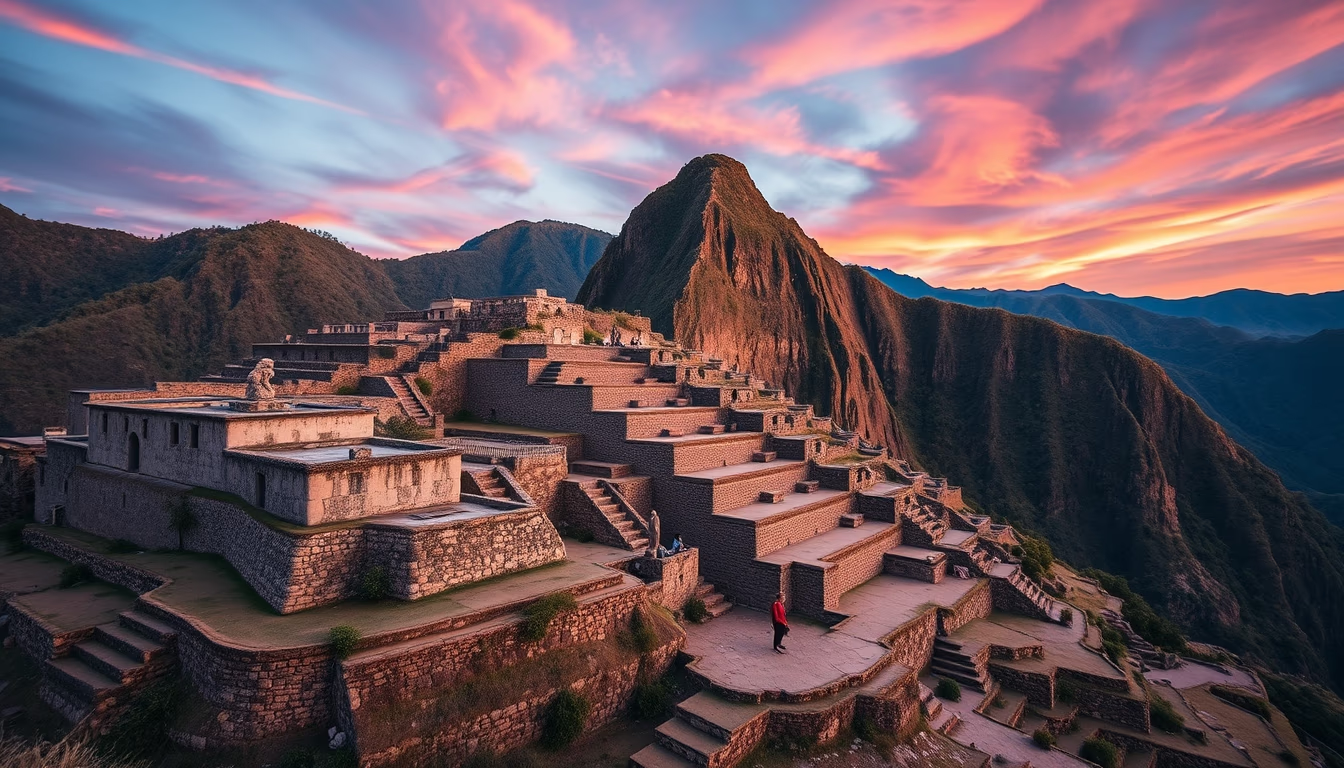
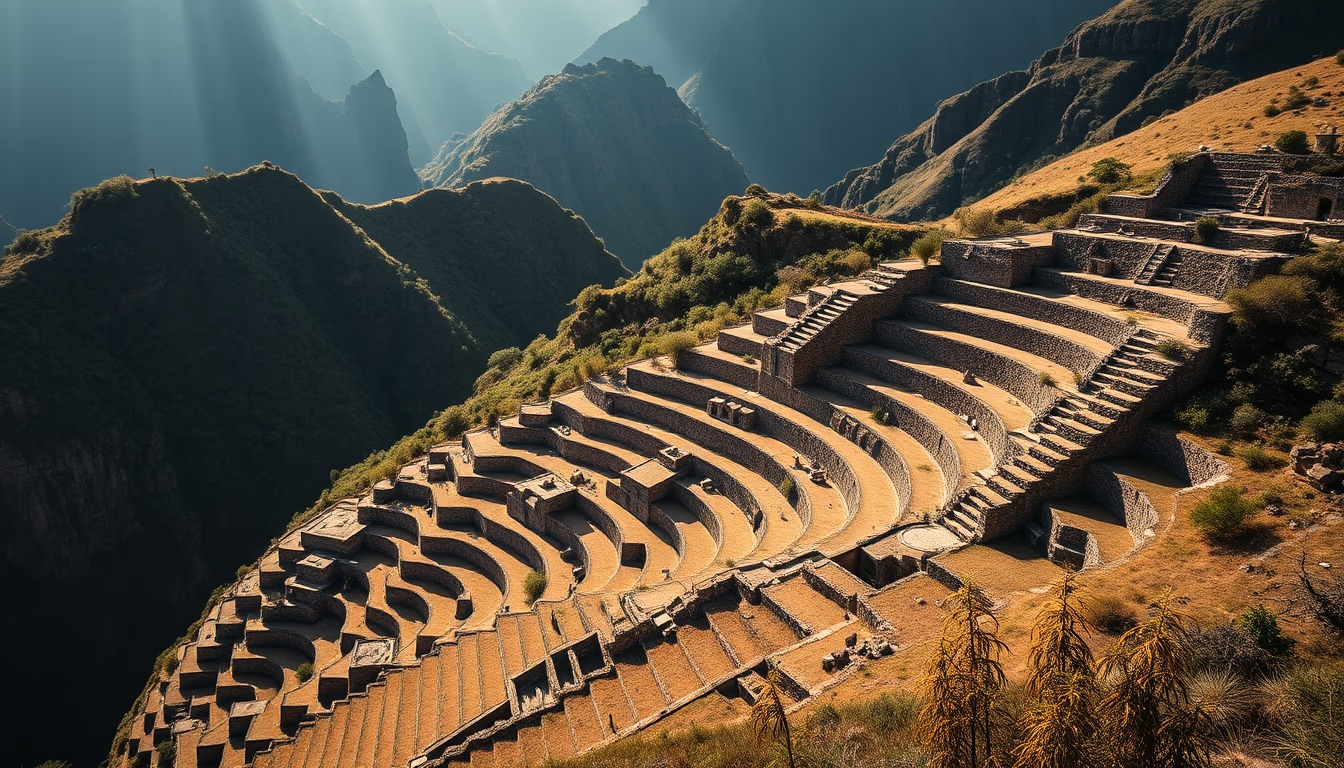
Incan terraces: ancient agricultural engineering that turned steep Andean slopes into fertile land, featuring advanced irrigation and drainage systems.
About this subject
Incan terraces are among the most remarkable legacies of the Inca civilization, which dominated the Andes from the 13th to the 16th centuries. Built on steep slopes, these terraces allowed farming at altitudes between 2,500 and 4,000 meters, where natural soil would be unstable and infertile. Each terrace consisted of dry stone walls filled with layers of gravel, sand, and topsoil, ensuring efficient drainage and moisture retention.
The irrigation system was equally sophisticated: stone channels carried water from springs and glaciers, distributing it by gravity. At sites like Machu Picchu and Moray, the terraces form concentric rings creating microclimates with temperature differences up to 15°C, enabling the cultivation of adapted varieties of maize, potato, and quinoa. Archaeological studies suggest the Incas also used terraces for ceremonial and astronomical purposes, aligning some with solstices and equinoxes.
Construction demanded deep knowledge of geology and hydrology. Stones were fitted without mortar but so perfectly that they withstand earthquakes to this day. After the Spanish conquest, many terraces were abandoned, yet they are still cultivated by Andean communities. Pisac in the Sacred Valley displays hundreds of terraces cascading downhill, a testament to human adaptation to extreme terrain. On long-exposure nights, the starry sky over these terraces highlights the connection between Inca engineering and the cosmos.
Frequently Asked Questions
How did the Incas build the terraces without modern tools?
They used levers, rope pulleys, and collective labor (mita). Stones were fitted manually with brute force and precision, often using smaller stones as wedges.
Are Incan terraces still used for planting today?
Yes, especially in the Sacred Valley of the Incas in Peru. Local communities grow potatoes, maize, and quinoa, preserving traditional irrigation and crop rotation techniques.
What was the purpose of the circular terraces at Moray?
Moray is believed to have been an agricultural research center, where different levels created microclimates for experimenting with crops. It may also have had ceremonial significance tied to the solar cycle.
Direct URL
https://pub-c7d6a6ea828543ac903a74a341ccb2e1.r2.dev/imagens/incan-terraces-long-exposure-p1.avifHow to credit
Include a visible link back to UtilizAí. Copy one of the snippets below:
<a href="https://xn--utiliza-eza.com/en/midia/imagens/incan-terraces-long-exposure-p1">Incan terraces</a> by <a href="https://xn--utiliza-eza.com">UtilizAí</a>, licensed under <a href="https://creativecommons.org/licenses/by/4.0/">CC BY 4.0</a>.
[Incan terraces](https://xn--utiliza-eza.com/en/midia/imagens/incan-terraces-long-exposure-p1) by [UtilizAí](https://xn--utiliza-eza.com), CC BY 4.0
License: CC-BY-4.0