Imax theater giant screen
1344×768 · AVIF · CC BY 4.0
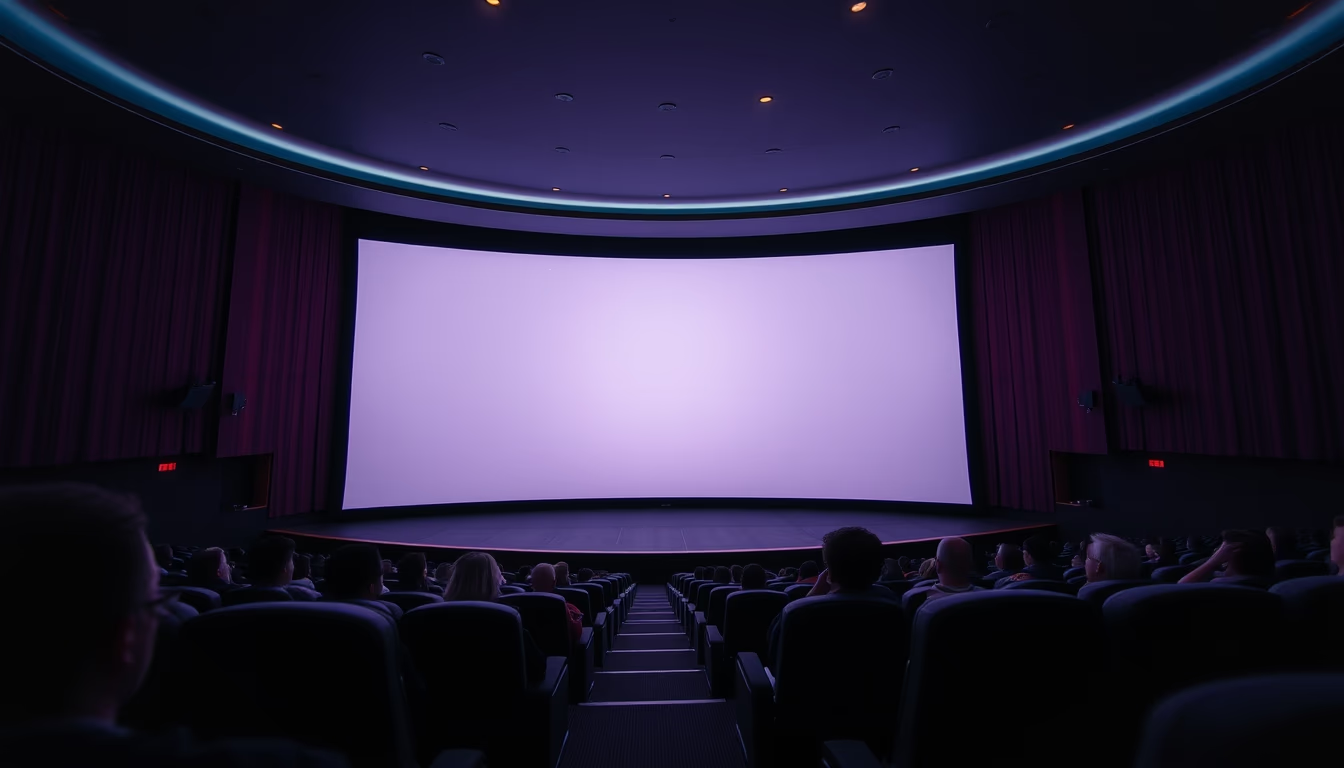
IMAX giant screens revolutionize cinema with immersive technology and high-definition sound, installed in over 1,600 theaters worldwide.
About this subject
IMAX (Image Maximum) is a cinematographic projection system created in Canada in 1970 by Graeme Ferguson, Roman Kroitor, and Robert Kerr. The technology is notable for its enormous screens, which can reach up to 30 meters in width, combined with high-brightness projectors and high resolution. The format uses 70 mm film running horizontally, providing an image area about 10 times larger than traditional 35 mm film. IMAX theaters are designed with steep stadium seating to ensure every viewer has an unobstructed and immersive view.
In Brazil, the first IMAX theater opened in 2006 at Shopping Bourbon in São Paulo, featuring a 20-meter-wide screen. Today, the country has over 20 IMAX screens in capitals such as Rio de Janeiro, Brasília, Belo Horizonte, and Curitiba. The Bourbon complex, with a capacity of 500 seats, was a landmark in introducing the format to Brazil. The technology is also used for educational documentaries in science museums, like the Museu do Amanhã in Rio de Janeiro, which has an IMAX 3D theater.
IMAX evolution included the adoption of laser projectors (IMAX with Laser) starting in 2014, offering higher contrast, more vibrant colors, and support for 4K and 3D content. Moreover, the IMAX sound system, with multiple channels and powerful subwoofers, is calibrated for each theater, ensuring an immersive audio experience. The format is known for screening Hollywood blockbusters in expanded aspect ratio, such as "Avatar" and "Interstellar", which feature scenes specifically shot for IMAX proportions (1.43:1 or 1.90:1).
Interestingly, IMAX has been used in NASA space missions and deep-sea expeditions with specially adapted cameras. In 2022, the company announced expansion into home theaters with IMAX Enhanced, a partnership with TV and soundbar manufacturers. With over 50 years of history, IMAX remains a benchmark in immersive cinema, with annual box office revenues exceeding US$ 1 billion.
Frequently Asked Questions
What is the difference between IMAX and regular cinema?
IMAX screens are much larger (up to 30 m) and have a different aspect ratio (1.43:1 or 1.90:1), providing more image area. The projector uses 70 mm horizontal film (or digital laser) with higher resolution and brightness. The multi-channel sound is calibrated uniquely for the theater, creating superior immersion.
Is IMAX 3D the same as regular 3D?
No. IMAX 3D uses very bright projectors and high-quality polarized glasses, resulting in a sharper image without the brightness loss common in other 3D technologies. The giant screen enhances the sense of depth.
How many IMAX theaters are there in Brazil?
Currently, Brazil has over 20 IMAX screens, mainly in shopping malls in major capitals such as São Paulo, Rio de Janeiro, Brasília, Belo Horizonte, Curitiba, and Porto Alegre. The number is gradually growing with new commercial partnerships.
Direct URL
https://pub-c7d6a6ea828543ac903a74a341ccb2e1.r2.dev/imagens/imax-theater-giant-screen-magazine-editorial-p5.avifHow to credit
Include a visible link back to UtilizAí. Copy one of the snippets below:
<a href="https://xn--utiliza-eza.com/en/midia/imagens/imax-theater-giant-screen-magazine-editorial-p5">Imax theater giant screen</a> by <a href="https://xn--utiliza-eza.com">UtilizAí</a>, licensed under <a href="https://creativecommons.org/licenses/by/4.0/">CC BY 4.0</a>.
[Imax theater giant screen](https://xn--utiliza-eza.com/en/midia/imagens/imax-theater-giant-screen-magazine-editorial-p5) by [UtilizAí](https://xn--utiliza-eza.com), CC BY 4.0
License: CC-BY-4.0