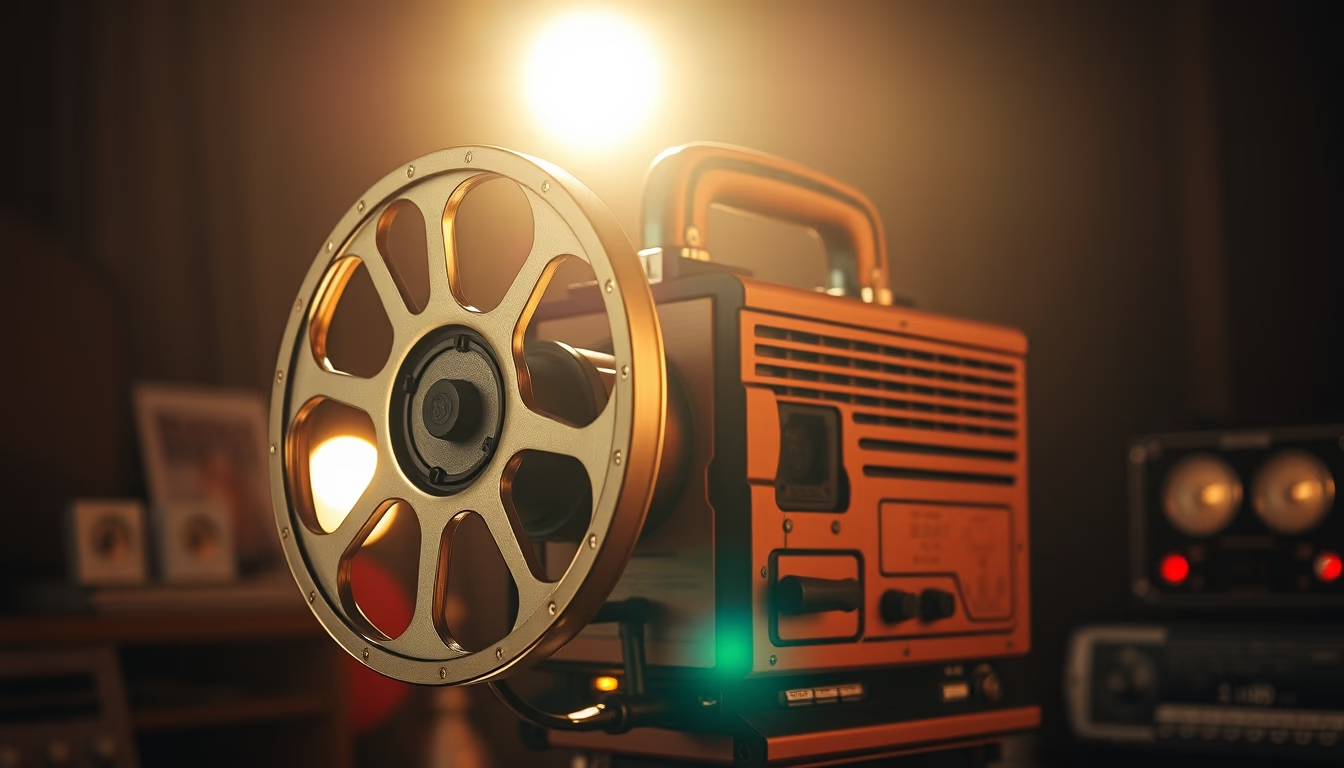
Imax theater giant screen
1344×768 · AVIF · CC BY 4.0

IMAX screens, renowned for their monumental size and immersive image quality, are a landmark in global cinema technology.
About this subject
IMAX (Image Maximum) screens are engineered for high-impact cinematic experiences, with dimensions often exceeding 22 meters wide by 16 meters tall, in a rectangular or slightly curved shape. Unlike conventional theaters, IMAX venues use dual-lamp (or laser) projectors and custom lenses to fill the viewer's peripheral vision, creating total immersion. The technology was developed in Canada in the 1960s by Graeme Ferguson, Roman Kroitor, and Robert Kerr, making its public debut at Expo '70 in Osaka with the film 'Tiger Child'. Since then, the IMAX network has grown to over 1,600 screens in 80 countries, with the world's largest screen at the Melbourne IMAX Theatre in Australia, measuring an impressive 32 meters wide by 23 meters high.
The IMAX projection system uses 70 mm film with 15 perforations per frame, resulting in an image area 10 times larger than standard 35 mm film. This approach, combined with 12-channel audio and dedicated subwoofers, delivers visual and sonic fidelity that is a benchmark for blockbusters and documentaries. Films like 'The Dark Knight' and 'Avatar' were partially shot with IMAX cameras, taking full advantage of the screen's resolution and height. In Brazil, IMAX theaters are found in major chains like Cinépolis and UCI, primarily in cities such as São Paulo and Rio de Janeiro.
Interestingly, IMAX is not limited to entertainment. The technology is widely used in educational and scientific documentaries, especially in museums and science centers, due to its ability to present detailed images of landscapes, wildlife, and natural phenomena. The company also invests in virtual reality and immersive experiences for theme parks. Recent advancements include IMAX with Laser, which offers higher contrast, brightness, and color gamut, eliminating the need for traditional projectors and reducing film wear. Despite competition from technologies like Dolby Cinema, IMAX maintains its status as a synonym for giant screens and cinematic immersion.
Frequently Asked Questions
What is the typical size of an IMAX screen?
Standard IMAX screens are about 22 meters wide by 16 meters tall, but the world's largest, in Melbourne, measures 32 meters wide by 23 meters high.
How does IMAX projection work?
The system uses 70 mm film with 15 perforations per frame, yielding an image area 10 times larger than 35 mm. Dual (or laser) projectors ensure brightness and sharpness, while 12-channel audio provides immersive sound.
Which films were shot with IMAX cameras?
Films like 'The Dark Knight' (2008) and 'Avatar' (2009) used IMAX cameras for select scenes, exploiting the screen's resolution and height for maximum visual impact.
Direct URL
https://pub-c7d6a6ea828543ac903a74a341ccb2e1.r2.dev/imagens/imax-theater-giant-screen-macro-closeup-p2.avifHow to credit
Include a visible link back to UtilizAí. Copy one of the snippets below:
<a href="https://xn--utiliza-eza.com/en/midia/imagens/imax-theater-giant-screen-macro-closeup-p2">Imax theater giant screen</a> by <a href="https://xn--utiliza-eza.com">UtilizAí</a>, licensed under <a href="https://creativecommons.org/licenses/by/4.0/">CC BY 4.0</a>.
[Imax theater giant screen](https://xn--utiliza-eza.com/en/midia/imagens/imax-theater-giant-screen-macro-closeup-p2) by [UtilizAí](https://xn--utiliza-eza.com), CC BY 4.0
License: CC-BY-4.0