Illustrated postcard 1900
1344×768 · AVIF · CC BY 4.0

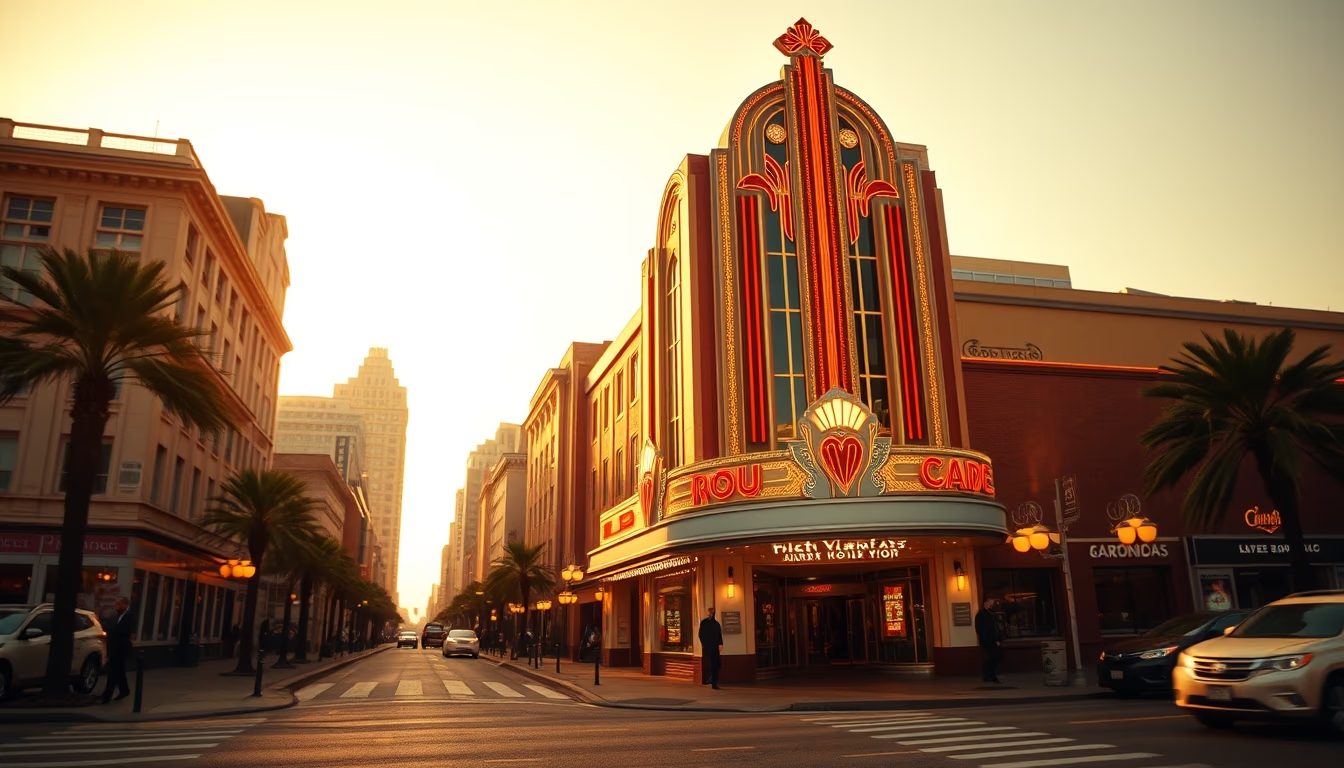
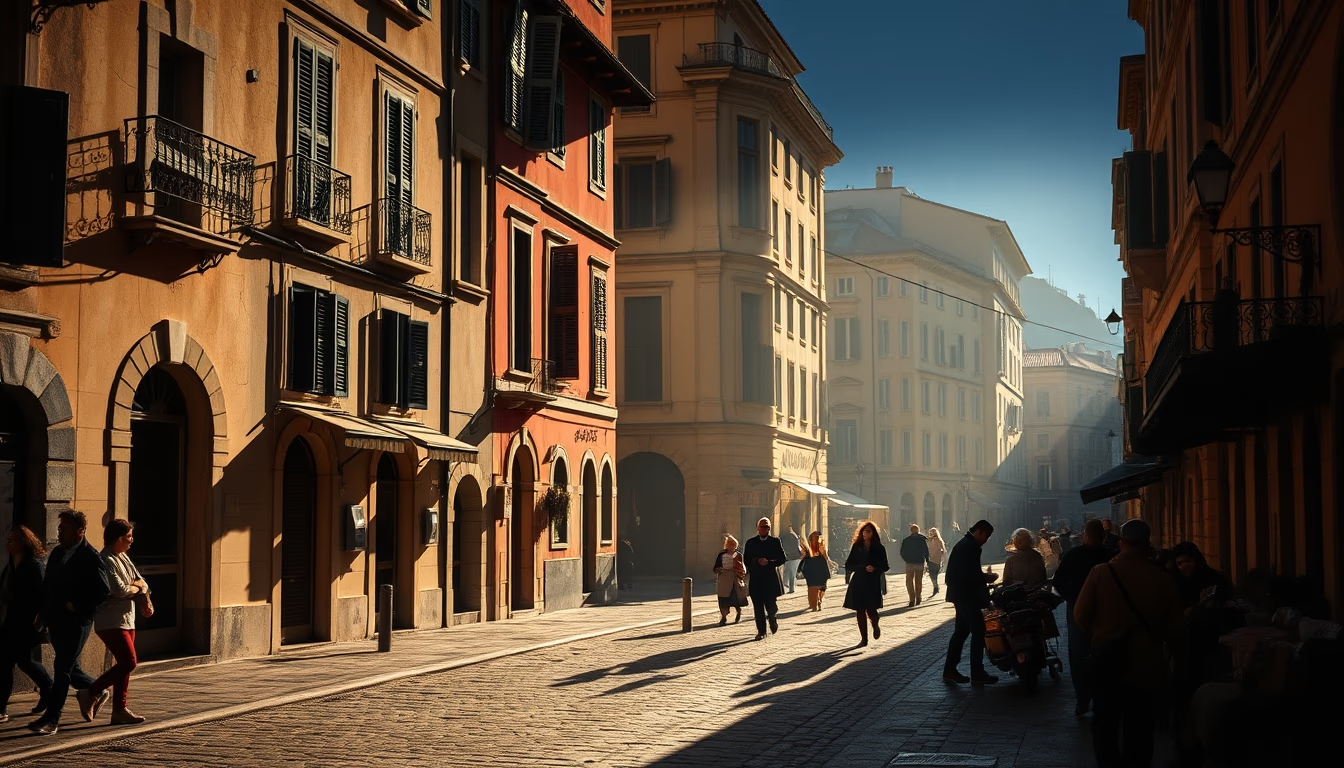
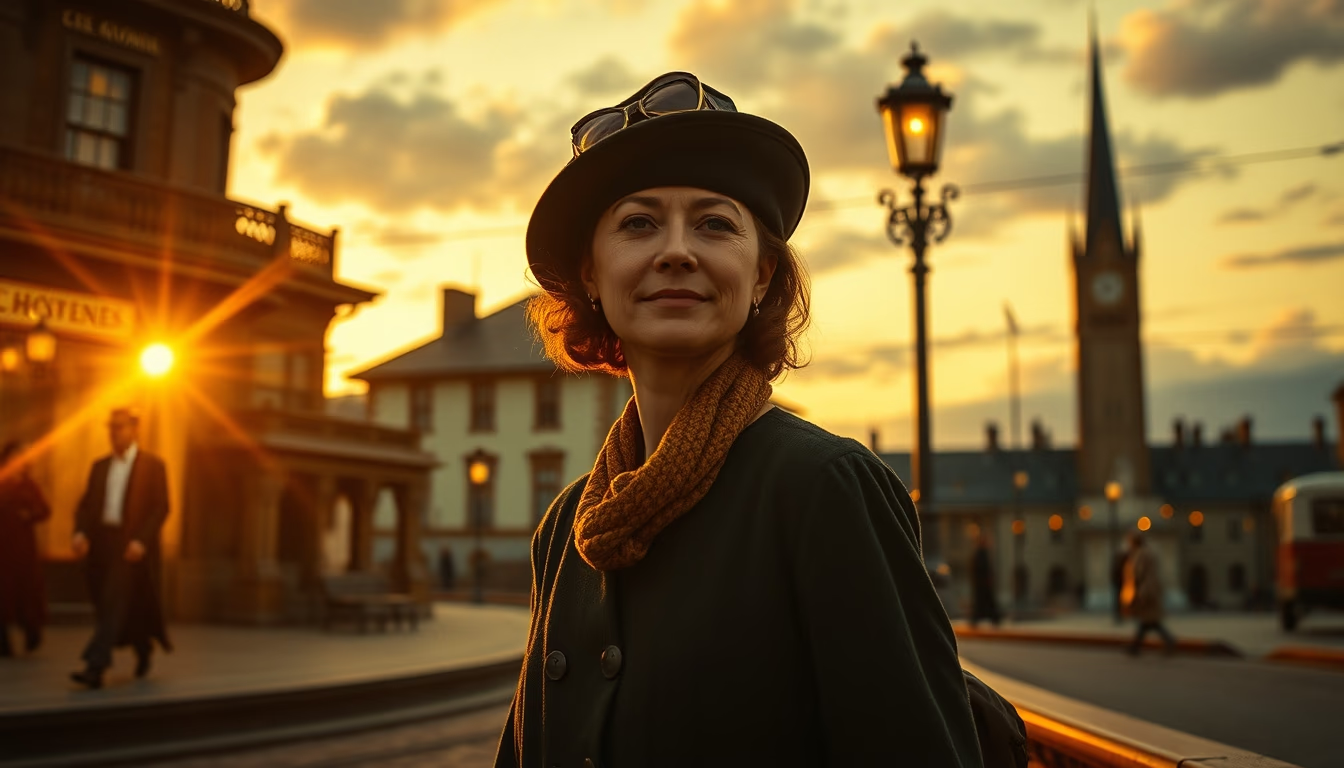
Illustrated postcards from the year 1900 mark the peak of the golden age of postcards, revealing customs, landscapes, and graphic advances of the early 20th century.
About this subject
Illustrated postcards exploded in popularity between 1890 and 1910, especially in the year 1900, when the Universal Exposition in Paris boosted demand for travel images and graphic novelties. Mass production was made possible by chromolithography, which allowed colorful and detailed prints at low cost, and collotype, which reproduced photographs with high fidelity. Companies like Raphael Tuck & Sons in England and Detroit Publishing Company in the United States dominated the market, employing artists and photographers to create thematic series.
Common themes included urban and rural views, monuments, genre scenes, humor, political propaganda, and even veiled eroticism. Postcards served as visual calling cards of cities and travel souvenirs, but were also used for everyday correspondence, often with short messages and already standardized addressing. The exchange of postcards became a global hobby, fueling a market of collectors and specialized publishers.
In Brazil, postcards from 1900 recorded the growth of cities like Rio de Janeiro and São Paulo, portraying urban modernization, trams, coffeehouses, and the tropical belle époque. The presence of European immigrants, especially Italians and Germans, influenced the aesthetics and themes of the cards, which often mixed national symbols with international references. Collecting vintage postcards, known as deltiology, still preserves this rich visual and sociological archive from the period.
Frequently Asked Questions
Why are postcards from 1900 so highly valued by collectors?
They represent the peak of the 'golden age of postcards', with limited editions, handcrafted printing techniques, and unique historical themes such as world fair records and cities that often changed dramatically afterwards.
What printing techniques were used to color vintage postcards?
Chromolithography was the main technique, using multiple lithographic stones for each color. Collotype, based on gelatin, was also used to reproduce photographs with continuous tones, often hand-colored later.
How were postcards used socially at the turn of the 20th century?
Besides travel souvenirs, they served as calling cards, invitations, advertisements, and even love letters. Delivery was fast, with several daily pickups, and people wrote short messages on the back, which often already had the address printed.
Direct URL
https://pub-c7d6a6ea828543ac903a74a341ccb2e1.r2.dev/imagens/illustrated-postcard-1900-magazine-editorial-fresh3.avifHow to credit
Include a visible link back to UtilizAí. Copy one of the snippets below:
<a href="https://xn--utiliza-eza.com/en/midia/imagens/illustrated-postcard-1900-magazine-editorial-fresh3">Illustrated postcard 1900</a> by <a href="https://xn--utiliza-eza.com">UtilizAí</a>, licensed under <a href="https://creativecommons.org/licenses/by/4.0/">CC BY 4.0</a>.
[Illustrated postcard 1900](https://xn--utiliza-eza.com/en/midia/imagens/illustrated-postcard-1900-magazine-editorial-fresh3) by [UtilizAí](https://xn--utiliza-eza.com), CC BY 4.0
License: CC-BY-4.0