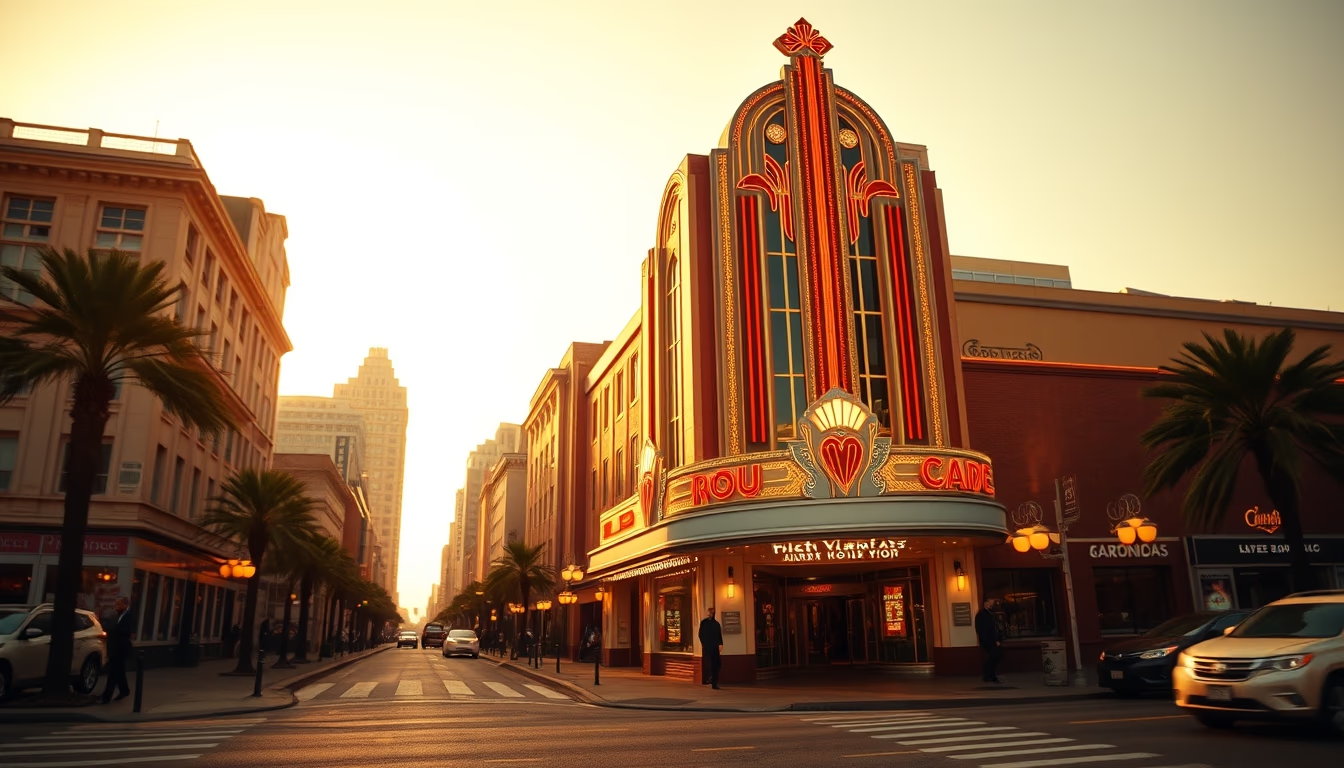
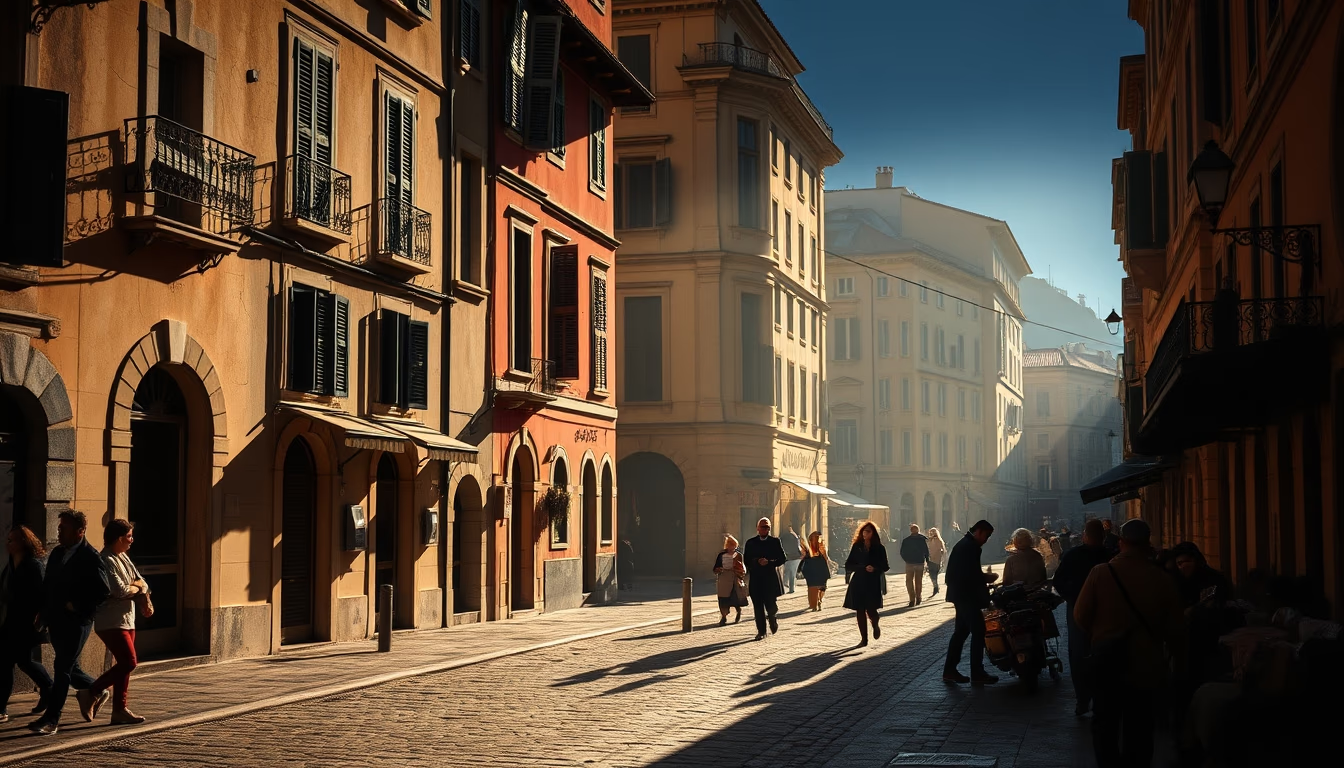
Illustrated postcard 1900
1344×768 · AVIF · CC BY 4.0
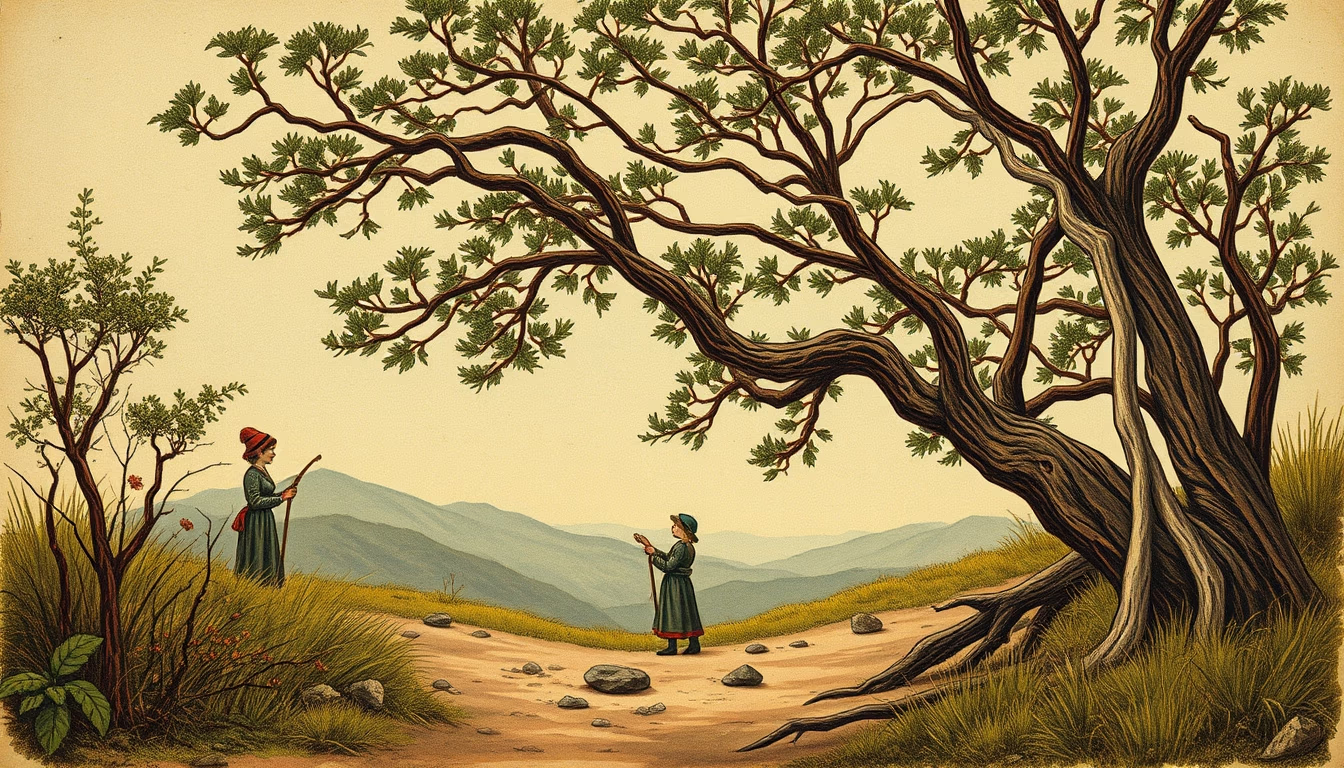
Illustrated postcards from the early 20th century reveal the aesthetics and customs of the Belle Époque, becoming collectibles and historical memory.
About this subject
Illustrated postcards reached their peak between 1890 and 1910, an era known as the Golden Age of Postcards. Driven by improved printing techniques such as chromolithography, these cards circulated en masse, serving both personal correspondence and the dissemination of landscapes, monuments, and human types. In Brazil, the trend arrived with the urban expansion of Rio de Janeiro and São Paulo, recording streets, trams, and buildings that today are part of cultural heritage.
Production involved artists who illustrated picturesque scenes, from rural daily life to natural beauties, often hand-colored or through mechanical processes. Print runs reached thousands of copies, sold in stationery stores and kiosks. Postcards also served advertising and political purposes, spreading ideals of progress and civilization.
Today, these items are valuable for historians and collectors, as they offer visual records of past eras, fashions, architectures, and even spelling errors and curious details. The preservation of these images in digital collections allows research on global visual memory, connecting places like Europe and the Americas through a shared cultural practice.
Interestingly, the exchange of postcards encouraged literacy and contact between different social classes, since anyone could send a brief message at low cost. Popularity declined after World War I and with the advent of the telephone, but the aesthetic and documentary legacy remains.
Frequently Asked Questions
How were illustrated postcards produced around 1900?
They were made using chromolithography or lithography, often with hand coloring. Images were drawn or photographed, then transferred to stone or metal plates, enabling mass print runs.
What themes were common in turn-of-the-century postcards?
Themes included urban and rural landscapes, monuments, ethnic and regional types, work scenes, popular festivals, greeting cards, and tourist propaganda. Humorous and political series also existed.
Why are old postcards considered important for history?
They serve as visual documents of an era, recording architecture, clothing, transportation, and customs. They are sources for historians of culture, art, and communication, as well as collectible objects.
Direct URL
https://pub-c7d6a6ea828543ac903a74a341ccb2e1.r2.dev/imagens/illustrated-postcard-1900-documentary-nature-style-fresh5.avifHow to credit
Include a visible link back to UtilizAí. Copy one of the snippets below:
<a href="https://xn--utiliza-eza.com/en/midia/imagens/illustrated-postcard-1900-documentary-nature-style-fresh5">Illustrated postcard 1900</a> by <a href="https://xn--utiliza-eza.com">UtilizAí</a>, licensed under <a href="https://creativecommons.org/licenses/by/4.0/">CC BY 4.0</a>.
[Illustrated postcard 1900](https://xn--utiliza-eza.com/en/midia/imagens/illustrated-postcard-1900-documentary-nature-style-fresh5) by [UtilizAí](https://xn--utiliza-eza.com), CC BY 4.0
License: CC-BY-4.0