Ikebana japanese arrangement
1344×768 · AVIF · CC BY 4.0
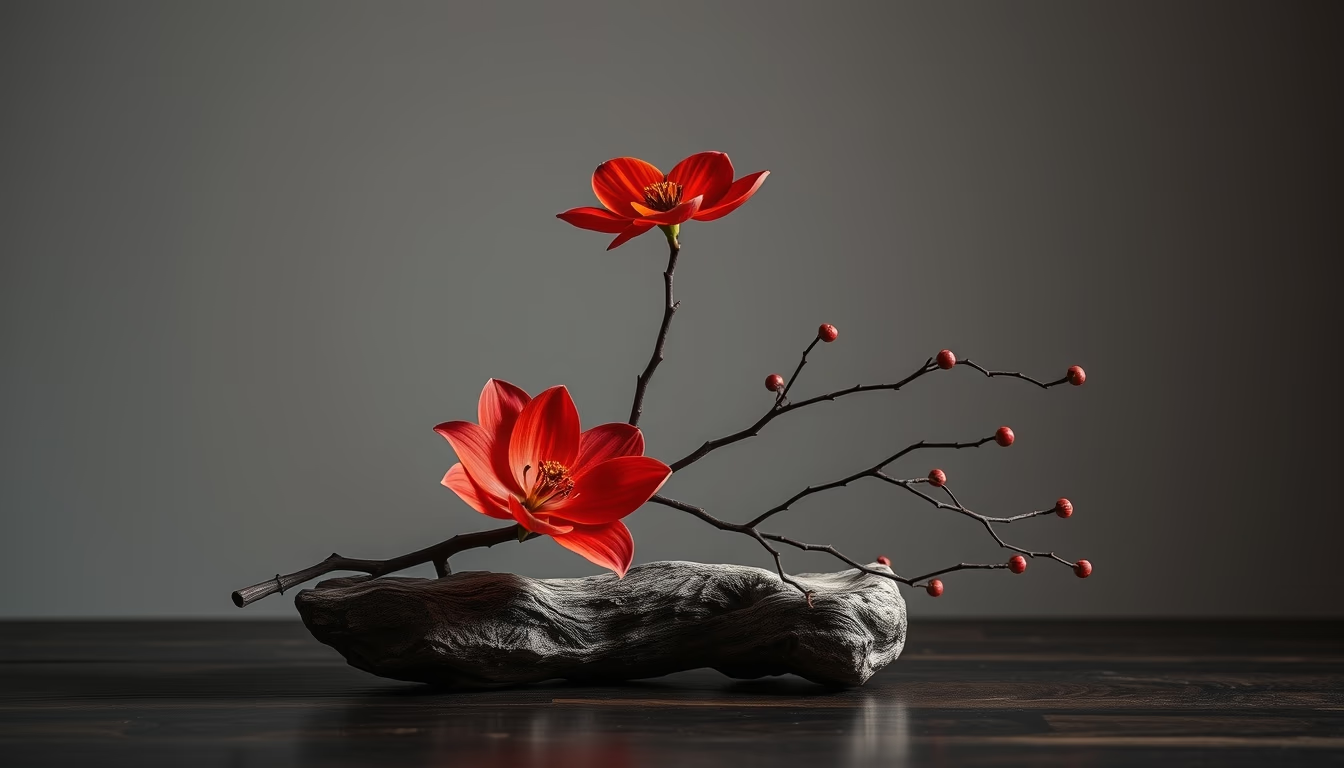
Ikebana, the Japanese art of flower arrangement, combines minimalism, symbolism, and centuries-old technique.
About this subject
Ikebana, also known as kadō (the way of flowers), is a traditional Japanese practice that goes beyond simply arranging flowers. Originating in the 6th century with the introduction of Buddhism to Japan, the art flourished as offerings on altars, evolving into a refined aesthetic emphasizing harmony among natural elements. Unlike Western arrangements that prioritize volume and color, ikebana values simplicity, asymmetry, and empty space (ma), seeking to express the ephemeral beauty of nature.
There are hundreds of ikebana schools, the most famous being Ikenobō, Sōgetsu, and Ohara. Each has distinct philosophies and styles. The classic rikka style (standing flowers) represents a microcosm of the natural landscape, with high branches symbolizing mountains and low elements representing rivers. The more modern jiyūka (free arrangement) allows greater creativity while still following principles such as asymmetry, the use of three main lines (shin, soe, tai), and seasonality.
Practicing ikebana is not just about the arrangement itself; it is an active meditation that develops patience and observation. Materials include not only flowers but also branches, leaves, moss, and even dried objects. Containers can be low vases (moribana) or tall ones (nageire), varying by school. The choice of plants follows the seasonal calendar, such as ume (plum) in winter, sakura in spring, and momiji leaves in autumn, each carrying symbolic meanings (purity, renewal, transience).
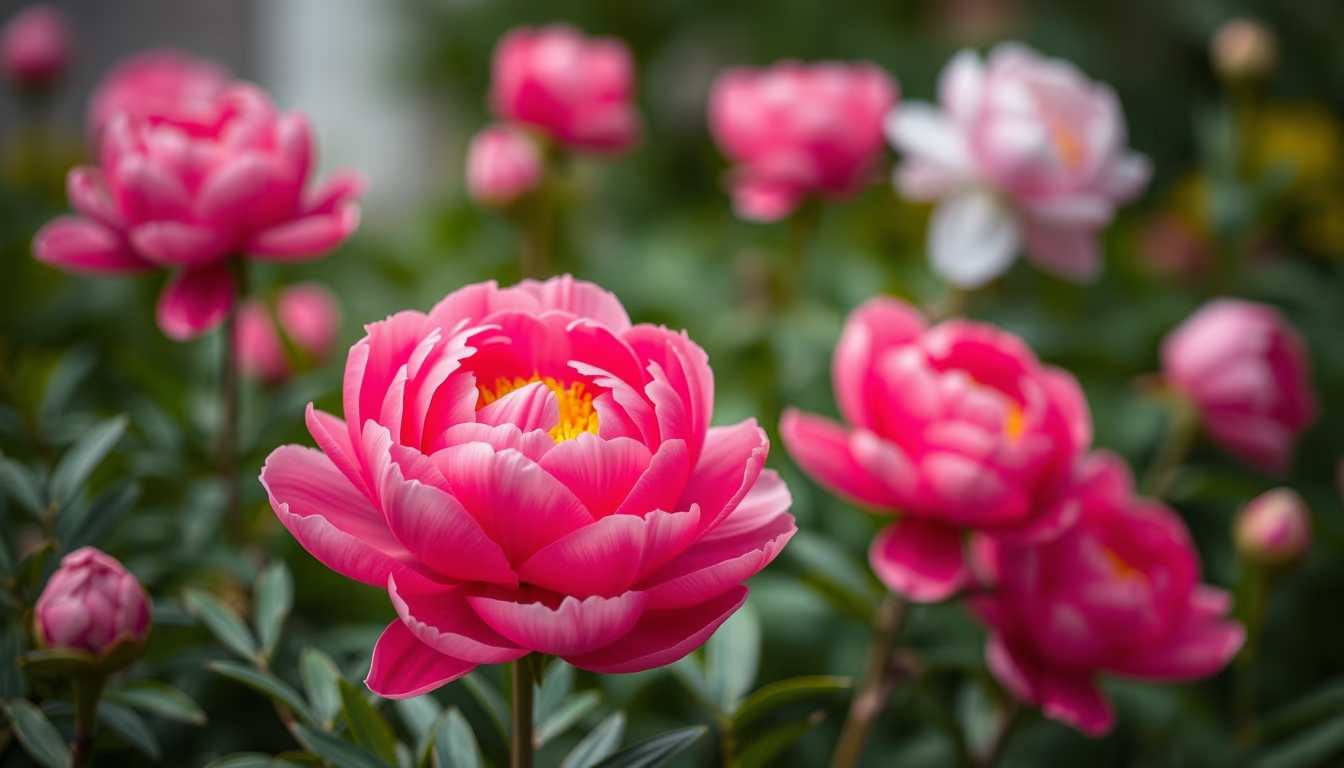
In Japan, ikebana is regarded as one of the traditional arts alongside the tea ceremony and calligraphy. Its influence extends to interior design, architecture, and even photography, as seen in this detailed capture that embodies the essence of a well-balanced arrangement. The practice remains relevant in the 21st century, with global exhibitions and competitions, and is accessible to beginners through classes worldwide.
Frequently Asked Questions
What are the basic principles of ikebana?
Principles include asymmetry, use of empty space (ma), structural lines (shin, soe, tai), and seasonality. Simplicity and harmony among elements are key.
How does ikebana differ from Western flower arrangements?
Ikebana focuses on minimalism, lines, and empty space, while Western arrangements prioritize volume, color, and symmetry. Ikebana also carries strong symbolism and follows traditional schools.
Is formal training necessary to practice ikebana?
While self-study is possible, formal training in schools like Ikenobō or Sōgetsu helps understand the fundamentals and philosophy. Many offer classes for beginners.
Direct URL
https://pub-c7d6a6ea828543ac903a74a341ccb2e1.r2.dev/imagens/ikebana-japanese-arrangement-fine-art-photography-fresh8.avifHow to credit
Include a visible link back to UtilizAí. Copy one of the snippets below:
<a href="https://xn--utiliza-eza.com/en/midia/imagens/ikebana-japanese-arrangement-fine-art-photography-fresh8">Ikebana japanese arrangement</a> by <a href="https://xn--utiliza-eza.com">UtilizAí</a>, licensed under <a href="https://creativecommons.org/licenses/by/4.0/">CC BY 4.0</a>.
[Ikebana japanese arrangement](https://xn--utiliza-eza.com/en/midia/imagens/ikebana-japanese-arrangement-fine-art-photography-fresh8) by [UtilizAí](https://xn--utiliza-eza.com), CC BY 4.0
License: CC-BY-4.0