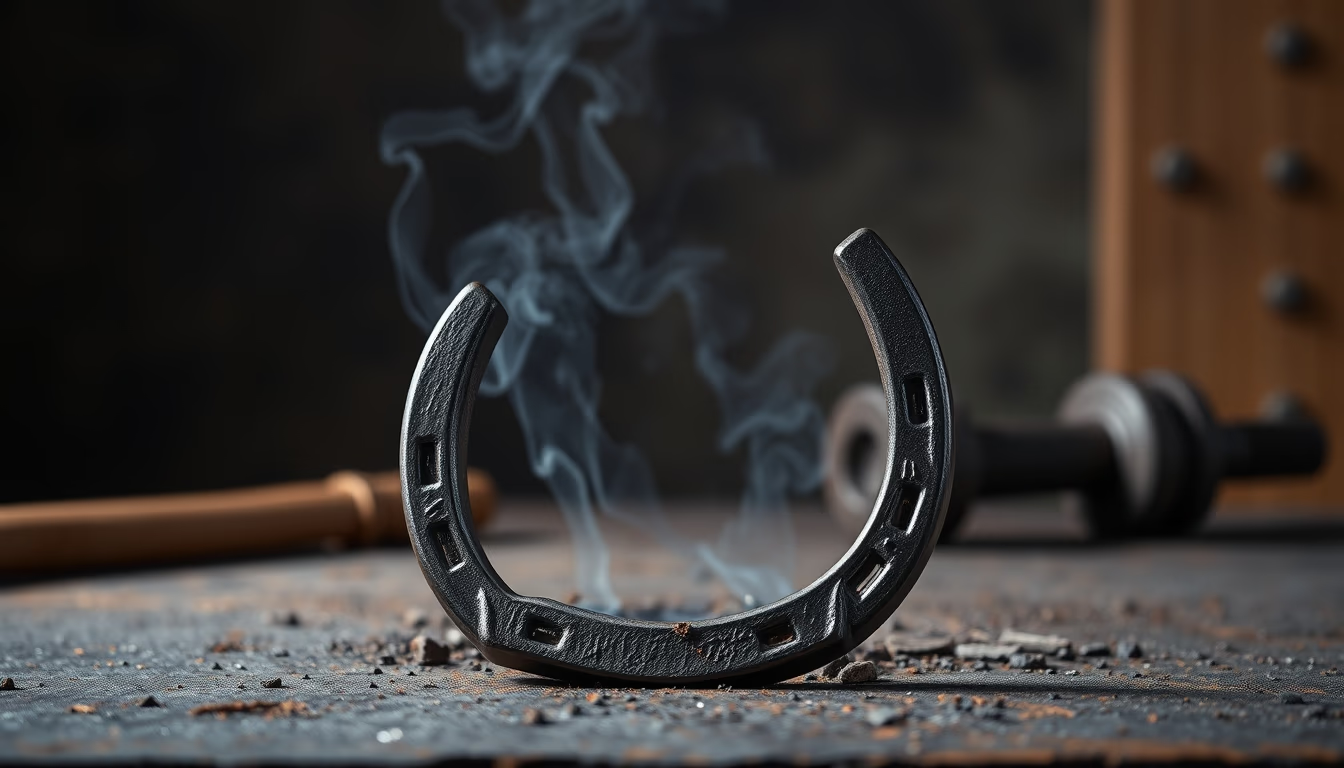
Horse bridle reins
1344×768 · AVIF · CC BY 4.0

Horse bridle reins: a guide on types, materials and use in equestrianism. Learn how to choose proper reins for safety and control.
About this subject
Horse bridle reins are essential components of tack, connecting the rider's hands to the bit in the horse's mouth, enabling communication and direction. There are several types, such as split reins, common in Western riding, allowing individual adjustment, and romal reins, typical of vaquero style, forming a single piece. In English riding, closed reins, usually stitched or buckled, are predominant, offering continuous grip.
Common materials include leather, synthetic rope, and fabric. Leather, traditional and durable, requires maintenance to prevent drying. Rope reins, popular in barefoot and roping disciplines, provide better grip in wet conditions. Thickness and braiding also affect comfort and control. Reins with knots or thicker braids are suitable for sensitive horses, while smooth ones are preferred for precision.
The correct choice of reins depends on the discipline, rider level, and horse sensitivity. In dressage tests, fine and flexible reins allow greater refinement; in jumping or racing, firmer reins ensure stability. Historically, the use of reins dates back to antiquity, with evidence of primitive bits in the Bronze Age. The evolution of materials and designs reflects the constant search for better communication between human and horse.
Fun fact: in some cultures, such as in Argentina, bridle reins are decorated with silver, highlighting the aesthetic and cultural importance of the equipment. Regardless of style, proper adjustment and maintenance are crucial for the animal's well-being and rider safety.
Frequently Asked Questions
What is the difference between split reins and closed reins?
Split reins are two separate pieces, one for each hand, common in Western styles, allowing individual adjustment. Closed reins are a single piece, used in English riding, keeping hands in a fixed position.
How to choose the ideal material for bridle reins?
Leather is traditional and durable but requires care. Synthetic rope reins are lightweight and moisture-resistant, ideal for roping. Fabric offers good grip. The choice depends on discipline and weather conditions.
Should reins be adjusted according to the horse?
Yes, length and thickness should fit the horse's head size and sensitivity. Very thin reins can hurt the mouth; very thick ones hinder communication. Proper adjustment improves comfort and performance.
Direct URL
https://pub-c7d6a6ea828543ac903a74a341ccb2e1.r2.dev/imagens/horse-bridle-reins-commercial-product-photography-fresh13.avifHow to credit
Include a visible link back to UtilizAí. Copy one of the snippets below:
<a href="https://xn--utiliza-eza.com/en/midia/imagens/horse-bridle-reins-commercial-product-photography-fresh13">Horse bridle reins</a> by <a href="https://xn--utiliza-eza.com">UtilizAí</a>, licensed under <a href="https://creativecommons.org/licenses/by/4.0/">CC BY 4.0</a>.
[Horse bridle reins](https://xn--utiliza-eza.com/en/midia/imagens/horse-bridle-reins-commercial-product-photography-fresh13) by [UtilizAí](https://xn--utiliza-eza.com), CC BY 4.0
License: CC-BY-4.0