Home automation dashboard
1344×768 · AVIF · CC BY 4.0
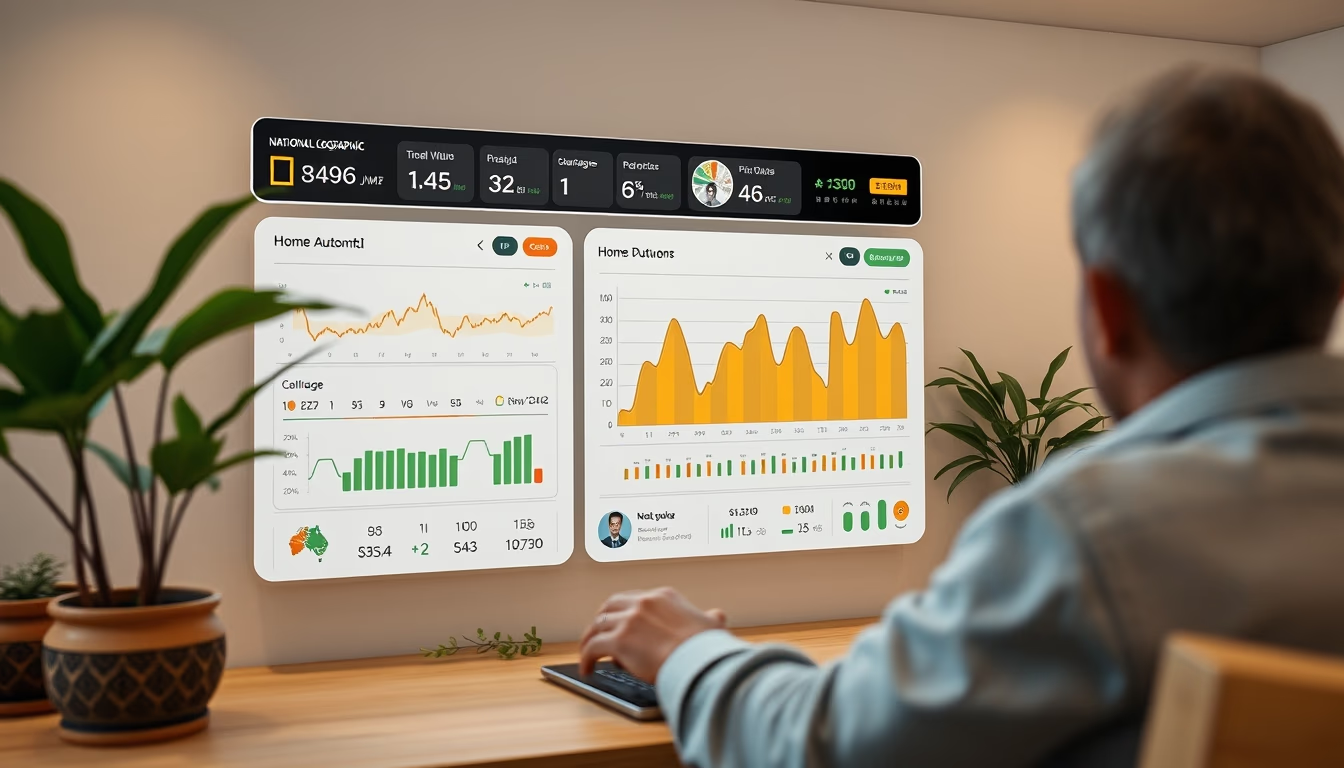
A home automation dashboard integrates smart devices into a centralized interface for efficient home control.
About this subject
A home automation dashboard is the central interface that consolidates control of various smart devices in a household. It allows monitoring and managing systems such as lighting, climate control, security, appliances, and entertainment from a single screen, whether on a tablet, smartphone, or fixed wall display. This technology has become essential for connected homes, offering convenience, energy savings, and personalization. Platforms like Home Assistant, OpenHAB, and commercial ecosystems such as Amazon Alexa, Google Home, and Apple HomeKit power these dashboards. The global smart home market is projected to reach $135 billion by 2025, driven by IoT adoption and the pursuit of energy efficiency.
Modern dashboards feature intuitive interface design, often with real-time graphs, customizable alerts, and voice integration. A common feature is scene creation, such as "night mode" that turns off lights and locks doors automatically. Security is a key concern: dashboards encrypt data and require multifactor authentication to prevent unauthorized access. Moreover, the trend toward autonomous homes uses artificial intelligence to learn routines and suggest optimizations, like adjusting the thermostat based on weather forecasts.
In Brazil, home automation is growing especially in urban areas, notably in cities such as São Paulo and Brasília. Integration with voice assistants in Portuguese and the popularity of devices compatible with the 127V/220V power grid expand access. Interestingly, the first home automation system was developed in the 1970s by X10, which used power line wiring to send control signals. Today's dashboards have evolved to include predictive intelligence and connectivity via Wi-Fi, Bluetooth, or Zigbee.
Frequently Asked Questions
What is a home automation dashboard?
It is a centralized interface that allows you to control and monitor smart devices in a home, such as lights, thermostats, and cameras, from a single screen or app.
What are the main benefits of using a smart home dashboard?
It offers convenience by consolidating controls, energy savings through scheduled automations, enhanced security with real-time alerts, and personalization of daily routines.
What connectivity technologies are common in dashboards?
Wi-Fi, Bluetooth, Zigbee, and Z-Wave are the most common, enabling communication between devices from different manufacturers and integration with voice assistants.
Direct URL
https://pub-c7d6a6ea828543ac903a74a341ccb2e1.r2.dev/imagens/home-automation-dashboard-national-geographic-style-p6.avifHow to credit
Include a visible link back to UtilizAí. Copy one of the snippets below:
<a href="https://xn--utiliza-eza.com/en/midia/imagens/home-automation-dashboard-national-geographic-style-p6">Home automation dashboard</a> by <a href="https://xn--utiliza-eza.com">UtilizAí</a>, licensed under <a href="https://creativecommons.org/licenses/by/4.0/">CC BY 4.0</a>.
[Home automation dashboard](https://xn--utiliza-eza.com/en/midia/imagens/home-automation-dashboard-national-geographic-style-p6) by [UtilizAí](https://xn--utiliza-eza.com), CC BY 4.0
License: CC-BY-4.0