Holi powder colors
1344×768 · AVIF · CC BY 4.0
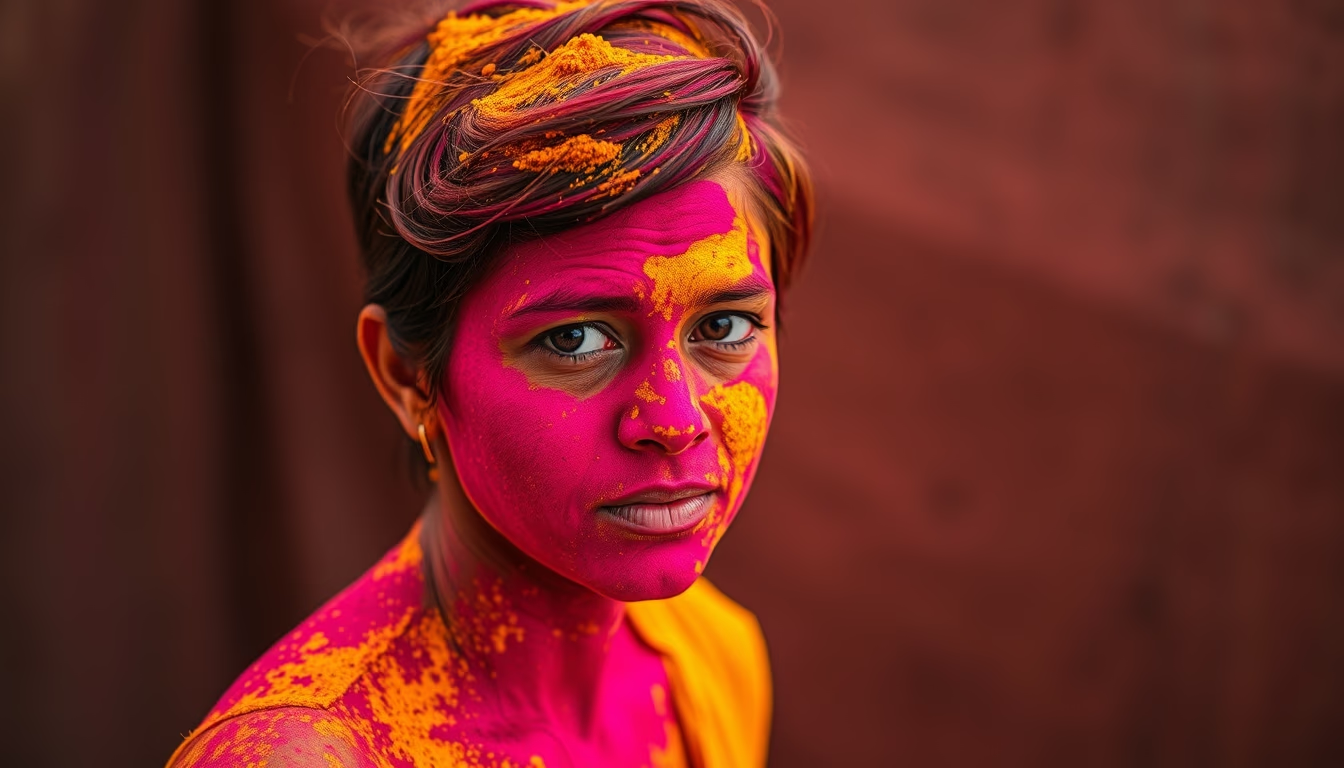
The colorful powders of Holi, known as gulal and abir, are the heart of the Indian festival of colors, carrying deep cultural and religious meanings.
About this subject
Holi, the Hindu spring festival, is famous for the use of colored powders called gulal (dry) or abir (wet). Traditionally, these powders were made from natural ingredients such as flowers, herbs, and spices. For instance, yellow came from turmeric or chickpea flour, red from hibiscus or sandalwood, and green from neem leaves. Today, many powders are synthetic to ensure brighter colors, but there is a growing movement toward eco-friendly and organic options.
Each color carries symbolism: red represents love and fertility, yellow is the color of turmeric and purity, blue recalls the god Krishna, green symbolizes spring, and pink is associated with joy. During Holi, people throw these powders at each other, sing, and dance, celebrating the victory of good over evil and the arrival of the harvest. The act of coloring everyone with the same hues breaks social and economic barriers.
The production of Holi powder involves grinding cornstarch or rice flour with dyes. In India, street vendors prepare homemade mixtures, while large brands industrialize the product. It is common for the powder to be scented with essential oils. However, synthetic versions may contain toxic substances like lead or mica, harmful to skin and the environment. Therefore, certified natural powders are recommended, especially for children.
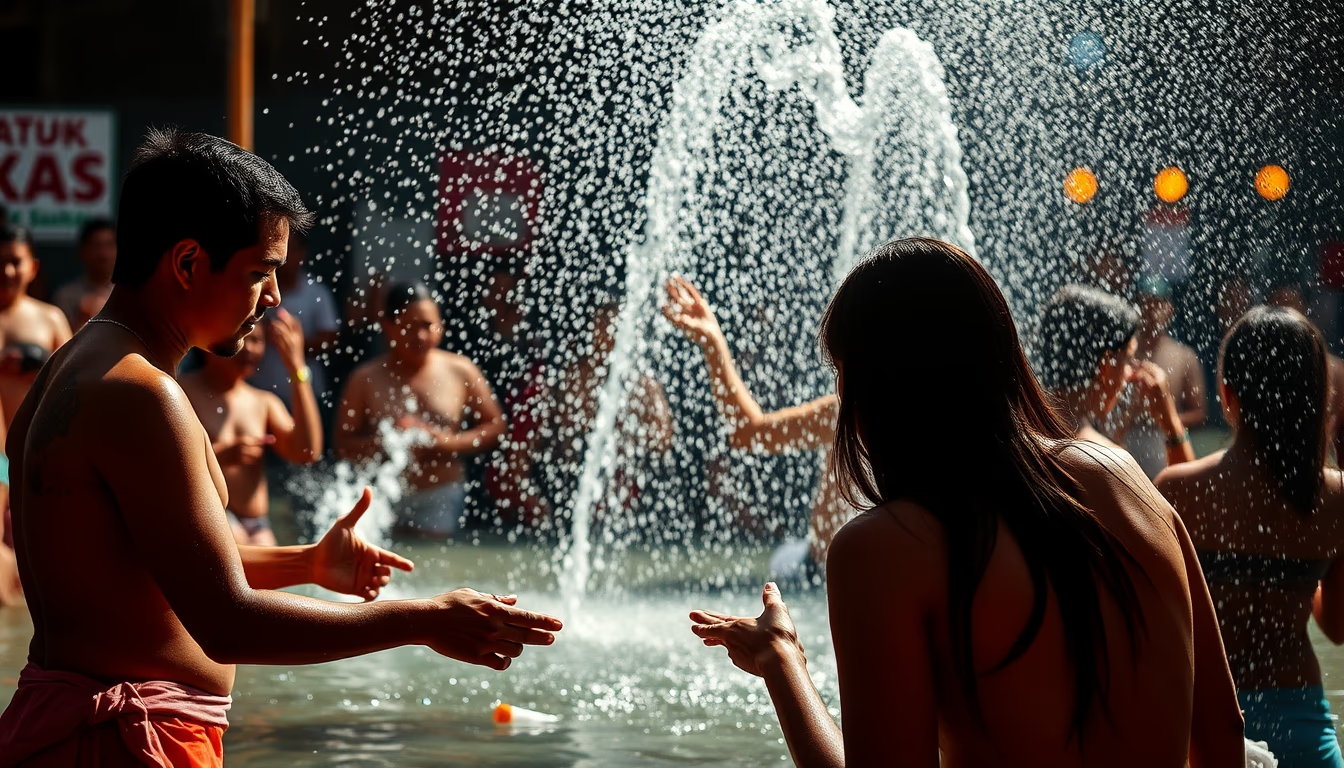
Beyond India, Holi has spread globally, with celebrations in countries such as the United States, Brazil, and the United Kingdom. At these events, colored powders are sold in packets or distributed at stations. The experience of being covered in vibrant colors has become a cultural icon, symbolizing joy and renewal.
Frequently Asked Questions
What is Holi powder made of?
Holi powder, known as gulal or abir, is a colored pigment. Traditionally it is made from cornstarch or rice flour mixed with dyes from flowers and spices. Today, synthetic versions are also common.
What do the colors of Holi represent?
Each color has symbolism: red for love and fertility, yellow for purity and turmeric, blue for the god Krishna, green for spring, and pink for joy. Throwing colors signifies celebrating life and breaking social barriers.
Is Holi powder safe for skin and the environment?
Natural organic powders are safe, but synthetic ones may contain harmful chemicals like lead and mica. It is best to use certified natural powders or make your own to avoid allergies and pollution.
Direct URL
https://pub-c7d6a6ea828543ac903a74a341ccb2e1.r2.dev/imagens/holi-powder-colors-documentary-photography-fresh9.avifHow to credit
Include a visible link back to UtilizAí. Copy one of the snippets below:
<a href="https://xn--utiliza-eza.com/en/midia/imagens/holi-powder-colors-documentary-photography-fresh9">Holi powder colors</a> by <a href="https://xn--utiliza-eza.com">UtilizAí</a>, licensed under <a href="https://creativecommons.org/licenses/by/4.0/">CC BY 4.0</a>.
[Holi powder colors](https://xn--utiliza-eza.com/en/midia/imagens/holi-powder-colors-documentary-photography-fresh9) by [UtilizAí](https://xn--utiliza-eza.com), CC BY 4.0
License: CC-BY-4.0