Holi powder colors
1344×768 · AVIF · CC BY 4.0
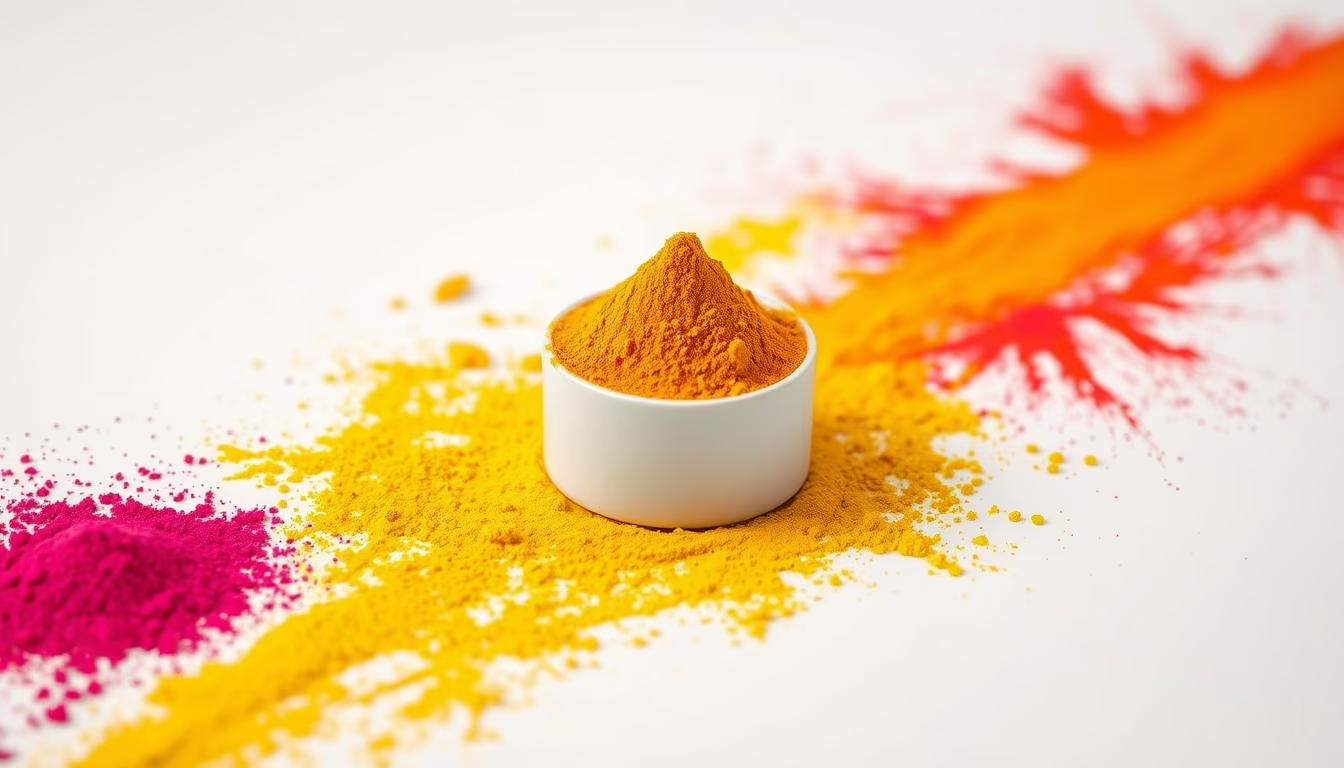
Vibrant colored powders, known as gulal, are essential in the Holi festival, celebrating spring and the victory of good over evil in India.
About this subject
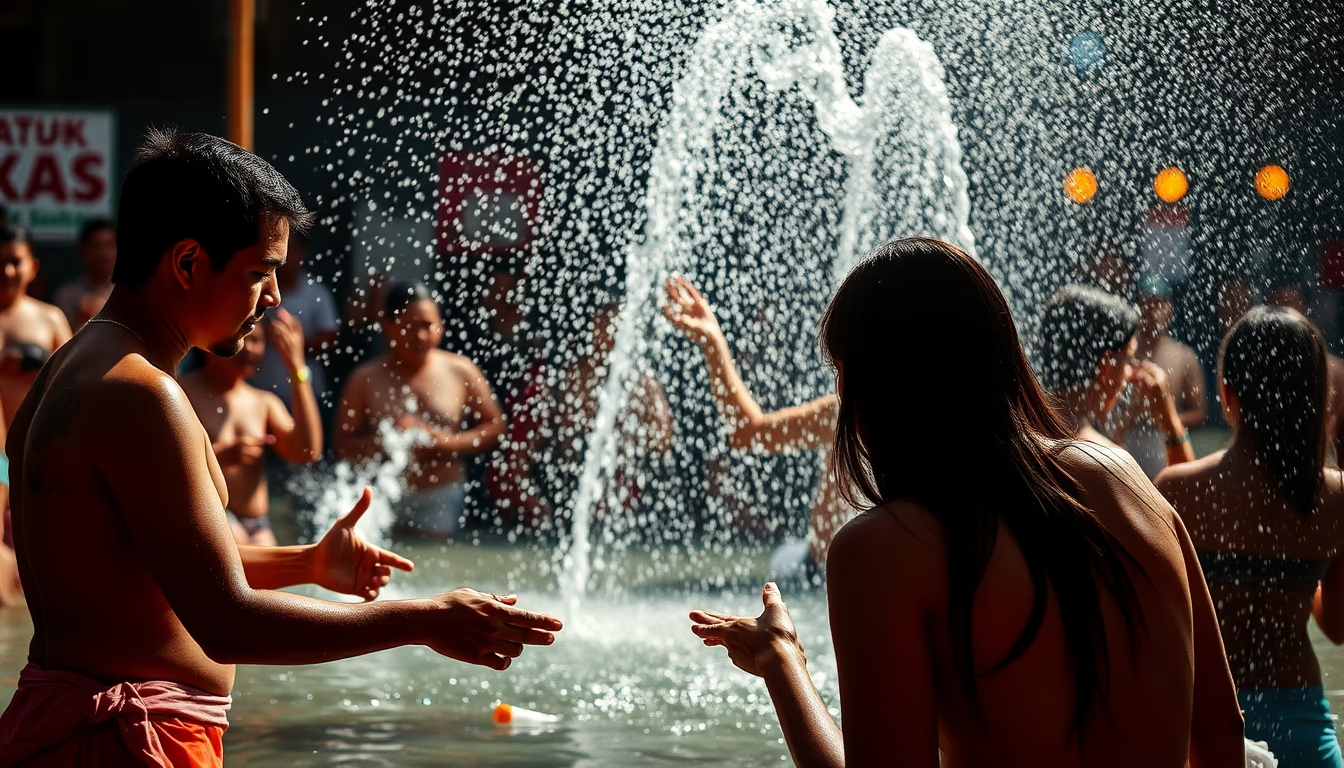
The Holi festival, also known as the Festival of Colors, is one of India's most iconic celebrations, marking the end of winter and the arrival of spring. During the event, participants throw colored powders called gulal at each other, which traditionally were made from plants such as bougainvillea, turmeric, and sandalwood. These powders symbolize joy, love, and the breaking down of social barriers.
Each color carries significance: red represents love and fertility, blue the divinity of Krishna, green nature and harvest, and yellow the turmeric used in rituals. During Holi, people gather in streets and temples, sing, dance, and spread these colors without distinction of caste, religion, or age. The tradition dates back to mythological stories like that of Prahlada and Holika, symbolizing the victory of good over evil.
Nowadays, Holi powders are widely produced in both natural and synthetic versions. Natural ones use flower and root extracts, while synthetics offer a broader range of vibrant shades. However, safety concerns have led to regulations banning the use of toxic dyes in some regions. In India, the gulal market moves millions of dollars annually, with sales peaking in the weeks before the festival.
Holi has crossed borders and is celebrated by Indian communities worldwide, including in Brazil, the United States, and the United Kingdom. Public festivals gather thousands of people, adapting the tradition with electronic music and color runs. The global popularity reflects the universal appeal of a celebration that promotes unity and renewal.
Frequently Asked Questions
What are Holi powders?
They are colored powders, traditionally called gulal, used during the Holi festival in India to throw at each other as symbols of joy and renewal.
Do the colors of Holi powders have specific meanings?
Yes, each color represents something: red for love and fertility, blue for the deity Krishna, green for nature, and yellow for ritualistic turmeric.
How are Holi powders traditionally made?
Traditionally, they are made from plants like bougainvillea, turmeric, and sandalwood, ground and mixed with water or oils to create the colors.
Direct URL
https://pub-c7d6a6ea828543ac903a74a341ccb2e1.r2.dev/imagens/holi-powder-colors-commercial-product-photography-fresh17.avifHow to credit
Include a visible link back to UtilizAí. Copy one of the snippets below:
<a href="https://xn--utiliza-eza.com/en/midia/imagens/holi-powder-colors-commercial-product-photography-fresh17">Holi powder colors</a> by <a href="https://xn--utiliza-eza.com">UtilizAí</a>, licensed under <a href="https://creativecommons.org/licenses/by/4.0/">CC BY 4.0</a>.
[Holi powder colors](https://xn--utiliza-eza.com/en/midia/imagens/holi-powder-colors-commercial-product-photography-fresh17) by [UtilizAí](https://xn--utiliza-eza.com), CC BY 4.0
License: CC-BY-4.0