Greenhouse interior plants
1344×768 · AVIF · CC BY 4.0
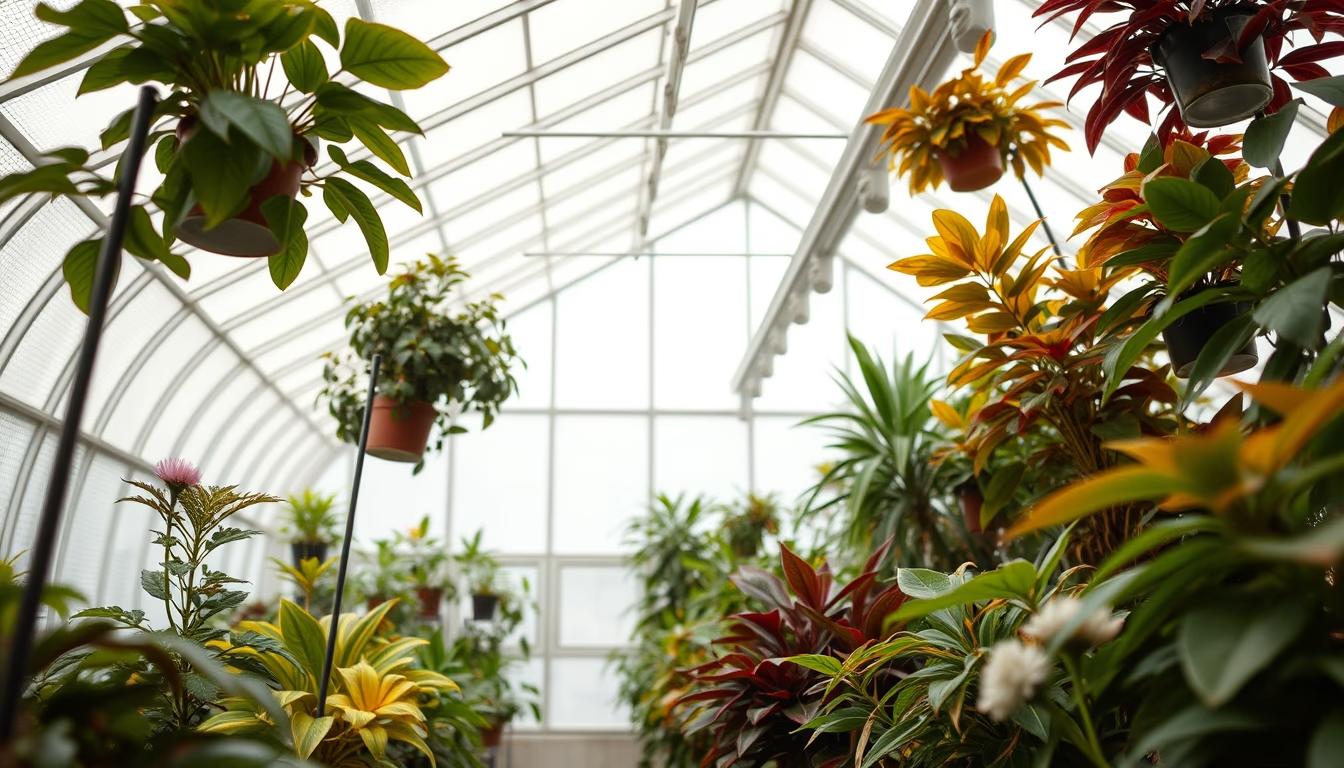
Agricultural greenhouses transform food production by creating controlled microclimates, enabling intensive cultivation and protection against weather extremes worldwide.
About this subject
Agricultural greenhouses, also known as glasshouses or polytunnels, are structures that allow plants to be grown in controlled environments. Their history dates back to ancient Rome, where primitive greenhouses made of mica and stone were used to grow cucumbers out of season. Today, modern greenhouses use materials like glass, polycarbonate and plastic, combined with automated systems for irrigation, ventilation and heating.
These structures are vital for intensive agriculture, especially in regions with harsh climates. Countries such as the Netherlands, Spain and Israel lead in greenhouse production, achieving high yields per square meter. In Brazil, the use of greenhouses is growing rapidly in the production of vegetables, flowers and seedlings, mainly in the Southeast and South. Greenhouse technology enables hydroponic cultivation, which saves water and nutrients, and precise control of light and temperature, boosting productivity.
Beyond food production, greenhouses play a key role in agricultural research and the preservation of endangered species. They also reduce the use of pesticides, as the enclosed environment limits pest incidence. With the increasing demand for sustainable food, greenhouses are becoming ever more important for global food security. The world's largest greenhouse, the Eden Project in the UK, exemplifies how these structures can integrate science, education and tourism.
Frequently Asked Questions
How does an agricultural greenhouse work?
A greenhouse works by creating a controlled microclimate, with adjustable temperature, humidity and light. It captures sunlight through transparent coverings and may include automated heating, ventilation and irrigation systems to optimize plant growth.
What are the main advantages of greenhouse cultivation?
Advantages include protection against weather, pests and diseases; higher yield per area; possibility of off-season cultivation; efficient use of water and nutrients; and reduced pesticide use.
What types of plants can be grown in greenhouses?
Almost any plant can be grown, but the most common are vegetables (tomato, lettuce, bell pepper), flowers (roses, orchids), fruit seedlings and medicinal plants. Each species requires specific temperature and light conditions.
Direct URL
https://pub-c7d6a6ea828543ac903a74a341ccb2e1.r2.dev/imagens/greenhouse-interior-plants-national-geographic-style-p2.avifHow to credit
Include a visible link back to UtilizAí. Copy one of the snippets below:
<a href="https://xn--utiliza-eza.com/en/midia/imagens/greenhouse-interior-plants-national-geographic-style-p2">Greenhouse interior plants</a> by <a href="https://xn--utiliza-eza.com">UtilizAí</a>, licensed under <a href="https://creativecommons.org/licenses/by/4.0/">CC BY 4.0</a>.
[Greenhouse interior plants](https://xn--utiliza-eza.com/en/midia/imagens/greenhouse-interior-plants-national-geographic-style-p2) by [UtilizAí](https://xn--utiliza-eza.com), CC BY 4.0
License: CC-BY-4.0