Greenhouse interior plants
1344×768 · AVIF · CC BY 4.0
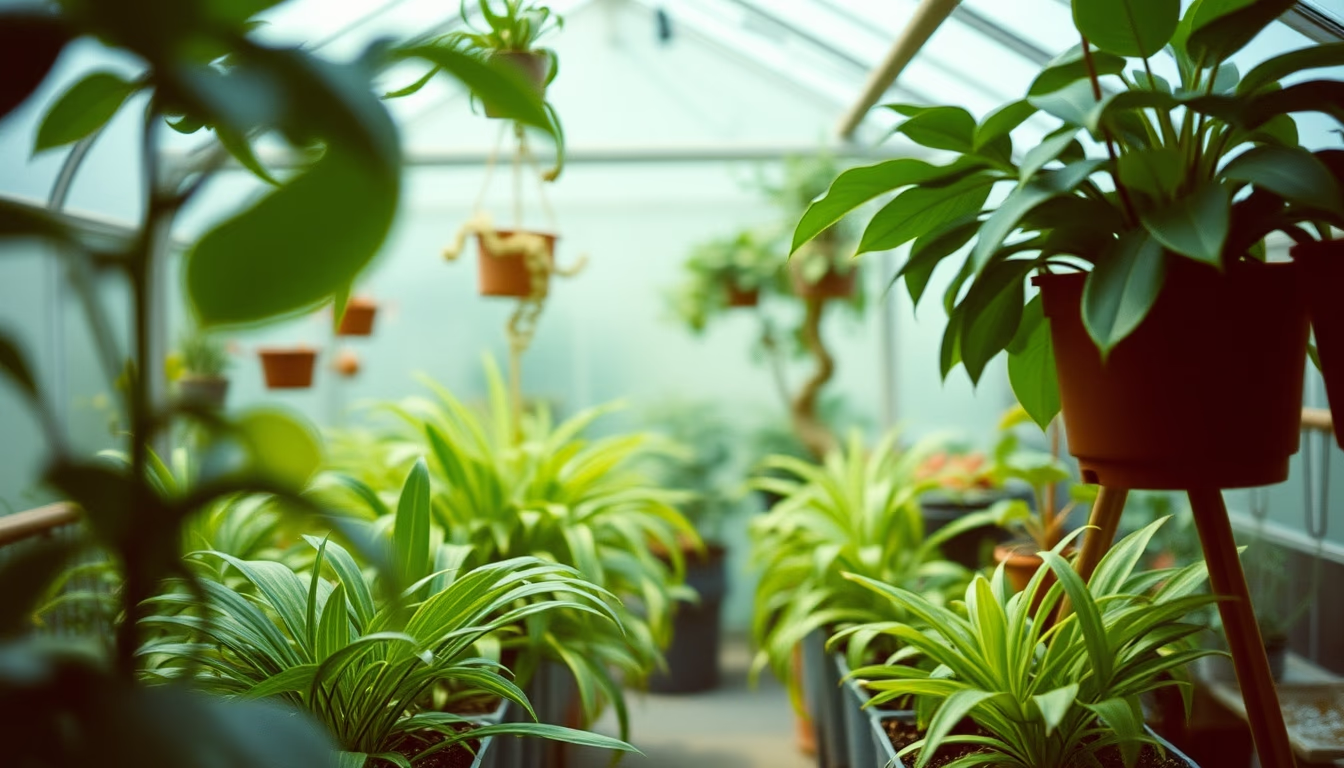
Agricultural greenhouses enable plant cultivation under controlled conditions, crucial for intensive and sustainable food production.
About this subject
The interior of a modern greenhouse reveals an environment carefully designed to maximize plant growth. These structures, typically made of glass or plastic, create a microclimate by regulating temperature, humidity, light, and ventilation. Unlike open-field planting, greenhouses protect crops from weather extremes like frost, heavy rain, and wind, while also reducing pest and disease pressure. This technology is widely used to produce vegetables, ornamental flowers, fruit seedlings, and even medicinal plants.
Greenhouses range from simple models with plastic cover and manual irrigation to high-tech systems with full automation, soil sensors, digital climate control, and hydroponic or aeroponic cultivation. In the Netherlands, a global leader, greenhouses cover thousands of hectares and produce tomatoes, cucumbers, and bell peppers year-round with high efficiency. In Brazil, their use is expanding in regions like the mountainous area of Rio de Janeiro and the South, for crops such as strawberries, lettuce, and herbs.
The economic and environmental benefits are significant. Protected cultivation allows off-season harvests, boosting farmer income. Precise control reduces water and fertilizer waste, especially in recirculating systems. Greenhouses also lower the need for pesticides, favoring organic and integrated pest management. Globally, the area under greenhouse cultivation exceeds 3 million hectares, led by China, Spain, and Mexico.
By 2026, trends point to smart greenhouses connected via the Internet of Things (IoT), solar power for climate control, and integration with urban agriculture. The lo-fi disposable camera aesthetic seen in the image evokes documentary records of rural life, contrasting with the high-tech nature of these environments. This nostalgic perspective highlights manual labor and connection to the land, relevant topics in discussions about food security and climate change.
Frequently Asked Questions
What is an agricultural greenhouse and what is it used for?
An agricultural greenhouse is an enclosed structure, typically made of glass or plastic, that allows control of temperature, humidity, and light for plant cultivation. It protects crops from weather, pests, and diseases, enables off-season production, and boosts yields.
Which plants are most commonly grown in greenhouses?
The most common greenhouse crops include vegetables like tomatoes, cucumbers, and lettuce; fruits like strawberries and melons; ornamental flowers such as roses and chrysanthemums; as well as seedlings and medicinal plants. Choice depends on climate and market demand.
How do greenhouses contribute to sustainability?
Greenhouses contribute to sustainability by reducing pesticide use, saving water through efficient irrigation systems, and enabling local food production, which cuts transportation emissions. With renewable energy and nutrient recycling, their environmental footprint is further minimized.
Direct URL
https://pub-c7d6a6ea828543ac903a74a341ccb2e1.r2.dev/imagens/greenhouse-interior-plants-lo-fi-disposable-camera-p6.avifHow to credit
Include a visible link back to UtilizAí. Copy one of the snippets below:
<a href="https://xn--utiliza-eza.com/en/midia/imagens/greenhouse-interior-plants-lo-fi-disposable-camera-p6">Greenhouse interior plants</a> by <a href="https://xn--utiliza-eza.com">UtilizAí</a>, licensed under <a href="https://creativecommons.org/licenses/by/4.0/">CC BY 4.0</a>.
[Greenhouse interior plants](https://xn--utiliza-eza.com/en/midia/imagens/greenhouse-interior-plants-lo-fi-disposable-camera-p6) by [UtilizAí](https://xn--utiliza-eza.com), CC BY 4.0
License: CC-BY-4.0