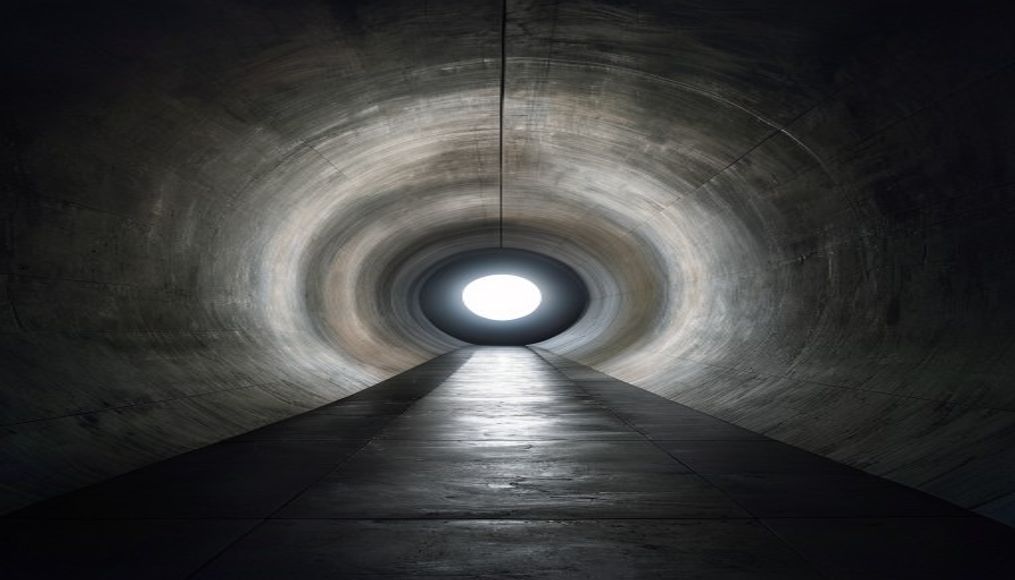
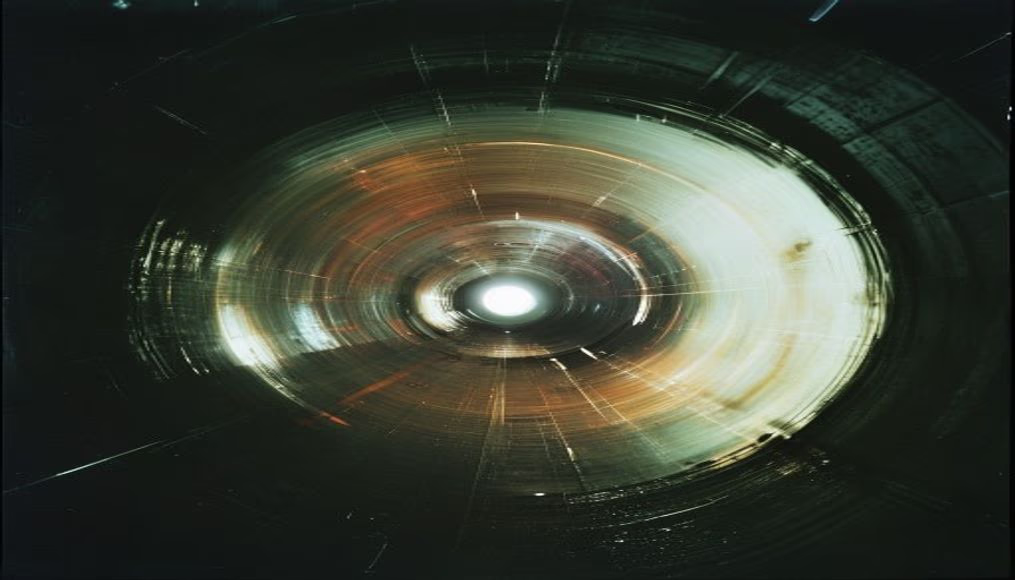
Gravitational lensing visualization
1344×768 · AVIF · CC BY 4.0

Gravitational lensing is a phenomenon predicted by general relativity where light from distant objects is bent by the gravity of intervening masses.
About this subject
Gravitational lensing occurs when a massive object, such as a galaxy cluster, warps spacetime, bending light from more distant sources. Predicted by Albert Einstein in 1915, this effect was first confirmed during the 1919 solar eclipse, when Arthur Eddington measured light deflection near the Sun. Gravitational lensing acts like a cosmic magnifying glass, magnifying and distorting images of extremely remote galaxies, allowing astronomers to observe objects otherwise too faint to be seen.
There are two main types: strong lensing, which produces multiple images, arcs, or Einstein rings, and weak lensing, which subtly distorts galaxy shapes. A classic example is the Einstein Cross, a quadruple quasar in Pegasus caused by an intervening elliptical galaxy. Another notable case is the Abell 2744 cluster, used by Hubble to map dark matter.
This technique is crucial for modern astrophysics. Gravitational microlensing, where a compact star amplifies the light of a more distant star, has enabled the discovery of thousands of exoplanets, including rocky and gas giant worlds. Moreover, lensing helps determine the distribution of dark matter, which emits no light but exerts gravitational pull. Surveys like the Hubble Frontier Fields leverage natural lenses to explore the most ancient galaxies, some 13 billion light-years away.
Interestingly, an Einstein ring forms when the source, lens, and observer are perfectly aligned, creating a full circle of light. The first complete ring was found in 1998 in the object LRG 3-757. Since then, hundreds of rings have been cataloged, providing unique laboratories to test general relativity and measure galaxy masses.
Frequently Asked Questions
What is gravitational lensing?
It is a phenomenon where gravity from a massive object bends light from a more distant source, acting like a natural lens. Predicted by Einstein and confirmed in 1919.
How do gravitational lenses help astronomy?
They magnify distant galaxies, help map dark matter, and detect exoplanets through microlensing. They allow study of the early Universe and tests of general relativity.
What is an Einstein ring?
It is a perfect circular image formed when the source, gravitational lens, and observer are aligned. The first complete ring was discovered in 1998 in the object LRG 3-757.
Direct URL
https://pub-c7d6a6ea828543ac903a74a341ccb2e1.r2.dev/imagens/gravitational-lensing-visualization-national-geographic-style-p9.avifHow to credit
Include a visible link back to UtilizAí. Copy one of the snippets below:
<a href="https://xn--utiliza-eza.com/en/midia/imagens/gravitational-lensing-visualization-national-geographic-style-p9">Gravitational lensing visualization</a> by <a href="https://xn--utiliza-eza.com">UtilizAí</a>, licensed under <a href="https://creativecommons.org/licenses/by/4.0/">CC BY 4.0</a>.
[Gravitational lensing visualization](https://xn--utiliza-eza.com/en/midia/imagens/gravitational-lensing-visualization-national-geographic-style-p9) by [UtilizAí](https://xn--utiliza-eza.com), CC BY 4.0
License: CC-BY-4.0