Gpu nvidia rtx
1344×768 · AVIF · CC BY 4.0
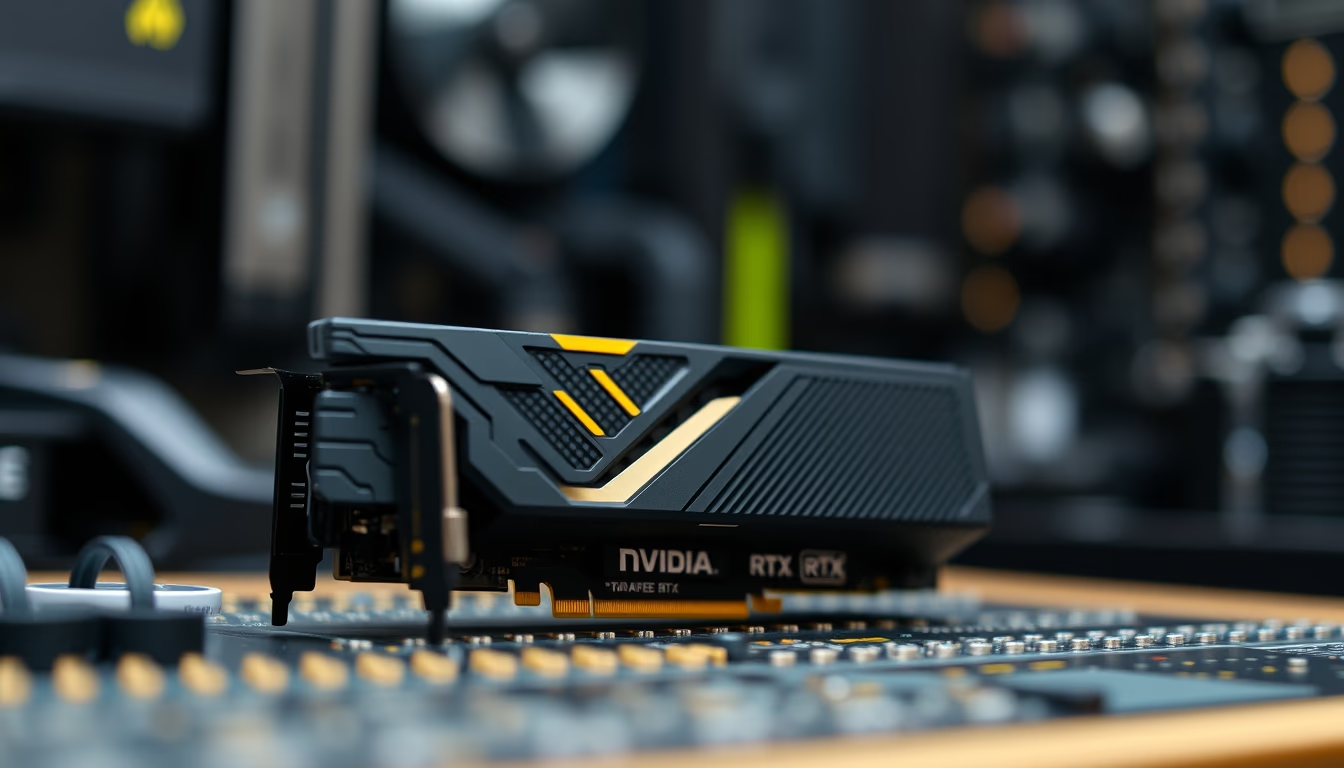
The Nvidia RTX GPU revolutionized graphics processing with real-time ray tracing and AI, essential for gamers and creators.
About this subject
The Nvidia RTX lineup, launched in 2018 with the Turing architecture, marked the first time real-time ray tracing became viable in consumer GPUs. Ray tracing simulates the physical behavior of light, generating realistic reflections, shadows, and lighting in games and 3D applications. This technology is supported by dedicated RT cores on the card, which also feature Tensor Cores for accelerating artificial intelligence tasks, such as DLSS (Deep Learning Super Sampling), a machine learning technique that upscales resolution in real time without sacrificing performance.
Subsequent generations, Ampere (RTX 30) and Ada Lovelace (RTX 40), brought significant improvements in energy efficiency and performance. The RTX 4090, for instance, boasts over 16,000 CUDA cores and 24 GB of GDDR6X VRAM, capable of rendering complex scenes with multiple lighting and physics effects. Beyond gaming, RTX GPUs are widely used in professional rendering, video editing, scientific simulations, and AI model training.
The adoption of ray tracing has been driven by partnerships with game developers, such as the Cyberpunk 2077 and Minecraft RTX series. Nvidia also offers the NVIDIA Studio, an ecosystem of drivers and tools optimized for creators. Competition with AMD (Radeon RX) and Intel (Arc) keeps pressure for constant innovation. G-Sync technology and support for high refresh rate monitors complement the gaming experience.
Frequently Asked Questions
What does RTX stand for in Nvidia graphics cards?
RTX stands for Ray Tracing Texel Extreme, indicating support for real-time ray tracing. RTX cards have dedicated RT cores for this technology and Tensor Cores for AI.
What's the difference between DLSS and ray tracing?
Ray tracing calculates realistic lighting, while DLSS uses AI to upscale resolution without performance loss. Both can be used together in compatible games.
Are RTX cards only good for gaming?
No. They are widely used in 3D rendering, video editing, scientific simulations, and neural network training, thanks to CUDA cores and Tensor Cores.
Direct URL
https://pub-c7d6a6ea828543ac903a74a341ccb2e1.r2.dev/imagens/gpu-nvidia-rtx-tilt-shift-miniature-p9.avifHow to credit
Include a visible link back to UtilizAí. Copy one of the snippets below:
<a href="https://xn--utiliza-eza.com/en/midia/imagens/gpu-nvidia-rtx-tilt-shift-miniature-p9">Gpu nvidia rtx</a> by <a href="https://xn--utiliza-eza.com">UtilizAí</a>, licensed under <a href="https://creativecommons.org/licenses/by/4.0/">CC BY 4.0</a>.
[Gpu nvidia rtx](https://xn--utiliza-eza.com/en/midia/imagens/gpu-nvidia-rtx-tilt-shift-miniature-p9) by [UtilizAí](https://xn--utiliza-eza.com), CC BY 4.0
License: CC-BY-4.0