Gpu amd radeon
1344×768 · AVIF · CC BY 4.0
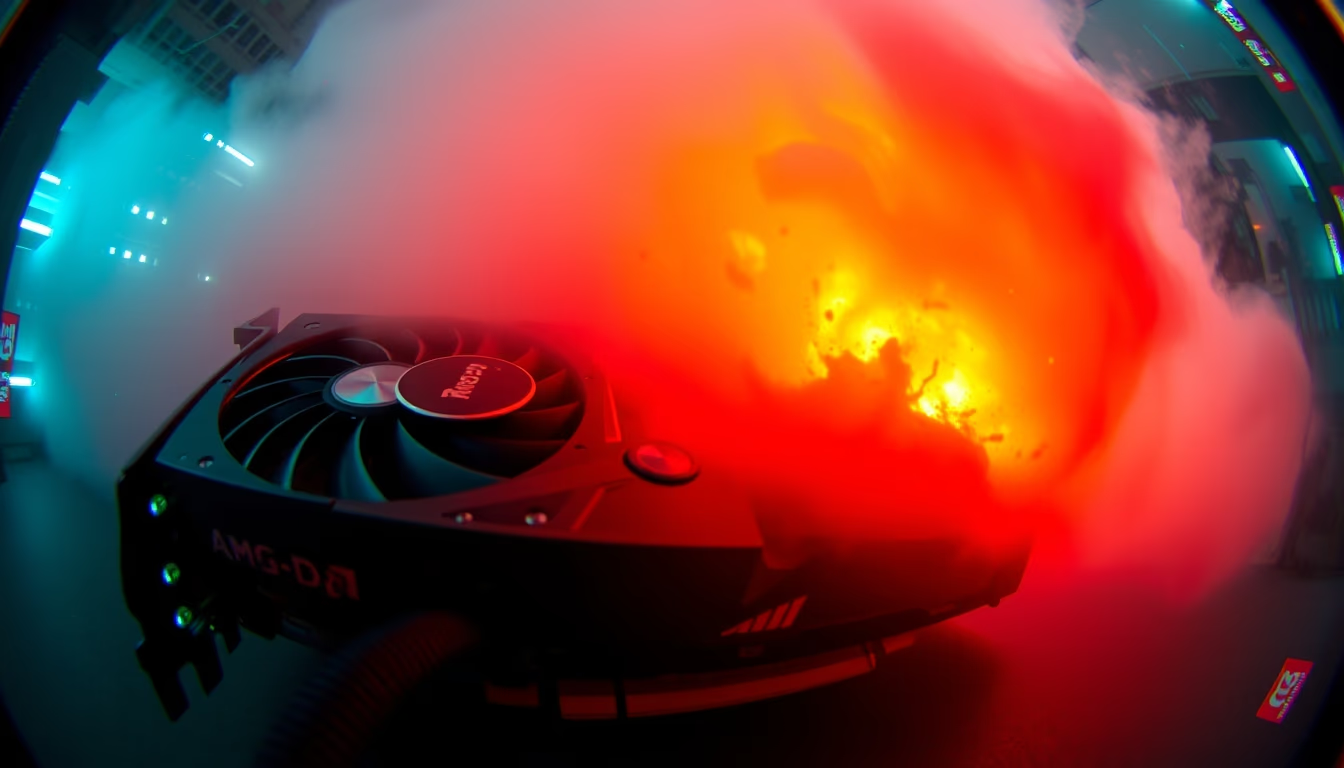
The AMD Radeon line is one of the leading families of graphics cards in the market, directly competing with NVIDIA GeForce in graphical performance, supporting technologies like FreeSync and the RDNA architecture.
About this subject
AMD Radeon is a brand of graphics processing units (GPUs) developed by Advanced Micro Devices (AMD). Originally launched in 2000 as ATI Radeon, the line has gone through several generations, from the Radeon 7000 series to the current RDNA 3 architecture cards. This family is known for offering good value and innovations such as FreeSync, a technology that synchronizes the monitor's refresh rate with the graphics card to eliminate screen tearing, directly competing with NVIDIA's G-Sync.
Radeon GPUs have utilized architectures like GCN (Graphics Core Next) and more recently RDNA (Radeon DNA), which brought significant improvements in power efficiency and performance per watt. The RDNA architecture, introduced in 2019 with the RX 5000 series, was designed for gaming and high-performance applications, while RDNA 2, present in the RX 6000 series, added hardware-accelerated ray tracing support and features like Infinity Cache to reduce memory latency.
Historically, AMD Radeon has been a popular choice among gamers and PC enthusiasts, especially for offering more VRAM at competitive prices compared to NVIDIA equivalents. Additionally, Radeon cards are widely used in workstations and servers, with the Radeon Pro and Instinct series targeting professional applications and high-performance computing. The rivalry between AMD and NVIDIA drives innovation in the sector, benefiting consumers with constant advancements in graphics technology.
Frequently Asked Questions
What is the main difference between AMD Radeon and NVIDIA GeForce?
The main differences lie in architectures, exclusive technologies, and market positioning. AMD Radeon typically offers better value and more VRAM, while NVIDIA leads in ray tracing and features like DLSS. Both compete in performance, but each has specific advantages depending on usage.
What is FreeSync technology?
FreeSync is an AMD technology that synchronizes the monitor's refresh rate with the graphics card's frame rate, eliminating tearing and reducing stuttering. It works through the VESA Adaptive-Sync standard without licensing fees, unlike NVIDIA's G-Sync.
What does RDNA mean in Radeon architecture?
RDNA stands for Radeon DNA, a GPU architecture developed by AMD to replace the older GCN. It focuses on power efficiency and performance per watt, with significant improvements for gaming. The latest version, RDNA 3, uses chiplets and supports ray tracing and other advanced technologies.
Direct URL
https://pub-c7d6a6ea828543ac903a74a341ccb2e1.r2.dev/imagens/gpu-amd-radeon-fish-eye-wide-angle-p7.avifHow to credit
Include a visible link back to UtilizAí. Copy one of the snippets below:
<a href="https://xn--utiliza-eza.com/en/midia/imagens/gpu-amd-radeon-fish-eye-wide-angle-p7">Gpu amd radeon</a> by <a href="https://xn--utiliza-eza.com">UtilizAí</a>, licensed under <a href="https://creativecommons.org/licenses/by/4.0/">CC BY 4.0</a>.
[Gpu amd radeon](https://xn--utiliza-eza.com/en/midia/imagens/gpu-amd-radeon-fish-eye-wide-angle-p7) by [UtilizAí](https://xn--utiliza-eza.com), CC BY 4.0
License: CC-BY-4.0