Glitch art digital
1344×768 · AVIF · CC BY 4.0
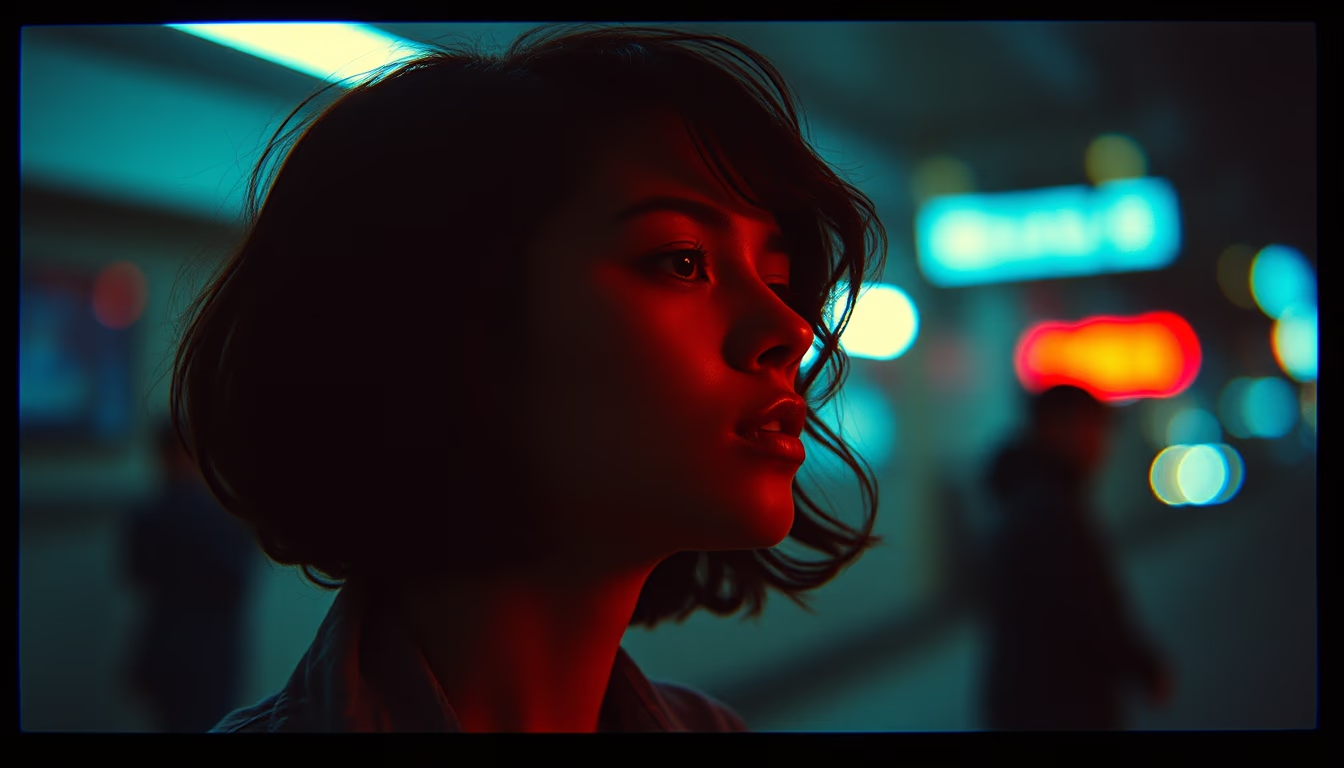
Digital glitch art explores visual errors and distortions as creative expression, combining lo-fi aesthetics and p5.js programming.
About this subject
Glitch art is a form of digital art that intentionally uses errors, distortions, and visual artifacts from digital or analog media as an aesthetic element. It originated in the 1960s with video and television experiments but gained momentum with the popularization of computers in the 1990s. Artists like Nam June Paik and Rosa Menkman explored technological failures as a visual language, questioning digital perfection and celebrating imperfection.
Common techniques include data bending (manipulating image or audio files in hex editors), circuit bending (modifying hardware to generate unexpected signals), and using software that deliberately corrupts data streams. The lo-fi aesthetic, inspired by disposable cameras and damaged VHS tapes, adds layers of noise, grain, and blown-out colors, evoking nostalgia and authenticity in a polished digital age.
The p5.js library, based on Processing, is widely used by creative coders to generate glitch art procedurally. Through code, it is possible to simulate pixel corruption, RGB channel shifting, scanlines, and other characteristic effects. This approach democratizes creation, allowing anyone with basic programming knowledge to explore the aesthetics of error.
Glitch art also dialogues with movements like vaporwave and cyberpunk, which revive visuals from obsolete media. Today, it is a fertile field for debates on digital materiality, planned obsolescence, and the beauty found in system failures.
Frequently Asked Questions
What is glitch art?
Glitch art is an artistic movement that uses digital or analog errors and distortions as an aesthetic element. It can be created through techniques like databending, circuit bending, or software that intentionally corrupts data.
How to create glitch art with p5.js?
With p5.js, you can manipulate pixels of a loaded image, shift RGB channels, add noise, or corrupt data via arrays. The official documentation provides tutorials and examples for effects like ROM glitch, scanlines, and distortions.
What is the difference between glitch art and lo-fi aesthetics?
Glitch art focuses on technological errors such as data failure or circuit glitches. The lo-fi aesthetic aims to mimic the appearance of old or cheap equipment, like disposable cameras and cassette tapes. They often overlap, as glitch is a common resource in the lo-fi language.
Direct URL
https://pub-c7d6a6ea828543ac903a74a341ccb2e1.r2.dev/imagens/glitch-art-digital-lo-fi-disposable-camera-p5.avifHow to credit
Include a visible link back to UtilizAí. Copy one of the snippets below:
<a href="https://xn--utiliza-eza.com/en/midia/imagens/glitch-art-digital-lo-fi-disposable-camera-p5">Glitch art digital</a> by <a href="https://xn--utiliza-eza.com">UtilizAí</a>, licensed under <a href="https://creativecommons.org/licenses/by/4.0/">CC BY 4.0</a>.
[Glitch art digital](https://xn--utiliza-eza.com/en/midia/imagens/glitch-art-digital-lo-fi-disposable-camera-p5) by [UtilizAí](https://xn--utiliza-eza.com), CC BY 4.0
License: CC-BY-4.0