Glass blowing furnace
1344×768 · AVIF · CC BY 4.0
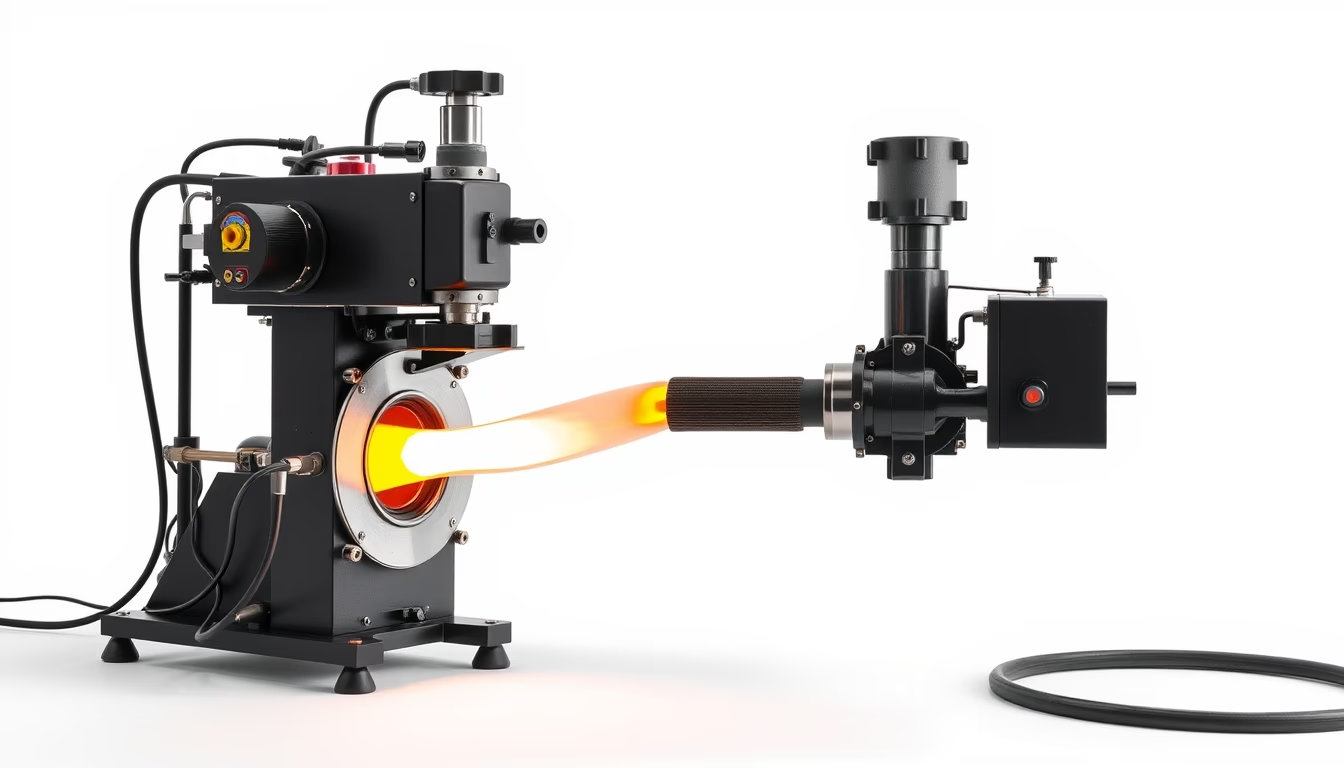
Glass blowing furnace used in handcrafted production, reaching temperatures above 1000°C to melt and shape glass.
About this subject
The glass blowing furnace is the heart of artisan glassmaking, an equipment that keeps glass in a pliable state through temperatures ranging from 1100°C to 1200°C. This intense heat is needed to melt the mixture of silica, sodium carbonate, and limestone, the basic components of common glass. The artisan uses a hollow blowpipe to gather a gob of molten glass and, by blowing, creates bubbles that are shaped with metal and wooden tools. After shaping, the piece goes to the annealing oven, where it cools slowly at about 500°C to prevent internal stresses.
The technique of glass blowing originated in Syria in the 1st century BCE and was perfected by the Romans, becoming one of the most versatile ways to work glass. Unlike industrial production, artisan blowing allows for unique pieces with variations in color, thickness, and form. Modern furnaces are made of refractory bricks and can be heated by gas or electricity, maintaining a stable temperature for hours. The furnace opening, called the 'glory hole', is sized so the artisan can retrieve the glass without losing too much heat.
A curious fact is that molten glass has the viscosity of hot honey, and the work must be fast because it starts to harden within seconds. For special colors, metal oxides are added, such as cobalt for blue or copper for green. The annealing oven can take from a few hours to days to cool large pieces, like sculptures. This patience is rewarded with the transparency and strength characteristic of artisan glass.
Frequently Asked Questions
What is the ideal temperature for glass blowing?
The working temperature is between 1100°C and 1200°C to keep the glass malleable, but each glass type has its exact point. After shaping, the piece undergoes annealing at about 500°C.
How long does it take for a blown glass piece to cool?
It depends on size and thickness. Small objects may take a few hours, while large sculptures sometimes require days of controlled cooling in the annealing oven.
What type of glass is used in artisan blowing?
The most common is soda-lime glass (silica, sodium carbonate, and limestone). Crystal (with lead) is used for higher brilliance, or borosilicate glass for thermal resistance.
Direct URL
https://pub-c7d6a6ea828543ac903a74a341ccb2e1.r2.dev/imagens/glass-blowing-furnace-commercial-product-photography-p3.avifHow to credit
Include a visible link back to UtilizAí. Copy one of the snippets below:
<a href="https://xn--utiliza-eza.com/en/midia/imagens/glass-blowing-furnace-commercial-product-photography-p3">Glass blowing furnace</a> by <a href="https://xn--utiliza-eza.com">UtilizAí</a>, licensed under <a href="https://creativecommons.org/licenses/by/4.0/">CC BY 4.0</a>.
[Glass blowing furnace](https://xn--utiliza-eza.com/en/midia/imagens/glass-blowing-furnace-commercial-product-photography-p3) by [UtilizAí](https://xn--utiliza-eza.com), CC BY 4.0
License: CC-BY-4.0