Fusion reactor tokamak
1344×768 · AVIF · CC BY 4.0
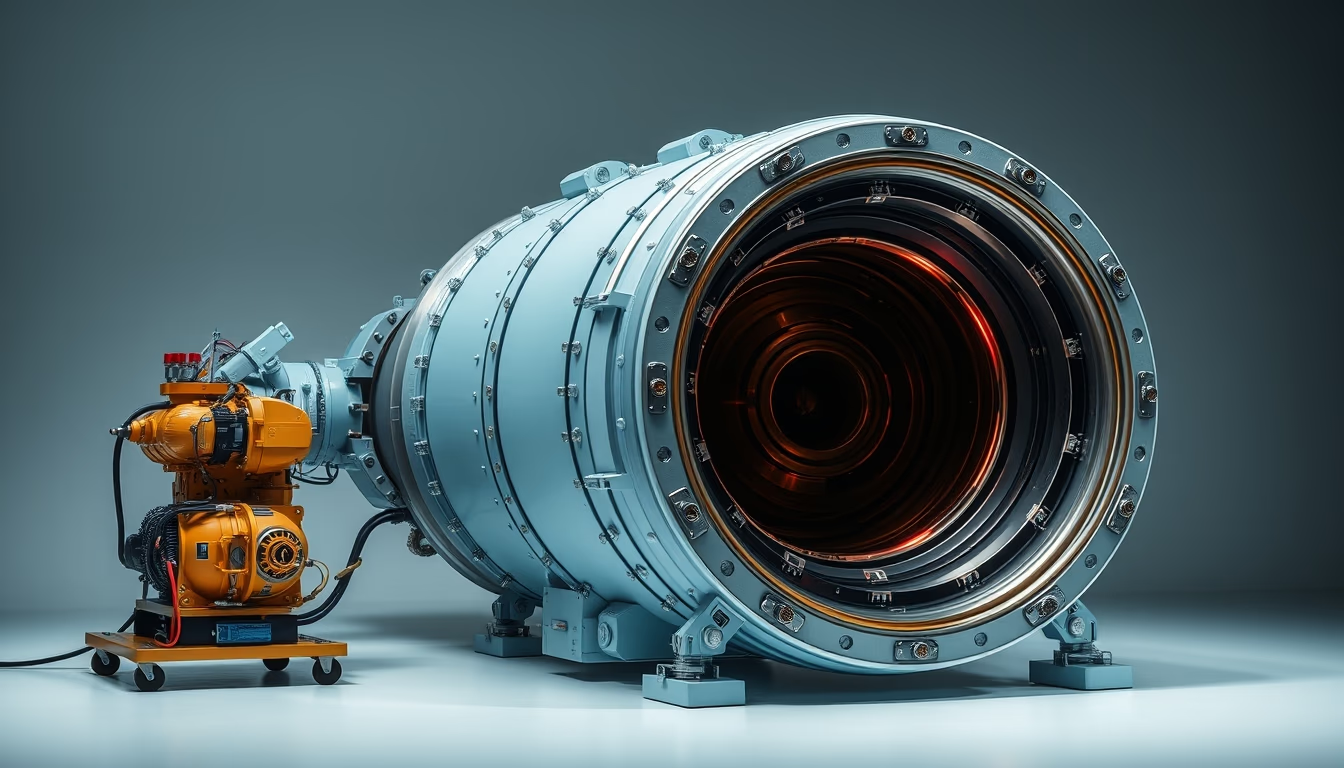
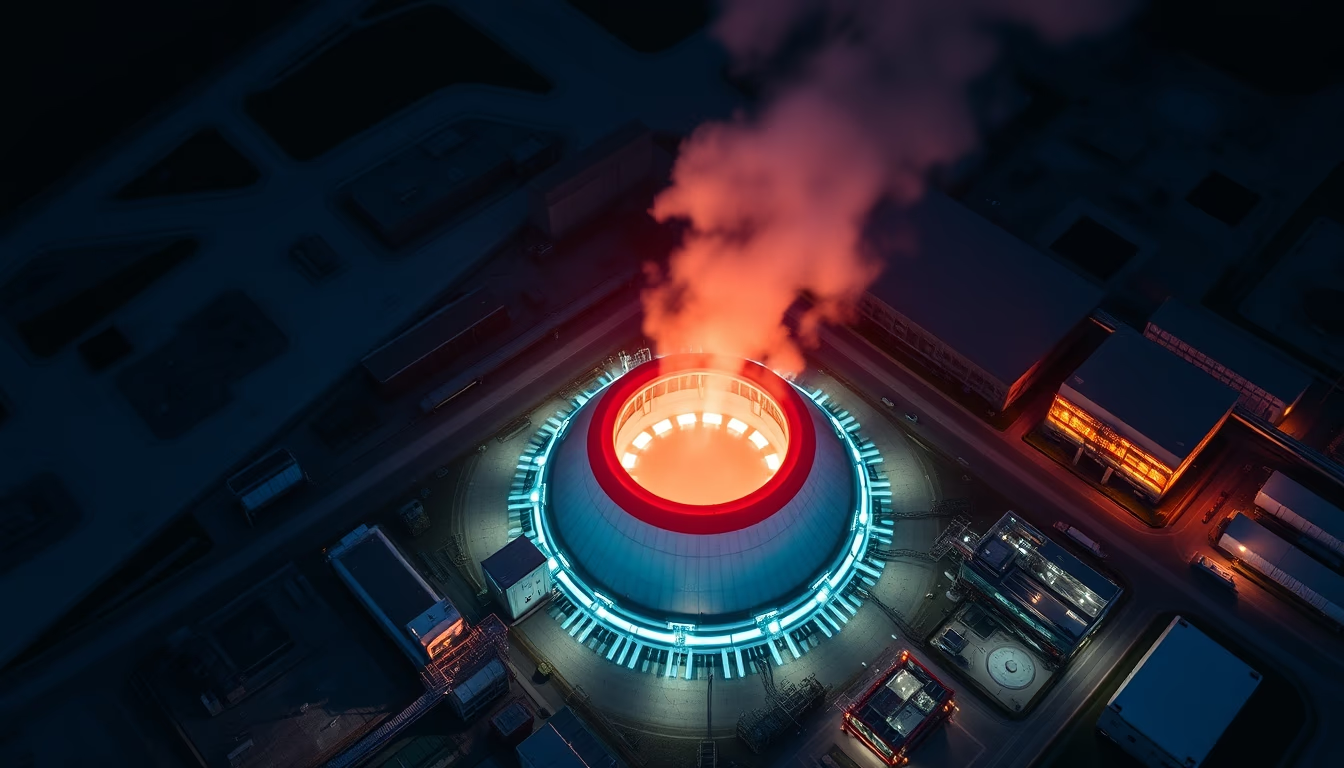
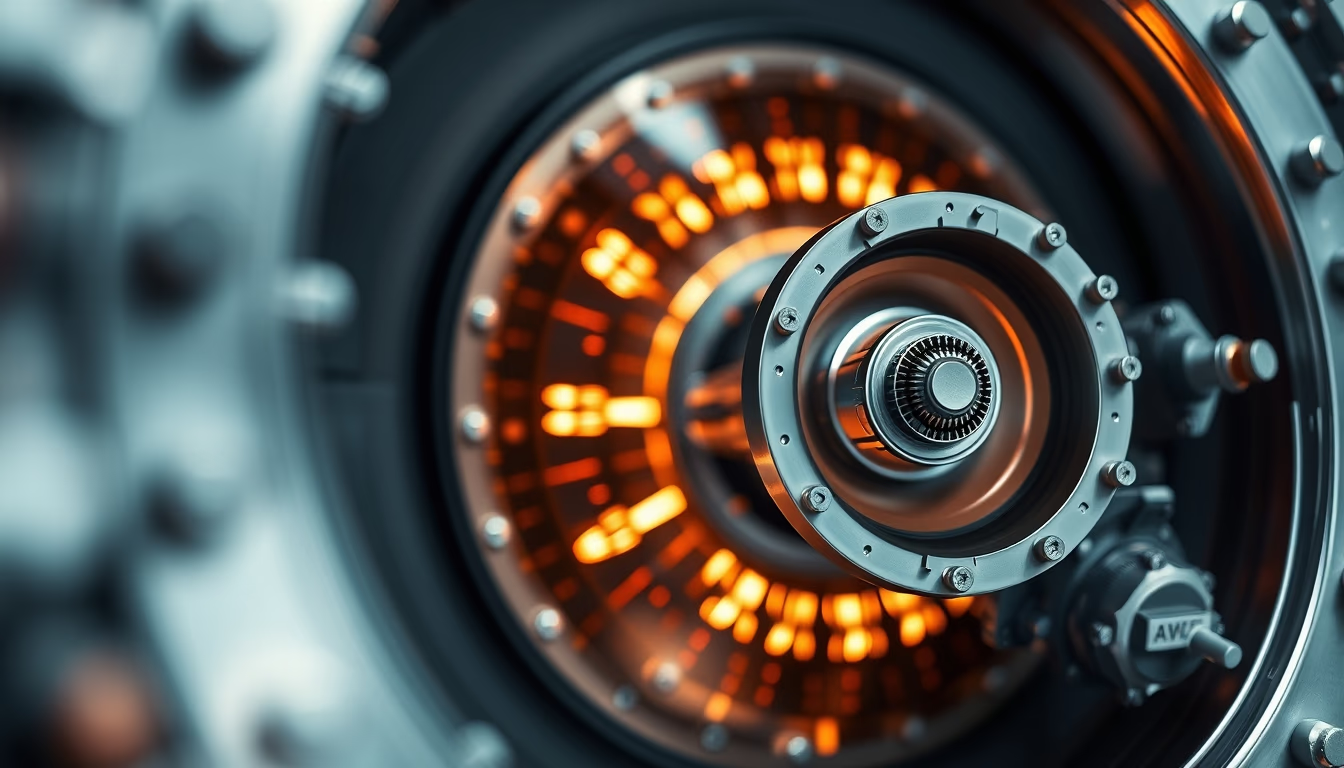
The tokamak is a toroidal fusion reactor designed to confine plasma and produce clean, carbon-free energy through nuclear fusion.
About this subject
The tokamak is the most studied type of fusion reactor. Its name originates from the Russian acronym for 'toroidal chamber with magnetic coils'. The concept was developed in the 1950s by Soviet physicists Igor Tamm and Andrei Sakharov, and has since become the basis for major fusion experiments worldwide.
The operating principle of a tokamak involves heating fuel, typically deuterium and tritium, to millions of degrees Celsius, forming a plasma. This plasma is confined by a helical magnetic field created by external coils and an electric current induced in the plasma itself. The toroidal shape helps stabilize the plasma, enabling controlled fusion reactions.
The largest current tokamak project is ITER (International Thermonuclear Experimental Reactor), under construction in Cadarache, France. ITER aims to demonstrate the scientific and technological feasibility of fusion as a large-scale energy source. First plasma is expected around 2025, with full fusion operation planned for the 2030s.
Despite enormous potential, virtually inexhaustible fuel, no greenhouse gas emissions, and low-level radioactive waste, fusion still faces significant challenges, such as maintaining plasma stability and achieving net energy gain. Tokamaks like JET (Joint European Torus) in the UK have set fusion energy records, but commercial breakeven remains elusive.
Frequently Asked Questions
How does a tokamak reactor work?
A tokamak heats deuterium and tritium to form a plasma at millions of degrees, confined by toroidal and poloidal magnetic fields. Fusion reactions release energy as fast neutrons, which are captured by the reactor walls to generate heat and ultimately electricity.
What is the ITER project and why is it important?
ITER is an international nuclear fusion experiment under construction in France. It is the first tokamak designed to produce more fusion energy than the energy used to heat the plasma, aiming for 500 MW of fusion power from 50 MW of input.
What is the difference between nuclear fusion and nuclear fission?
Fusion combines light nuclei (like hydrogen) into a heavier nucleus, releasing energy without long-lived high-level radioactive waste. Fission splits heavy nuclei (like uranium), producing dangerous radioactive waste and posing accident risks.
Direct URL
https://pub-c7d6a6ea828543ac903a74a341ccb2e1.r2.dev/imagens/fusion-reactor-tokamak-studio-still-life-p3.avifHow to credit
Include a visible link back to UtilizAí. Copy one of the snippets below:
<a href="https://xn--utiliza-eza.com/en/midia/imagens/fusion-reactor-tokamak-studio-still-life-p3">Fusion reactor tokamak</a> by <a href="https://xn--utiliza-eza.com">UtilizAí</a>, licensed under <a href="https://creativecommons.org/licenses/by/4.0/">CC BY 4.0</a>.
[Fusion reactor tokamak](https://xn--utiliza-eza.com/en/midia/imagens/fusion-reactor-tokamak-studio-still-life-p3) by [UtilizAí](https://xn--utiliza-eza.com), CC BY 4.0
License: CC-BY-4.0