Fusion reactor tokamak
1344×768 · AVIF · CC BY 4.0
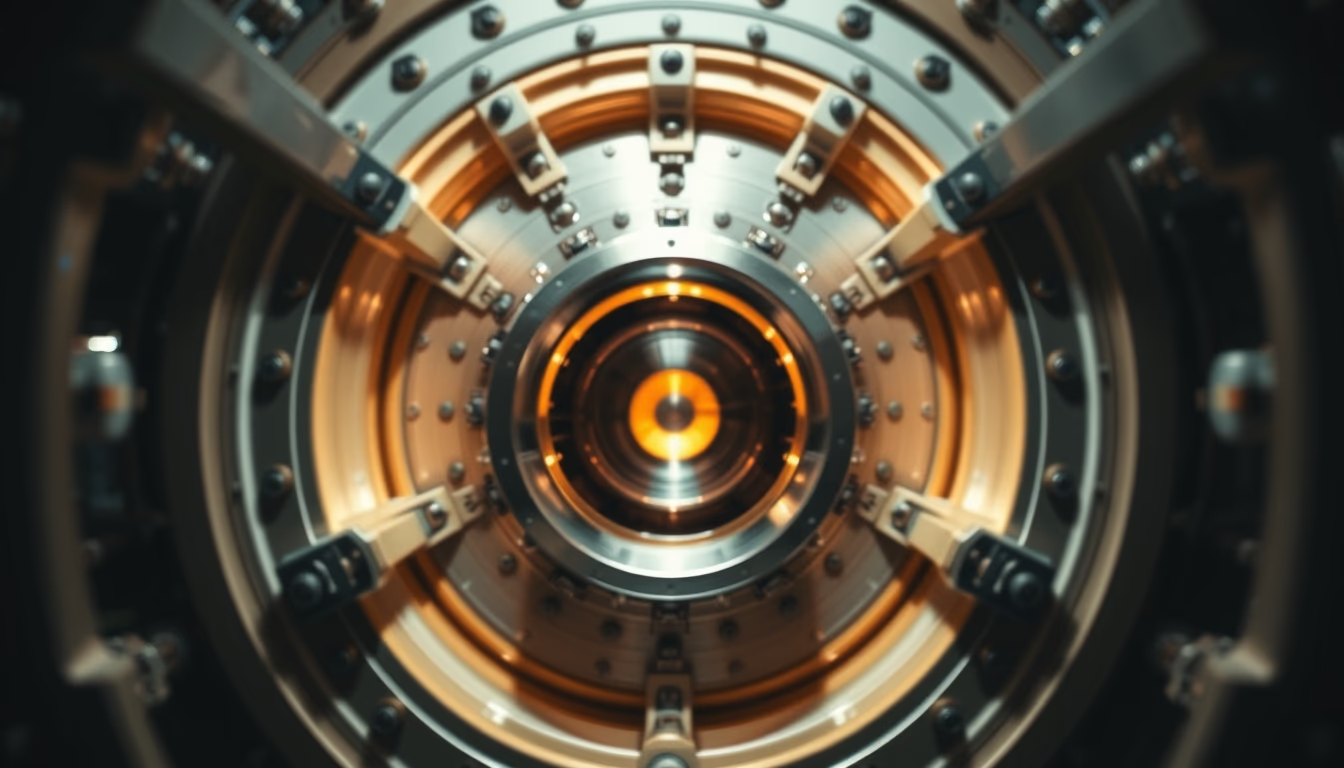
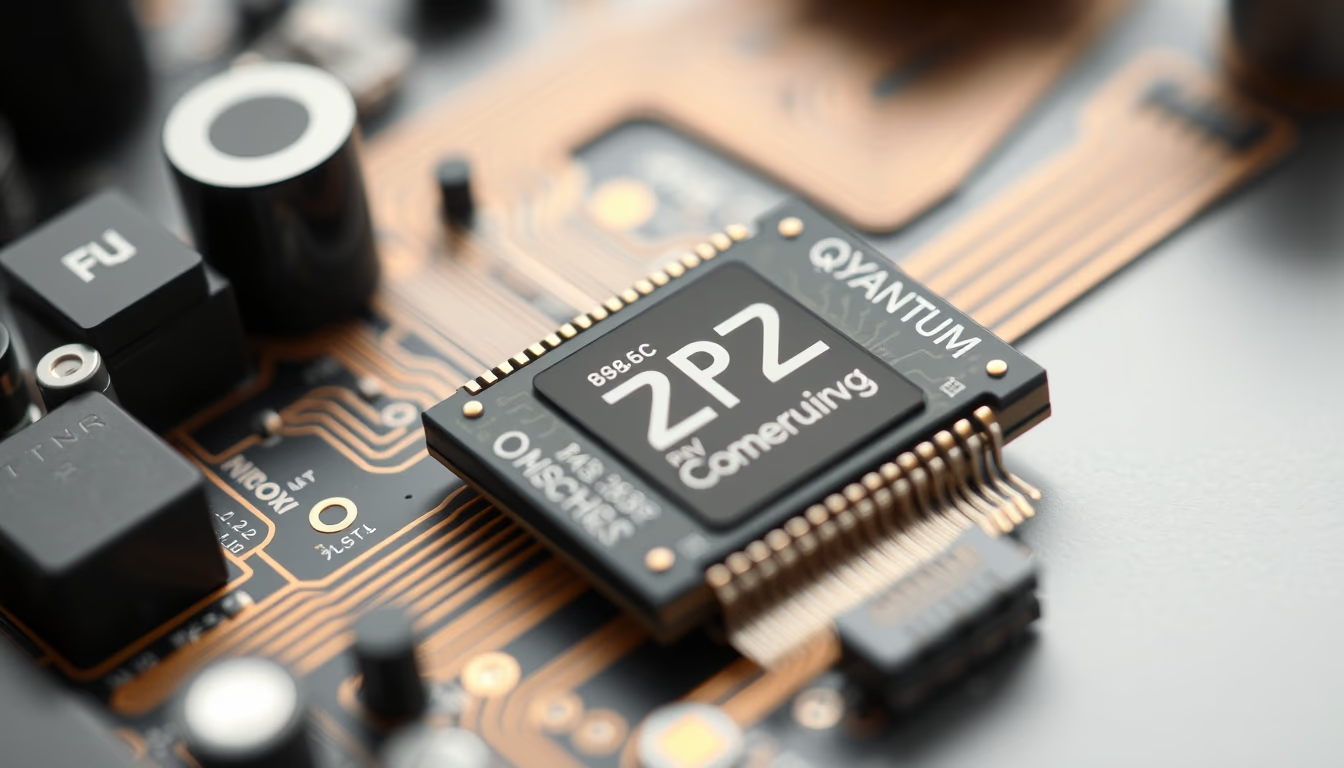
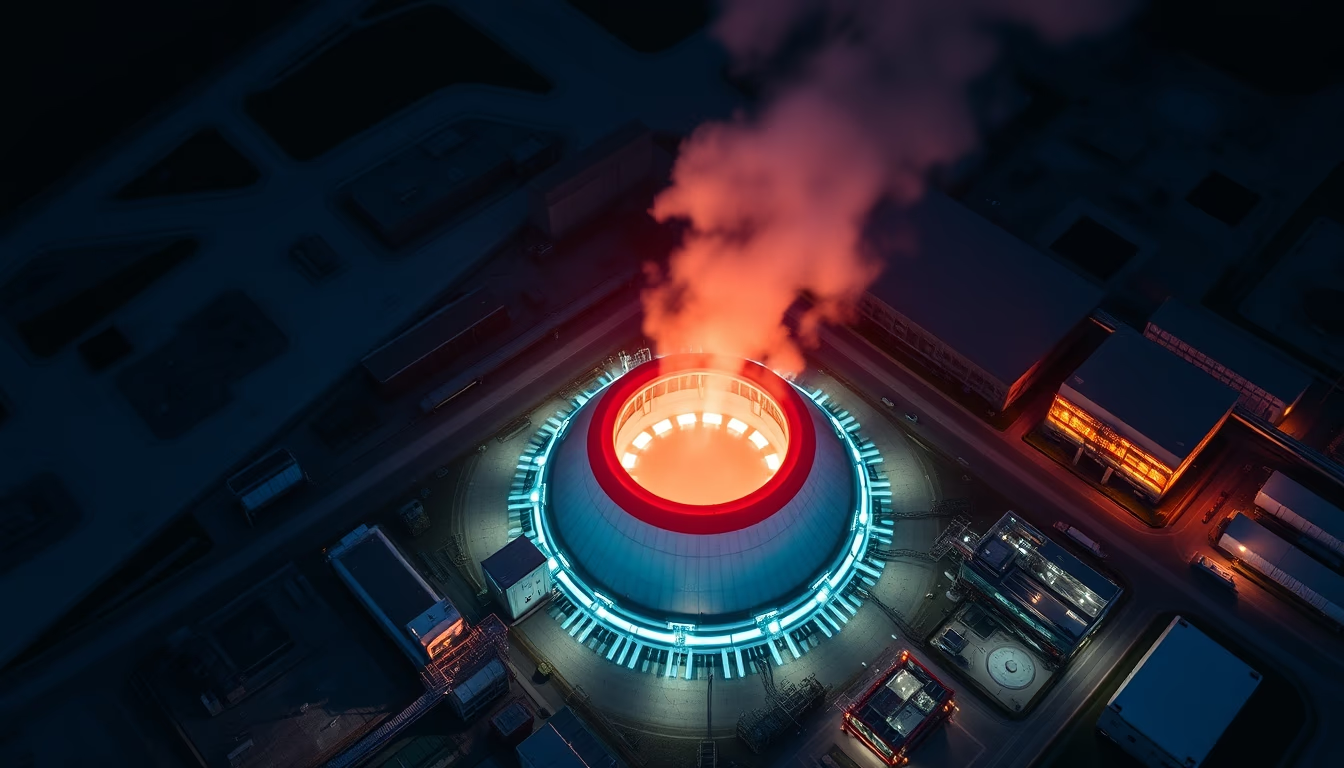
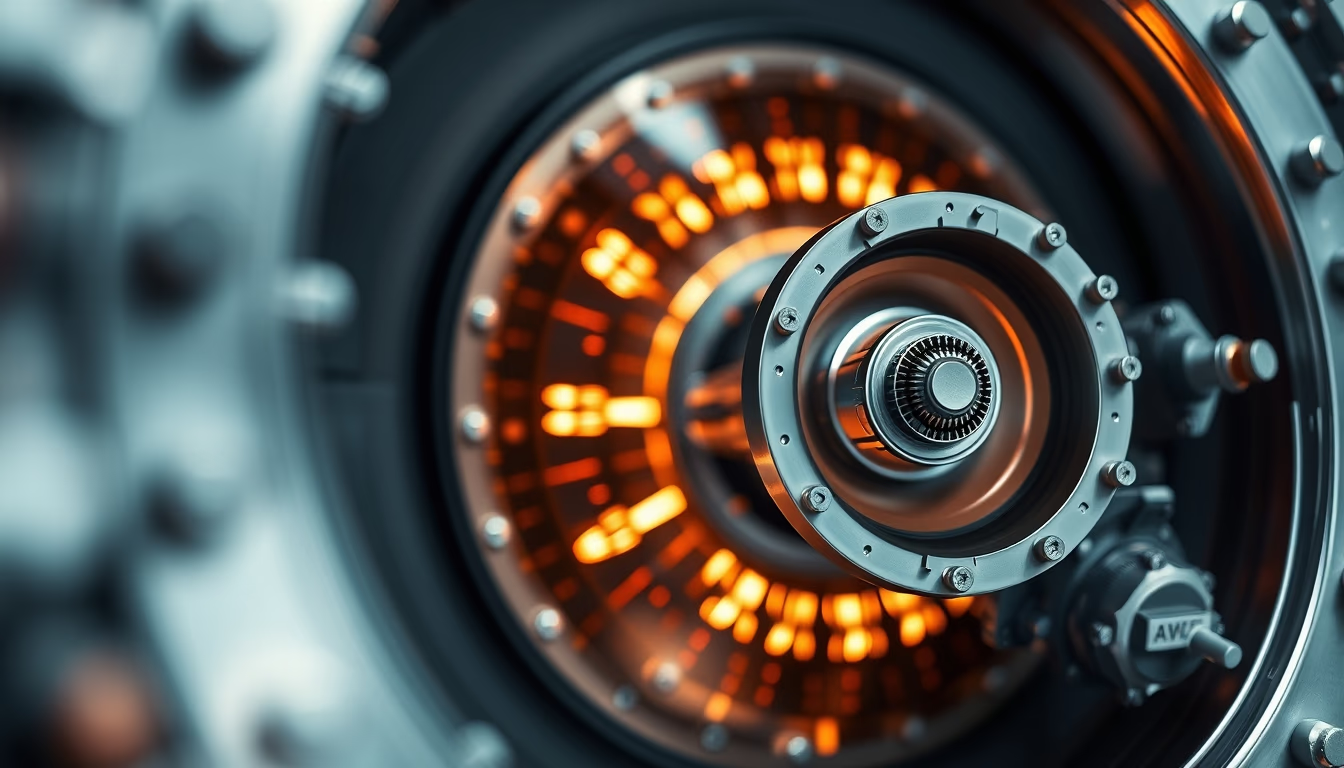
The tokamak is a nuclear fusion reactor that uses magnetic fields to confine plasma in a toroidal shape, aiming to generate clean and abundant energy.
About this subject
The tokamak is an experimental nuclear fusion device that confines high-temperature plasma using intense magnetic fields. The name derives from the Russian acronym for "toroidal chamber with magnetic coils" (Токамак). Developed in the 1950s by Soviet physicists Igor Tamm and Andrei Sakharov, the tokamak has become the most studied configuration for controlled fusion.
Inside the tokamak, plasma is heated to temperatures exceeding 150 million degrees Celsius, hotter than the core of the Sun. Charged particles are kept in helical trajectories around the toroidal axis by a combination of toroidal and poloidal magnetic fields, preventing contact with the reactor walls. This confinement is essential for fusion reactions between hydrogen isotopes, mainly deuterium and tritium.
Currently, the largest tokamak project under construction is ITER in France, an international collaboration of 35 countries. ITER aims to demonstrate the scientific and technological feasibility of fusion as a commercial-scale energy source. Other important tokamaks include EAST (China), KSTAR (South Korea), and JET (United Kingdom), which have already achieved fusion power records.
Despite progress, significant challenges remain, such as plasma instabilities, extreme heat dissipation, and developing neutron-resistant materials. Commercial fusion is expected to contribute to the global energy mix by mid-21st century, offering a virtually inexhaustible energy source with low environmental impact.
Frequently Asked Questions
How does a tokamak work?
A tokamak uses magnetic fields to confine plasma in a donut shape (toroidal). The plasma is heated to extreme temperatures, allowing hydrogen nuclei to fuse and release energy. External magnetic coils and an induced electric current in the plasma generate the required confinement fields.
What is the difference between a tokamak and a stellarator?
Both confine plasma magnetically, but a stellarator uses only external coils to create the toroidal and poloidal fields, without relying on a plasma current. This avoids instabilities but makes coil design much more complex. The tokamak is simpler but prone to sudden plasma disruptions.
When will nuclear fusion become commercially viable?
Commercial fusion is expected to begin generating electricity around 2050, after the completion of ITER and pilot projects like SPARC. Advances in materials, engineering, and economics are still needed to make fusion competitive with other energy sources.
Direct URL
https://pub-c7d6a6ea828543ac903a74a341ccb2e1.r2.dev/imagens/fusion-reactor-tokamak-studio-editorial-portrait-p10.avifHow to credit
Include a visible link back to UtilizAí. Copy one of the snippets below:
<a href="https://xn--utiliza-eza.com/en/midia/imagens/fusion-reactor-tokamak-studio-editorial-portrait-p10">Fusion reactor tokamak</a> by <a href="https://xn--utiliza-eza.com">UtilizAí</a>, licensed under <a href="https://creativecommons.org/licenses/by/4.0/">CC BY 4.0</a>.
[Fusion reactor tokamak](https://xn--utiliza-eza.com/en/midia/imagens/fusion-reactor-tokamak-studio-editorial-portrait-p10) by [UtilizAí](https://xn--utiliza-eza.com), CC BY 4.0
License: CC-BY-4.0