Fusion reactor tokamak
1344×768 · AVIF · CC BY 4.0
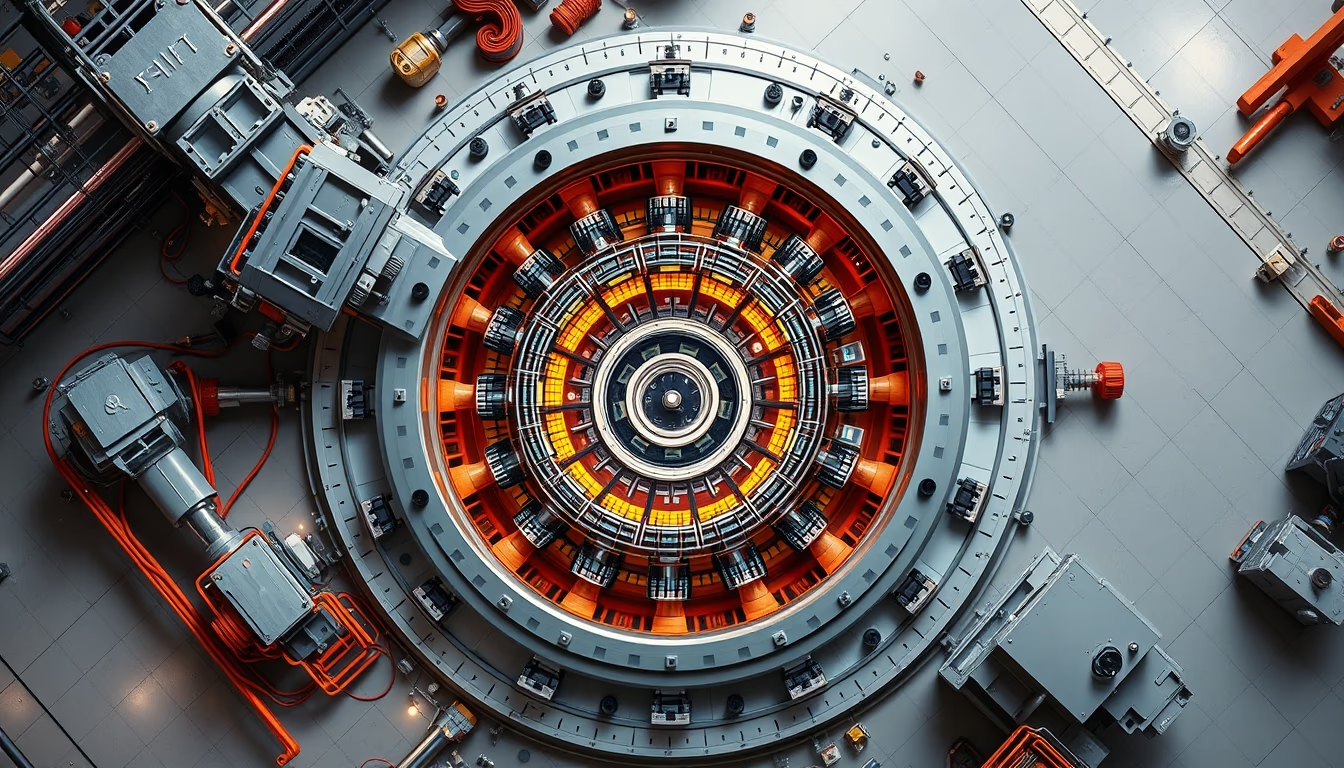
A tokamak is a magnetic confinement device designed to control nuclear fusion reactions, similar to the processes powering the Sun.
About this subject
The tokamak is one of the most promising designs for achieving controlled nuclear fusion energy. Originally developed in the Soviet Union during the 1950s by physicists Igor Tamm and Andrei Sakharov, the name is a Russian acronym for "toroidal chamber with magnetic coils." The fundamental principle involves heating hydrogen plasma to over 150 million degrees Celsius and confining it in a toroidal shape using magnetic fields, enabling deuterium and tritium nuclei to fuse and release energy.
Currently, the world's largest tokamak experiment is ITER (International Thermonuclear Experimental Reactor) under construction in France, aiming to demonstrate the commercial viability of fusion. Other notable tokamaks include the JET (Joint European Torus) in the United Kingdom, which holds the record for fusion energy output, and EAST in China. Despite progress, challenges such as plasma stability and material resistance to radiation must be overcome for fusion to become a practical energy source.
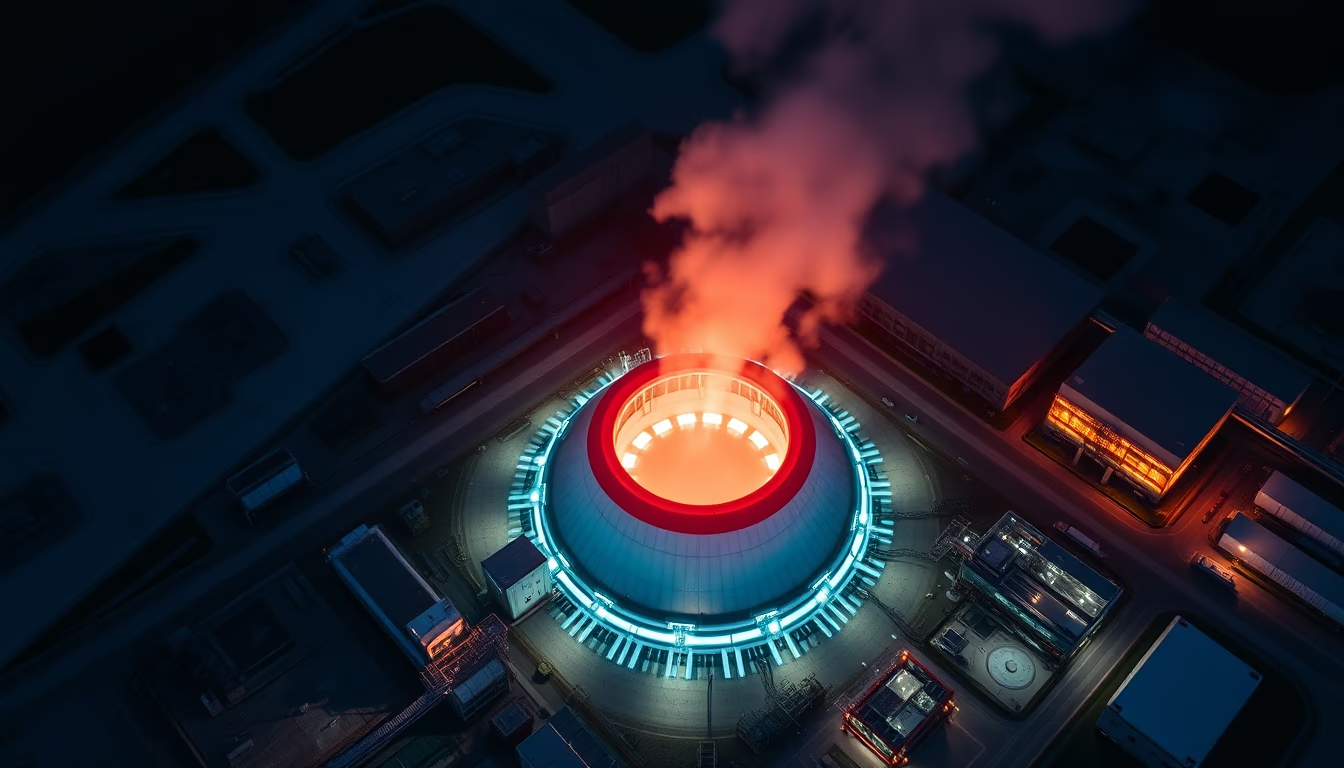
Nuclear fusion offers significant advantages: abundant fuel (deuterium extracted from water, tritium bred from lithium), low carbon emissions, no long-lived radioactive waste, and minimal risk of nuclear accidents. Scientists estimate that commercial fusion power plants could begin operating by the mid-21st century if ITER and subsequent experiments succeed. The isometric flat lay image simplifies this complex machine, emphasizing its toroidal geometry and magnetic systems.
Frequently Asked Questions
How does a tokamak generate energy?
The tokamak heats hydrogen plasma to extreme temperatures and uses magnetic fields to confine it. Under these conditions, deuterium and tritium fuse, releasing energy in the form of fast neutrons that heat the reactor blanket, producing steam for turbines.
What is the difference between fusion and nuclear fission?
Fusion combines light atoms (like hydrogen) to form a heavier one, releasing energy. Fission splits heavy atoms (like uranium) into smaller ones. Fusion produces less radioactive waste and has no risk of uncontrolled chain reaction.
Is ITER already operational?
No, ITER is still under construction in France. First plasma is expected around 2025, and full fusion experiments will begin around 2035.
Direct URL
https://pub-c7d6a6ea828543ac903a74a341ccb2e1.r2.dev/imagens/fusion-reactor-tokamak-isometric-flat-lay-p5.avifHow to credit
Include a visible link back to UtilizAí. Copy one of the snippets below:
<a href="https://xn--utiliza-eza.com/en/midia/imagens/fusion-reactor-tokamak-isometric-flat-lay-p5">Fusion reactor tokamak</a> by <a href="https://xn--utiliza-eza.com">UtilizAí</a>, licensed under <a href="https://creativecommons.org/licenses/by/4.0/">CC BY 4.0</a>.
[Fusion reactor tokamak](https://xn--utiliza-eza.com/en/midia/imagens/fusion-reactor-tokamak-isometric-flat-lay-p5) by [UtilizAí](https://xn--utiliza-eza.com), CC BY 4.0
License: CC-BY-4.0