Fiber optic transceiver
1344×768 · AVIF · CC BY 4.0
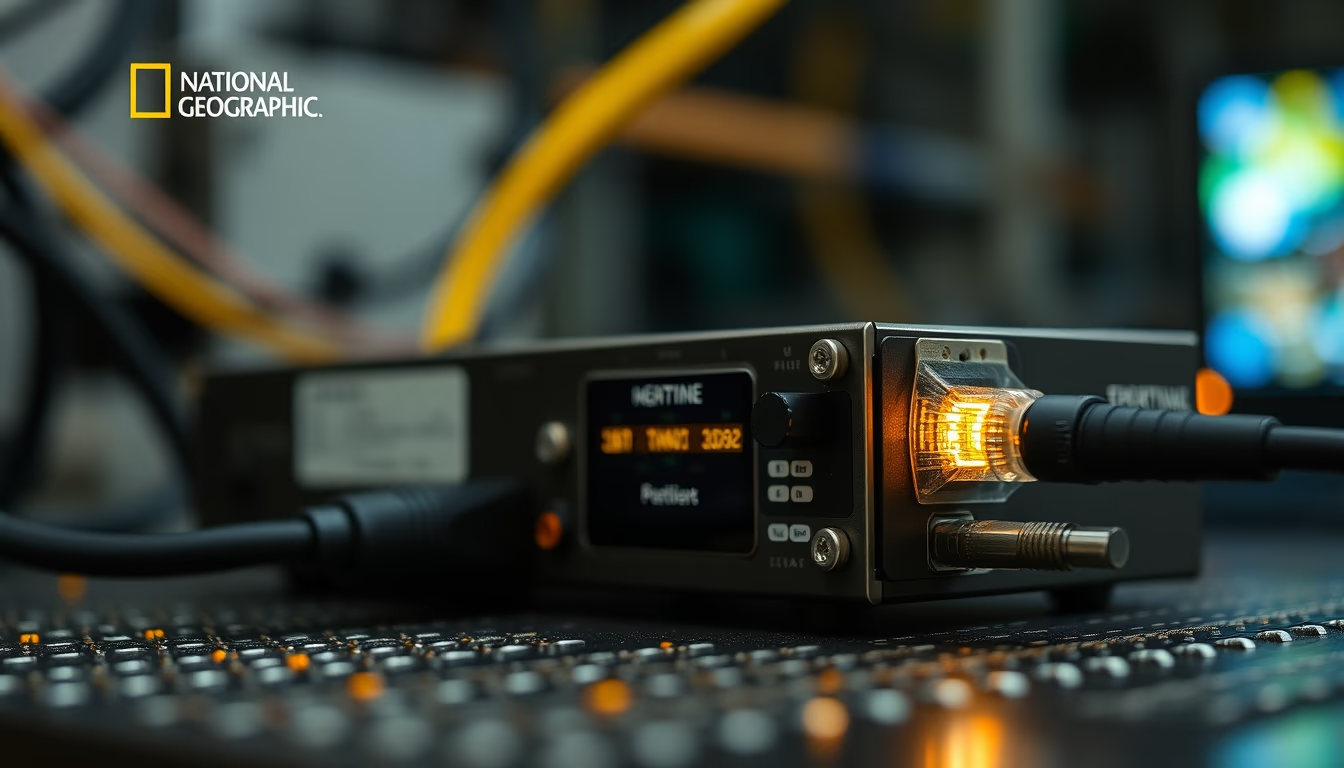
Fiber optic transceivers convert electrical signals to optical and back, enabling high-speed data transmission over long distances.
About this subject
A fiber optic transceiver, often called an SFP (Small Form-factor Pluggable) module, is a critical component in modern telecommunications networks. It converts electrical signals from switches or routers into light pulses that travel through fiber optic cables, enabling data transmission at speeds ranging from 100 Mbps to 400 Gbps, depending on standards like 10GBASE-SR or 40GBASE-LR4.
The importance of these devices has grown exponentially with the expansion of the internet and data centers. Companies such as Google, Amazon, and Microsoft use transceivers in their internal networks to connect servers and storage systems. Fiber optic technology offers advantages over traditional copper cables, including higher bandwidth, lower latency, and immunity to electromagnetic interference. Interestingly, the first fiber optic transceiver was developed in the 1970s, but modern hot-pluggable modules emerged in the 2000s, standardized by the Multi-Source Agreement (MSA), which ensures compatibility across manufacturers like Cisco, Juniper, and Finisar.
In Brazil, transceivers are fundamental to the country's internet infrastructure. Providers like Oi and Vivo use these modules in their fiber optic networks to offer broadband and telephony services. Additionally, the growing demand for video streaming and online gaming has accelerated the adoption of high-speed transceivers, such as 25G and 100G models, in regional backbones. The cost of a transceiver varies by supported distance: short-range models (SR, up to 300 meters) are cheaper, while long-range versions (LR, up to 10 km) can cost hundreds of dollars.
Frequently Asked Questions
What is the difference between an SFP and SFP+ transceiver?
SFP supports speeds up to 1 Gbps, while SFP+ is designed for 10 Gbps. They share the same physical form factor, but SFP+ uses more advanced electronics to achieve higher speed.
Are fiber optic transceivers compatible across different brands?
Yes, thanks to the MSA (Multi-Source Agreement) standard. However, some manufacturers like Cisco implement proprietary identification codes that may require their own branded modules for full functionality.
What is the maximum distance a fiber optic transceiver can cover?
It depends on the type: SR (short range) models reach up to 300 meters on multimode fiber, while LR (long range) models cover up to 10 km on single-mode fiber. ZR versions can achieve up to 80 km.
Direct URL
https://pub-c7d6a6ea828543ac903a74a341ccb2e1.r2.dev/imagens/fiber-optic-transceiver-national-geographic-style-p6.avifHow to credit
Include a visible link back to UtilizAí. Copy one of the snippets below:
<a href="https://xn--utiliza-eza.com/en/midia/imagens/fiber-optic-transceiver-national-geographic-style-p6">Fiber optic transceiver</a> by <a href="https://xn--utiliza-eza.com">UtilizAí</a>, licensed under <a href="https://creativecommons.org/licenses/by/4.0/">CC BY 4.0</a>.
[Fiber optic transceiver](https://xn--utiliza-eza.com/en/midia/imagens/fiber-optic-transceiver-national-geographic-style-p6) by [UtilizAí](https://xn--utiliza-eza.com), CC BY 4.0
License: CC-BY-4.0