Fiber optic transceiver
1344×768 · AVIF · CC BY 4.0
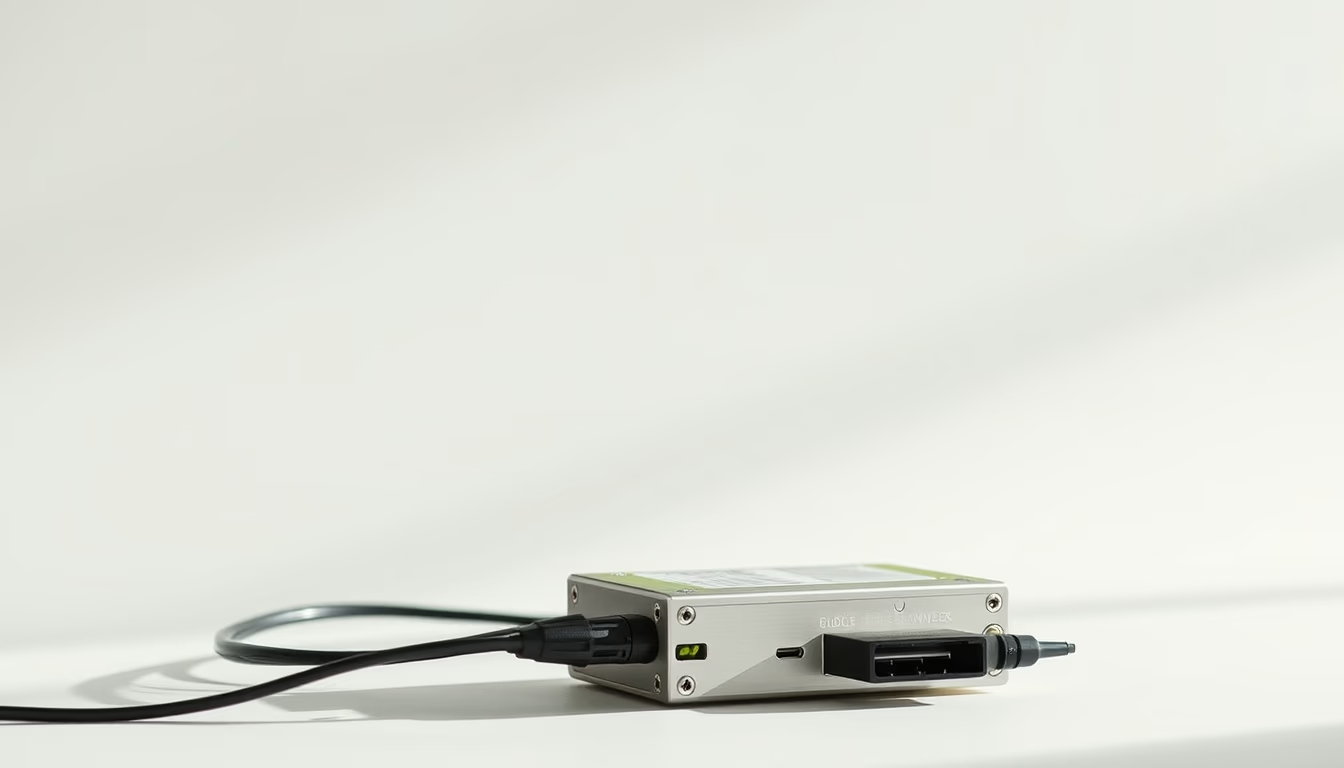
Fiber optic transceivers convert electrical signals to optical and back, crucial for high-speed networks and long-distance communication.
About this subject
A fiber optic transceiver is a device that integrates a transmitter and receiver into a single module, enabling bidirectional conversion of electrical signals to optical signals and vice versa. It is a fundamental component in telecommunications infrastructure and data networks, acting as the interface between fiber optic cables and electronic equipment such as switches, routers, and servers. Transceivers operate at specific wavelengths, typically 850 nm for multimode fiber or 1310/1550 nm for single-mode fiber, with transmission rates ranging from 100 Mbps to 400 Gbps or higher.
Common form factors include SFP (Small Form-factor Pluggable), SFP+ (enhanced version for 10 Gbps), and QSFP (Quad SFP for 40 Gbps and 100 Gbps). These modules are hot-pluggable, meaning they can be inserted or removed without powering down the equipment, facilitating upgrades and maintenance. Standards such as IEEE 802.3 define electrical and optical specifications, ensuring interoperability between manufacturers. Reach varies widely: from a few meters in local area networks to over 100 km on long-haul single-mode fiber links.
In practice, optical transceivers are vital for data centers, metropolitan area networks, and internet backbones. They also appear in cable TV systems, Fiber to the Home (FTTH) deployments, and submarine cables, where the ability to transmit large volumes of data with low latency is critical. A notable fact: in submarine cables, specialized transceivers with optical amplifiers enable transoceanic communications without electrical repeaters for thousands of kilometers. The compact design and energy efficiency of these devices drive the expansion of fiber optics to the end user, gradually replacing copper in access networks.
Frequently Asked Questions
What is the difference between SFP and SFP+ transceivers?
SFP supports up to 1 Gbps, while SFP+ operates at 10 Gbps. SFP+ is physically compatible with SFP slots but requires hardware that supports the higher speed.
What is the maximum distance a fiber optic transceiver can reach?
It depends on fiber type and module. Multimode fiber reaches up to 550 meters with SFP+; single-mode fiber can exceed 100 km with specialized long-haul modules.
Can fiber optic transceivers be used in home Ethernet networks?
Yes, but they are more common in enterprise networks and ISPs. For home use, you need a media converter or switch with SFP ports, plus fiber cabling.
Direct URL
https://pub-c7d6a6ea828543ac903a74a341ccb2e1.r2.dev/imagens/fiber-optic-transceiver-minimalist-composition-p1.avifHow to credit
Include a visible link back to UtilizAí. Copy one of the snippets below:
<a href="https://xn--utiliza-eza.com/en/midia/imagens/fiber-optic-transceiver-minimalist-composition-p1">Fiber optic transceiver</a> by <a href="https://xn--utiliza-eza.com">UtilizAí</a>, licensed under <a href="https://creativecommons.org/licenses/by/4.0/">CC BY 4.0</a>.
[Fiber optic transceiver](https://xn--utiliza-eza.com/en/midia/imagens/fiber-optic-transceiver-minimalist-composition-p1) by [UtilizAí](https://xn--utiliza-eza.com), CC BY 4.0
License: CC-BY-4.0