Fiber optic transceiver
1344×768 · AVIF · CC BY 4.0
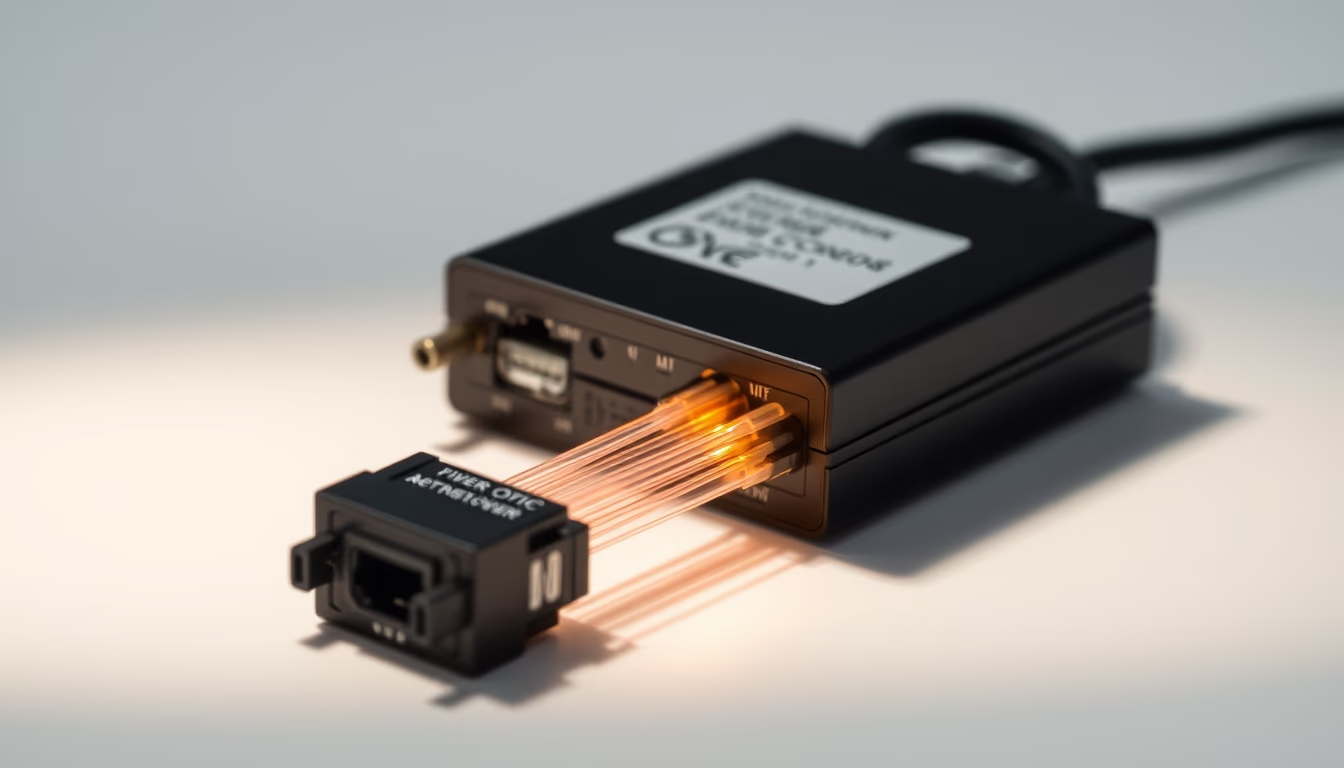
Fiber optic transceivers convert electrical signals to optical for high-speed network transmission. Essential in data centers and telecommunications.
About this subject
Fiber optic transceivers are compact devices that integrate a transmitter and receiver into a single module, enabling bidirectional communication over fiber optic cables. They convert electrical signals from network equipment (like switches and routers) into optical signals for transmission through fiber, and conversely convert incoming light back into electrical signals.
These modules come in standardized form factors such as SFP (Small Form-Factor Pluggable), SFP+, QSFP, and QSFP-DD, each supporting different data rates (from 1 Gbps to 400 Gbps and beyond). They are widely used in data centers, metropolitan area networks, and internet backbones where high bandwidth and low latency are critical. Technology has evolved to support multiple wavelengths via Wavelength Division Multiplexing (WDM), maximizing the capacity of existing fibers.
Selection of a transceiver depends on the required reach: short-range versions (SR, up to 300 m over multimode fiber) use VCSEL lasers, while long-range (LR, ER, ZR) employ DFB lasers on single-mode fiber, spanning tens of kilometers. Optical power and receiver sensitivity define the loss budget, a key parameter for network design. Modern transceivers also incorporate Digital Diagnostic Monitoring (DDM), providing real-time temperature, voltage, and optical power readings.
Fun fact: The first SFP transceiver was introduced in the early 2000s, replacing larger GBIC modules. The industry is moving toward smaller, denser formats like QSFP56, which packs four 50 Gbps channels. Interoperability between vendors is ensured by Multi-Source Agreements (MSA), but using qualified modules is recommended to prevent equipment damage.
Frequently Asked Questions
What is the difference between SFP, SFP+, and QSFP?
SFP supports up to 1 Gbps, SFP+ up to 10 Gbps, and QSFP (Quad SFP) combines four channels to reach 40 Gbps (QSFP) or 100 Gbps (QSFP28). Today, QSFP-DD achieves 400 Gbps using eight lanes.
Can I use any brand transceiver in any equipment?
Theoretically yes due to MSA agreements, but many vendors lock out third-party modules via firmware. It is best to use certified or listed compatible transceivers to avoid network issues.
What does DDM mean in transceivers?
DDM (Digital Diagnostic Monitoring) provides real-time telemetry such as temperature, voltage, and optical power levels. It helps with preventive maintenance and early detection of link degradation.
Direct URL
https://pub-c7d6a6ea828543ac903a74a341ccb2e1.r2.dev/imagens/fiber-optic-transceiver-magazine-editorial-p3.avifHow to credit
Include a visible link back to UtilizAí. Copy one of the snippets below:
<a href="https://xn--utiliza-eza.com/en/midia/imagens/fiber-optic-transceiver-magazine-editorial-p3">Fiber optic transceiver</a> by <a href="https://xn--utiliza-eza.com">UtilizAí</a>, licensed under <a href="https://creativecommons.org/licenses/by/4.0/">CC BY 4.0</a>.
[Fiber optic transceiver](https://xn--utiliza-eza.com/en/midia/imagens/fiber-optic-transceiver-magazine-editorial-p3) by [UtilizAí](https://xn--utiliza-eza.com), CC BY 4.0
License: CC-BY-4.0