Eyjafjallajökull volcano
1344×768 · AVIF · CC BY 4.0
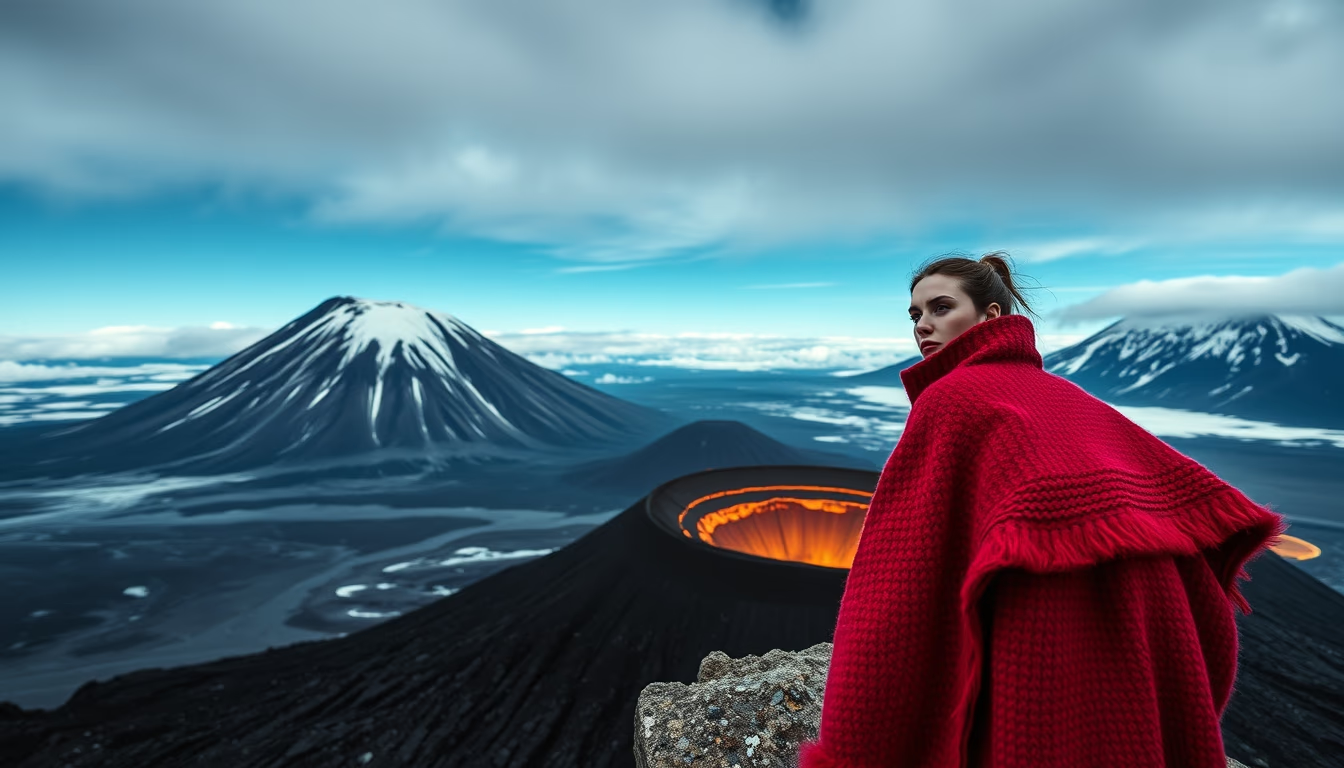
Eyjafjallajökull is a subglacial volcano in Iceland that caused the largest disruption of European air travel since World War II.
About this subject
Eyjafjallajökull is a volcano located in southern Iceland, beneath a glacier of the same name. Its name means 'glacier of the mountain islands' in Icelandic. The volcano has a caldera approximately 2.5 km in diameter and reaches a maximum altitude of 1,666 meters. The last significant eruption occurred in 2010, between March and April, preceded by a series of earthquakes and ground deformation.
The 2010 eruption was relatively small in lava volume but became globally famous due to the huge ash plume that reached the upper troposphere. The ash, composed of glassy and abrasive particles, posed a severe risk to jet engines. As a result, large portions of European airspace were closed for several weeks, affecting over 10 million passengers and causing billions in losses. It was the largest collapse of civil aviation since World War II.
Geologically, Eyjafjallajökull is part of the same volcanic system that includes the Katla volcano to the east. Studies suggest that eruptions of Eyjafjallajökull are often followed by Katla eruptions, but this did not happen after 2010. The volcano's activity is constantly monitored by the Icelandic Meteorological Office using seismographs and gas measurements to forecast future events.
The 2010 eruption had a strong cultural and scientific impact. It popularized terms like 'volcanic plume' and highlighted the vulnerability of modern aviation to natural phenomena. It also spawned studies on ash dispersion and redefined aviation safety protocols. The name Eyjafjallajökull became one of the most cited volcanoes in global media, even if many struggled to pronounce it.
Frequently Asked Questions
What does the name Eyjafjallajökull mean?
Eyjafjallajökull means 'glacier of the mountain islands' in Icelandic. It combines 'eyja' (island), 'fjalla' (mountain), and 'jökull' (glacier).
Why did the 2010 eruption paralyze European air traffic?
The eruption produced a volcanic ash plume containing abrasive, glassy particles. These particles can melt inside jet engines, causing failure. Aviation authorities closed the airspace to prevent accidents.
Is Eyjafjallajökull still active?
Yes, the volcano is considered active but is currently dormant. There are no signs of imminent eruption. It is continuously monitored by the Icelandic Meteorological Office.
Direct URL
https://pub-c7d6a6ea828543ac903a74a341ccb2e1.r2.dev/imagens/eyjafjallajokull-volcano-high-fashion-editorial-p6.avifHow to credit
Include a visible link back to UtilizAí. Copy one of the snippets below:
<a href="https://xn--utiliza-eza.com/en/midia/imagens/eyjafjallajokull-volcano-high-fashion-editorial-p6">Eyjafjallajökull volcano</a> by <a href="https://xn--utiliza-eza.com">UtilizAí</a>, licensed under <a href="https://creativecommons.org/licenses/by/4.0/">CC BY 4.0</a>.
[Eyjafjallajökull volcano](https://xn--utiliza-eza.com/en/midia/imagens/eyjafjallajokull-volcano-high-fashion-editorial-p6) by [UtilizAí](https://xn--utiliza-eza.com), CC BY 4.0
License: CC-BY-4.0