Eyjafjallajökull volcano
1344×768 · AVIF · CC BY 4.0
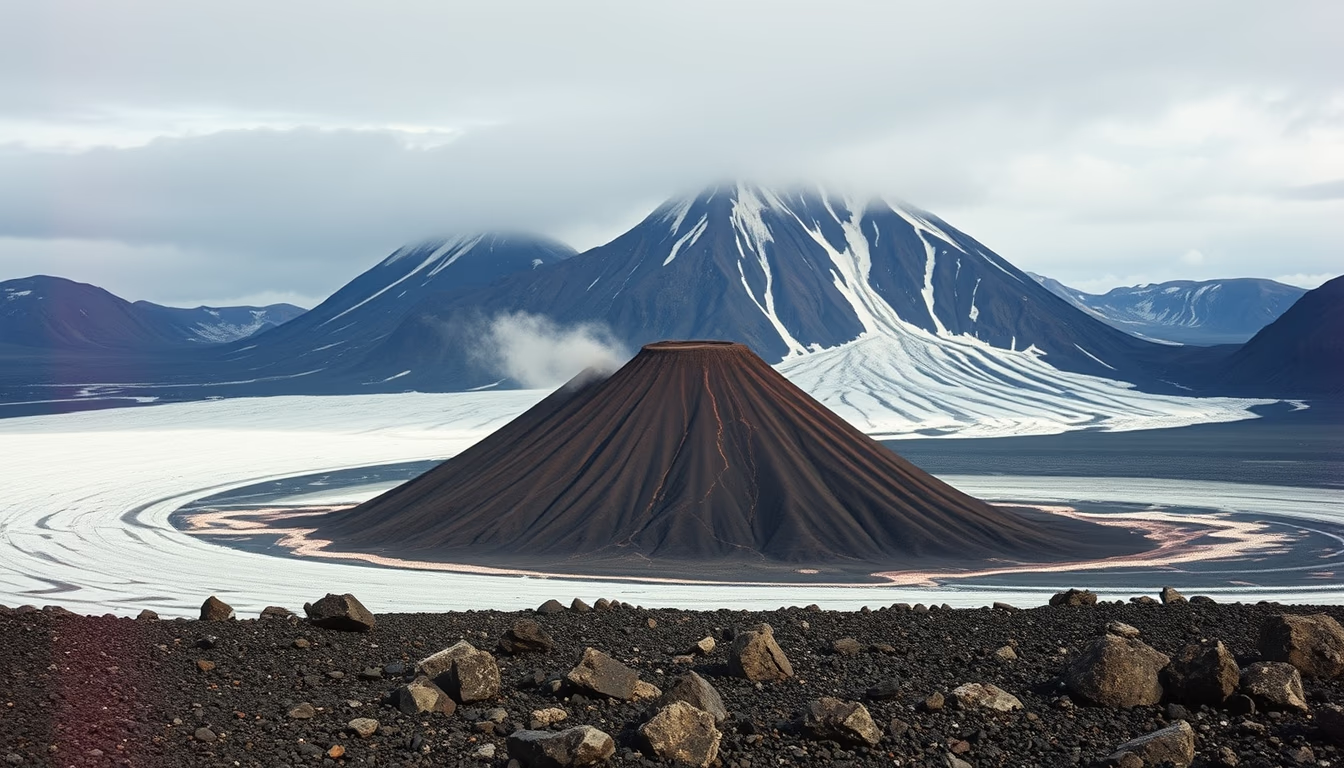
Eyjafjallajökull is a subglacial volcano in Iceland, globally infamous for its 2010 eruption that paralyzed European air travel.
About this subject
Eyjafjallajökull, meaning "glacier of the mountain islands," is located in southern Iceland beneath an ice cap of the same name. Rising to 1,666 meters, it is part of the Katla volcanic system, one of the country's most active. Its most famous eruption occurred from March to May 2010, when a fissure on the flank released lava and a massive ash plume reaching 11 kilometers in height. The ash, composed of glassy and abrasive particles, posed severe risks to aircraft engines, leading to the closure of much of Europe's airspace for weeks. Over 100,000 flights were canceled, affecting millions of passengers and causing billions in economic losses. The event turned Eyjafjallajökull into a global household name, sparking interest in Icelandic geology. Iceland, with 30 active volcanic systems, sits on the Mid-Atlantic Ridge, where the Eurasian and North American tectonic plates diverge. The 2010 eruption was preceded by seismic swarms and ground deformation monitored by seismographs. Notably, the eruption caused no direct deaths, but it highlighted modern aviation's vulnerability to natural phenomena. Since then, volcanic ash monitoring and risk management protocols have been improved across Europe. Culturally, the volcano spawned countless memes, puns, and even inspired a song by Icelandic singer Björk. The surrounding landscape, with glaciers, waterfalls, and lava fields, draws tourists, but the volcano's unpredictability demands caution.
Frequently Asked Questions
Where is the Eyjafjallajökull volcano located?
It is located in southern Iceland under an ice cap of the same name, about 125 kilometers east of the capital Reykjavík.
Why did the 2010 eruption cause such air travel chaos?
The eruption released fine, abrasive ash that could damage jet engines, prompting authorities to close European airspace as a precaution.
Is Eyjafjallajökull still active?
Yes, it is considered active, but there are no signs of imminent eruption. The last eruption was in 2010, and the volcano is continuously monitored by scientists.
Direct URL
https://pub-c7d6a6ea828543ac903a74a341ccb2e1.r2.dev/imagens/eyjafjallajokull-volcano-film-grain-authentic-p8.avifHow to credit
Include a visible link back to UtilizAí. Copy one of the snippets below:
<a href="https://xn--utiliza-eza.com/en/midia/imagens/eyjafjallajokull-volcano-film-grain-authentic-p8">Eyjafjallajökull volcano</a> by <a href="https://xn--utiliza-eza.com">UtilizAí</a>, licensed under <a href="https://creativecommons.org/licenses/by/4.0/">CC BY 4.0</a>.
[Eyjafjallajökull volcano](https://xn--utiliza-eza.com/en/midia/imagens/eyjafjallajokull-volcano-film-grain-authentic-p8) by [UtilizAí](https://xn--utiliza-eza.com), CC BY 4.0
License: CC-BY-4.0