Eyjafjallajökull volcano
1344×768 · AVIF · CC BY 4.0
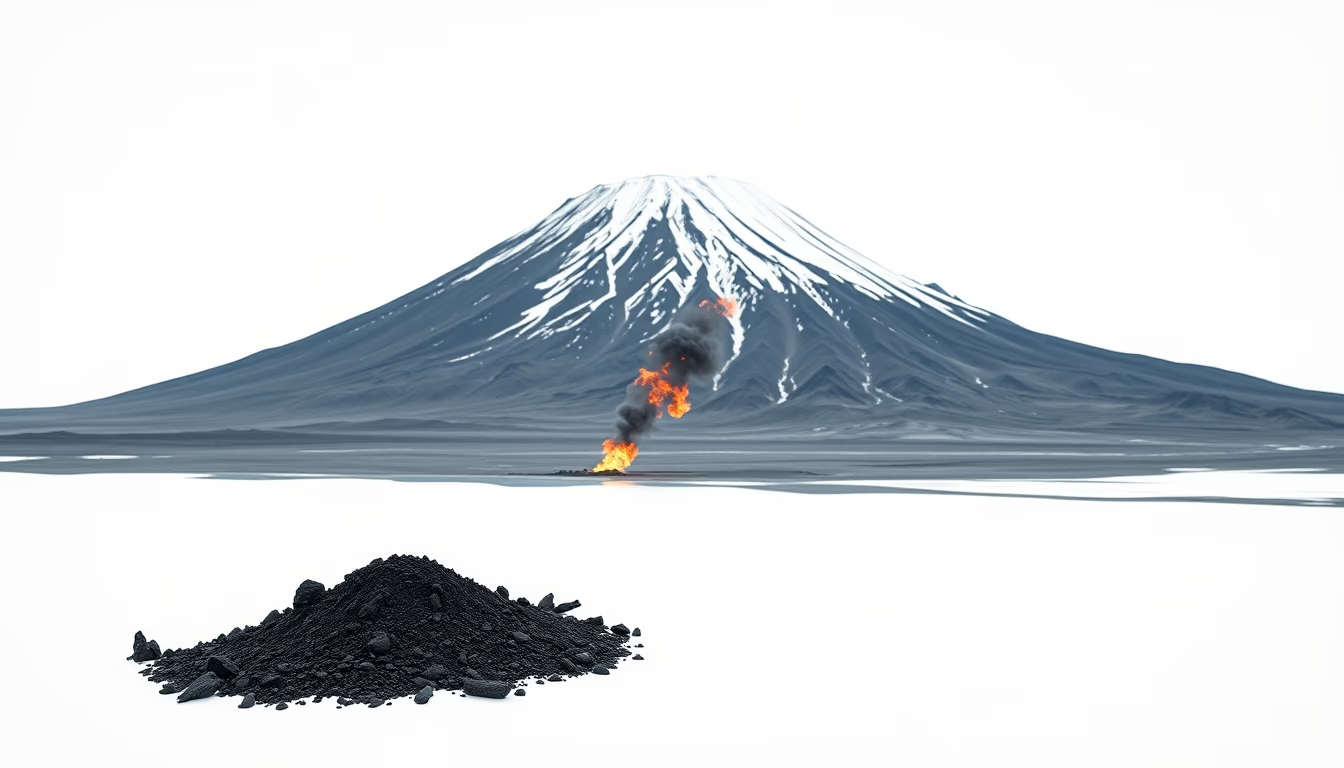
Eyjafjallajökull volcano in Iceland gained worldwide fame in 2010 when it disrupted European air travel for weeks.
About this subject
Eyjafjallajökull is one of several subglacial volcanoes in Iceland, located beneath an ice cap of the same name. Standing 1,666 meters tall, it is part of the Katla volcanic system, though it is an independent edifice. The 2010 eruption, which began on March 20 and intensified in April, was highly explosive due to the interaction of magma with ice. This interaction produced a fine ash cloud that reached altitudes over 9 km, carried by prevailing winds toward Europe. The result was the largest closure of European airspace since World War II, with over 100,000 flights canceled and economic losses estimated at $1.7 billion.
Geologically, Iceland lies on the Mid-Atlantic Ridge, where the North American and Eurasian tectonic plates diverge. This setting generates intense volcanism with frequent eruptions. Eyjafjallajökull is a stratovolcano built from alternating layers of lava and tephra. Before 2010, its last major eruption occurred between 1821 and 1823, causing jökulhlaups (glacial outburst floods). The 2010 eruption was preceded by a series of earthquakes and ground deformation, closely monitored by seismographs.
The 2010 eruption had global impacts beyond air travel disruption, affecting agriculture and health. The ash contained silica and fluorine, posing risks to livestock in Iceland. Fortunately, no direct fatalities occurred, but preventive evacuations were carried out. The name Eyjafjallajökull means "glacier of the mountain islands" in Icelandic, reflecting the country's glaciovolcanic landscape.
Frequently Asked Questions
Why was the 2010 eruption so disruptive to air travel?
The fine volcanic ash, rich in silica, could melt inside jet engines and solidify, causing engine failure. European authorities opted to close airspace as a safety measure, affecting thousands of flights.
Is the volcano still active?
Yes, Eyjafjallajökull is considered active, but there have been no eruptions since 2010. Continuous monitoring shows seismic activity and deformation, indicating future eruptions are possible.
What does the name Eyjafjallajökull mean?
Eyjafjallajökull means 'glacier of the mountain islands' in Icelandic. The name refers to the ice cap covering the volcano, a common feature in Iceland's volcanic landscape.
Direct URL
https://pub-c7d6a6ea828543ac903a74a341ccb2e1.r2.dev/imagens/eyjafjallajokull-volcano-commercial-product-photography-p3.avifHow to credit
Include a visible link back to UtilizAí. Copy one of the snippets below:
<a href="https://xn--utiliza-eza.com/en/midia/imagens/eyjafjallajokull-volcano-commercial-product-photography-p3">Eyjafjallajökull volcano</a> by <a href="https://xn--utiliza-eza.com">UtilizAí</a>, licensed under <a href="https://creativecommons.org/licenses/by/4.0/">CC BY 4.0</a>.
[Eyjafjallajökull volcano](https://xn--utiliza-eza.com/en/midia/imagens/eyjafjallajokull-volcano-commercial-product-photography-p3) by [UtilizAí](https://xn--utiliza-eza.com), CC BY 4.0
License: CC-BY-4.0