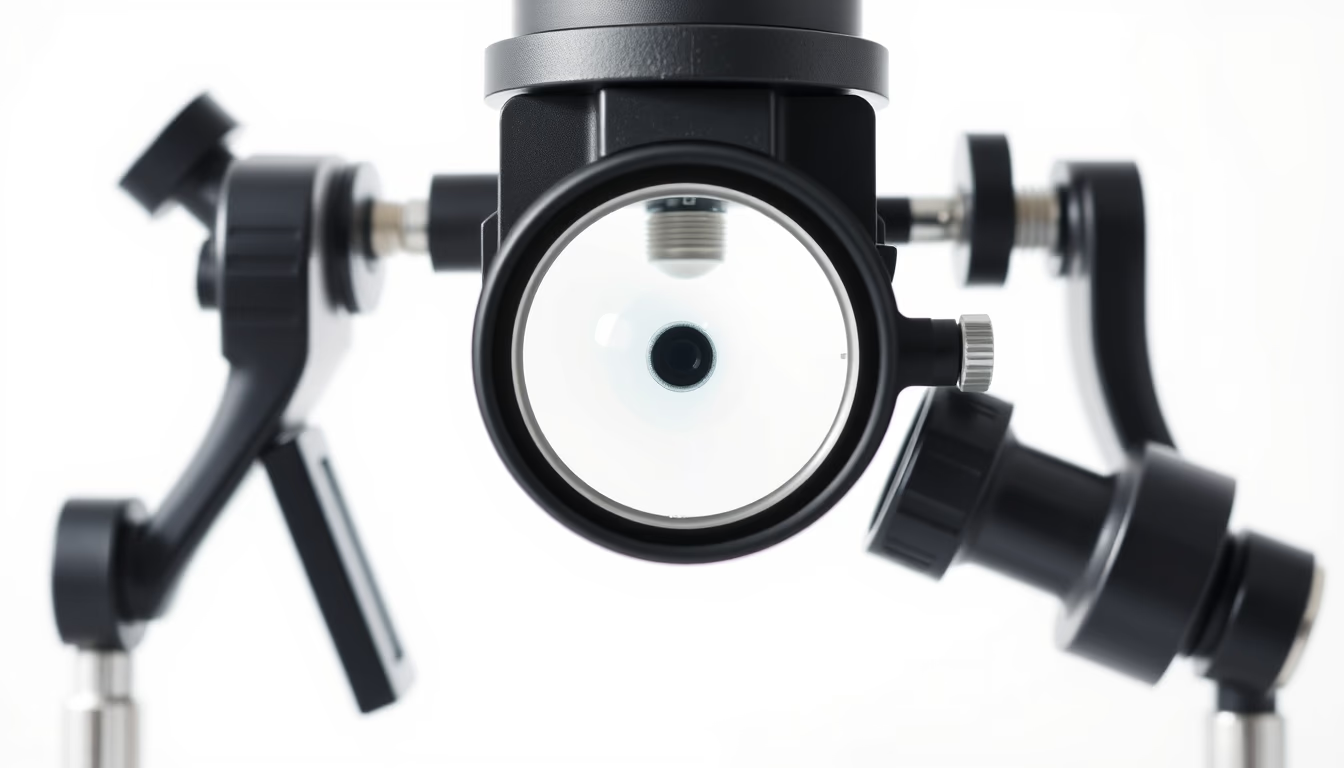
Eye exam phoropter
1344×768 · AVIF · CC BY 4.0
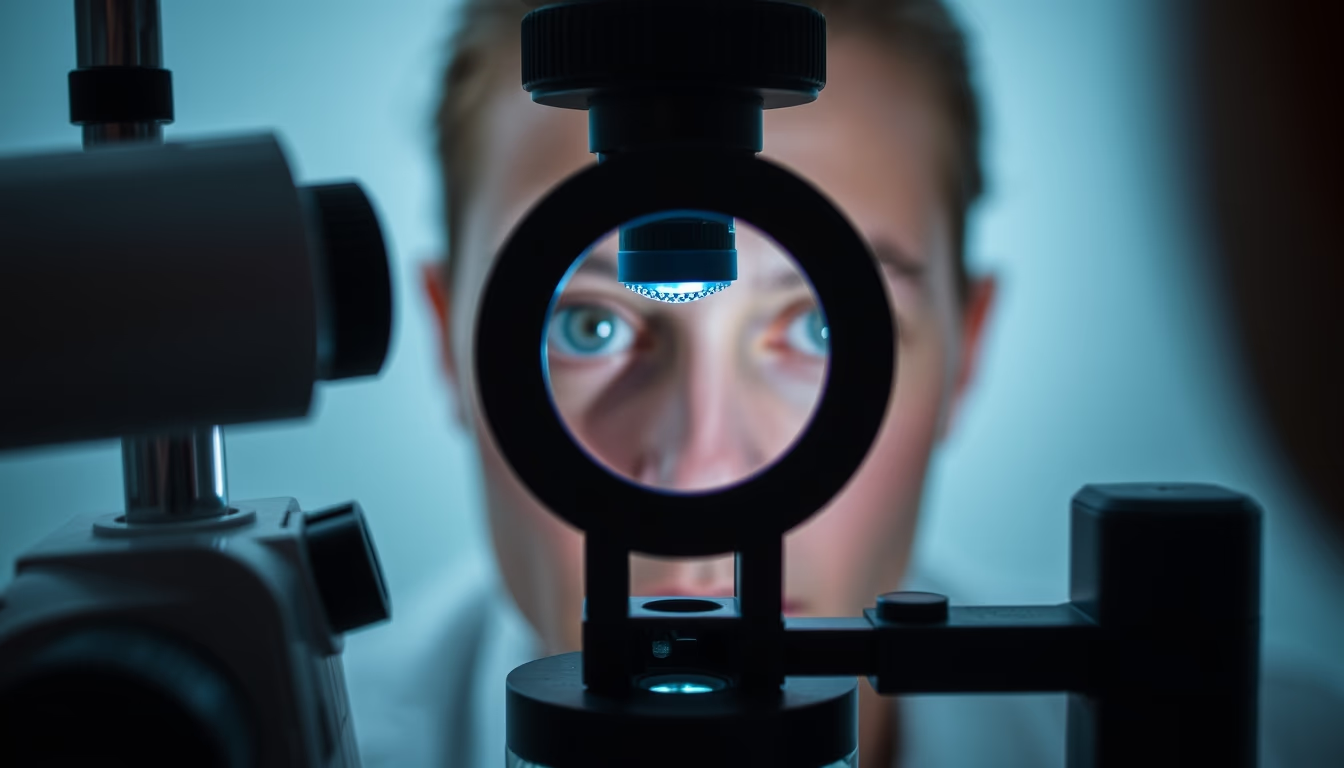
The phoropter is the clinical instrument used by ophthalmologists and optometrists to measure refractive error during eye exams.
About this subject
The phoropter, also known as a refractor, is an essential device in ophthalmology and optometry clinics used to determine the prescription for eyeglasses or contact lenses. During a refraction exam, the patient looks through the interchangeable lenses of the phoropter while the doctor adjusts different lenses to assess the correction for myopia, hyperopia, astigmatism, and presbyopia. Each eye is tested separately, and the instrument allows rapid switching of positive and negative lenses, as well as cylinders for astigmatism.
The history of the phoropter dates back to the 19th century, with early models being manual devices with individual lenses. The modern design was patented in 1914 by Henry L. De Zeng, who introduced a rotating system of lenses mounted on disks. Since then, the device has evolved with the addition of cylindrical lenses, prisms, and motorized controls. Today, digital computerized phoropters automate part of the process, but the basic principle remains the same.
In addition to its primary function, the phoropter is used in binocular vision tests, such as measuring phorias and stereopsis. In optometry clinics, it is often combined with an eye chart (usually the Snellen chart) positioned at 6 meters to simulate distance vision. The subjective refraction exam using a phoropter is considered the gold standard for eyeglass prescriptions, indispensable for correcting vision problems that affect billions of people worldwide.
Fun fact: the term “phoropter” comes from the Greek “phoros” (carrier) and “opter” (eye), literally meaning “eye carrier.” Despite advanced technology, many ophthalmologists still prefer the manual model because it allows greater tactile sensitivity during the exam.
Frequently Asked Questions
What is the difference between a phoropter and an autorefractor?
The phoropter requires subjective patient input to adjust lenses, while the autorefractor provides an objective automatic estimate of refractive error. The phoropter is more accurate for the final prescription.
How does the phoropter test work?
The patient sits in front of the phoropter and looks at an eye chart. The doctor switches lenses, asking the patient which option provides sharper vision. The process is repeated for each eye until the best correction is found.
Who invented the phoropter?
The modern phoropter design was patented by Henry L. De Zeng in 1914. Earlier versions existed since the 19th century, but De Zeng introduced the rotating disk system with mounted lenses.
Direct URL
https://pub-c7d6a6ea828543ac903a74a341ccb2e1.r2.dev/imagens/eye-exam-phoropter-fine-art-photography-p4.avifHow to credit
Include a visible link back to UtilizAí. Copy one of the snippets below:
<a href="https://xn--utiliza-eza.com/en/midia/imagens/eye-exam-phoropter-fine-art-photography-p4">Eye exam phoropter</a> by <a href="https://xn--utiliza-eza.com">UtilizAí</a>, licensed under <a href="https://creativecommons.org/licenses/by/4.0/">CC BY 4.0</a>.
[Eye exam phoropter](https://xn--utiliza-eza.com/en/midia/imagens/eye-exam-phoropter-fine-art-photography-p4) by [UtilizAí](https://xn--utiliza-eza.com), CC BY 4.0
License: CC-BY-4.0