Ergonomic chair home
1344×768 · AVIF · CC BY 4.0
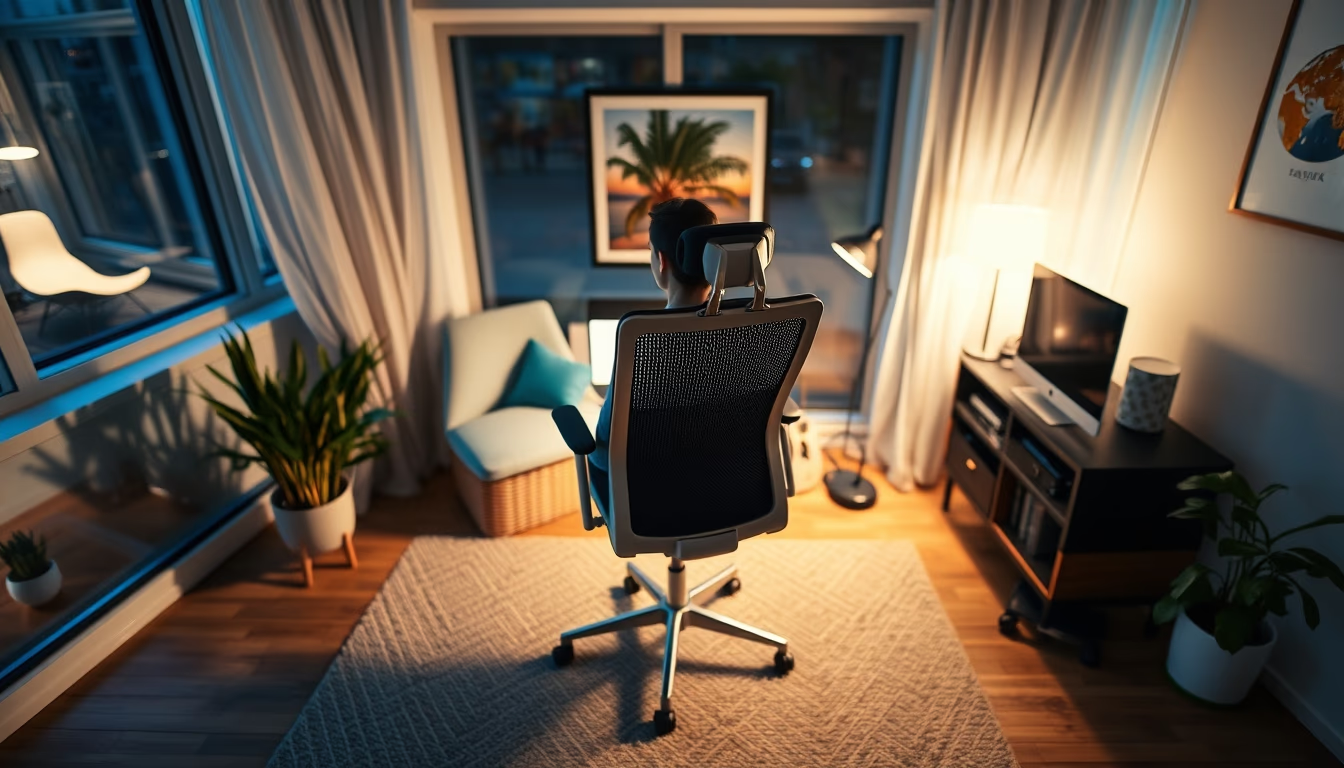
Ergonomic chair in the home office: essential for postural health and productivity in remote work.
About this subject
With the consolidation of remote work after the pandemic, the ergonomic chair has gone from a luxury to a basic home office item. Studies show that professionals spend an average of 6 to 10 hours sitting per day, and poor posture can lead to chronic pain, herniated discs, and decreased productivity. An ergonomic chair adjusts to the natural curves of the spine, offers lumbar support, adjustable height and backrest, as well as arm supports, preventing overload on shoulders and wrists.
In Brazil, the Brazilian Ergonomics Association (ABERGO) recommends that office furniture follow technical standards such as NBR 13962, which specifies requirements for office chairs. Models with synchronized mechanism, rounded seat edge, and swivel base are the most recommended. Additionally, the hybrid work culture has boosted national and international brands to develop specific lines for the home, with more compact designs and neutral colors that blend into home decor.
The global market for ergonomic chairs is expected to grow 6% annually until 2030, according to sector reports. This growth reflects not only the need for occupational health but also the search for aesthetics and sustainability: many manufacturers now use recycled foam, breathable fabrics, and certifications like Greenguard. For those working from home, investing in an ergonomic chair is as important as having a good internet connection, both directly impact work quality and well-being.
Fun fact: the term “ergonomics” comes from the Greek “ergon” (work) and “nomos” (laws), meaning the laws of work. The discipline gained strength during World War II, when it was necessary to optimize military equipment. Today, it applies to everything from chairs to software.
Frequently Asked Questions
What are the main features of an ergonomic chair?
An ergonomic chair should have adjustable lumbar support, height adjustment, a rounded front edge (to avoid thigh compression), reclining backrest, adjustable armrests, and a swivel base. Ideally, the seat and backrest should be independent (synchronized mechanism) to better follow body movements.
How to choose the best ergonomic chair for a home office?
Consider your weight and height, testing models that offer seat depth adjustment and lumbar support. Prefer breathable materials (mesh or perforated faux leather) and avoid overly soft chairs. Check for certifications such as NBR 13962 (Brazil) or Greenguard (low chemical emissions).
Are expensive ergonomic chairs always better?
Not necessarily. Entry-level models with basic adjustments can already improve posture. The important thing is adaptability: the backrest should follow the spine's curve, and the seat should not press the back of the knees. National brands like Flexform, Base, and Tigre offer good value for money.
Direct URL
https://pub-c7d6a6ea828543ac903a74a341ccb2e1.r2.dev/imagens/ergonomic-chair-home-documentary-photography-p2.avifHow to credit
Include a visible link back to UtilizAí. Copy one of the snippets below:
<a href="https://xn--utiliza-eza.com/en/midia/imagens/ergonomic-chair-home-documentary-photography-p2">Ergonomic chair home</a> by <a href="https://xn--utiliza-eza.com">UtilizAí</a>, licensed under <a href="https://creativecommons.org/licenses/by/4.0/">CC BY 4.0</a>.
[Ergonomic chair home](https://xn--utiliza-eza.com/en/midia/imagens/ergonomic-chair-home-documentary-photography-p2) by [UtilizAí](https://xn--utiliza-eza.com), CC BY 4.0
License: CC-BY-4.0