English saddle dressage
1344×768 · AVIF · CC BY 4.0
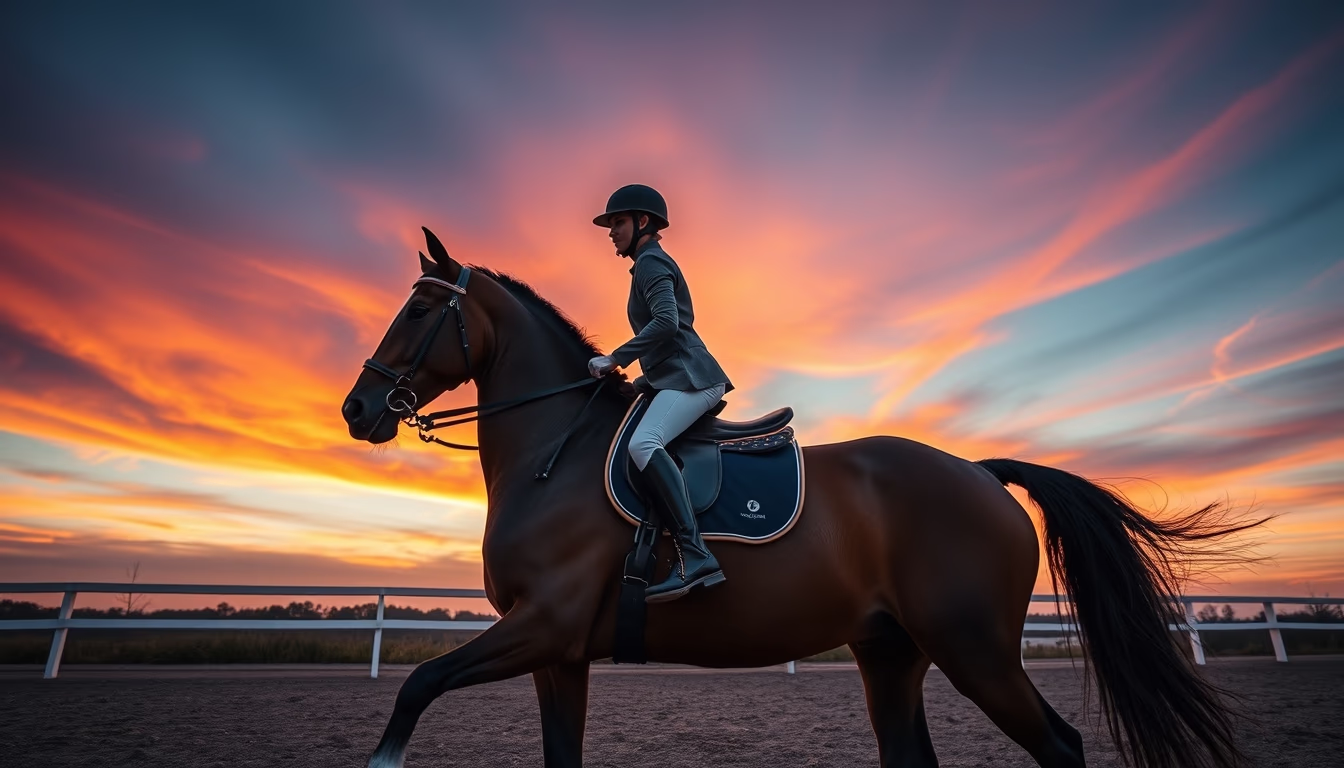
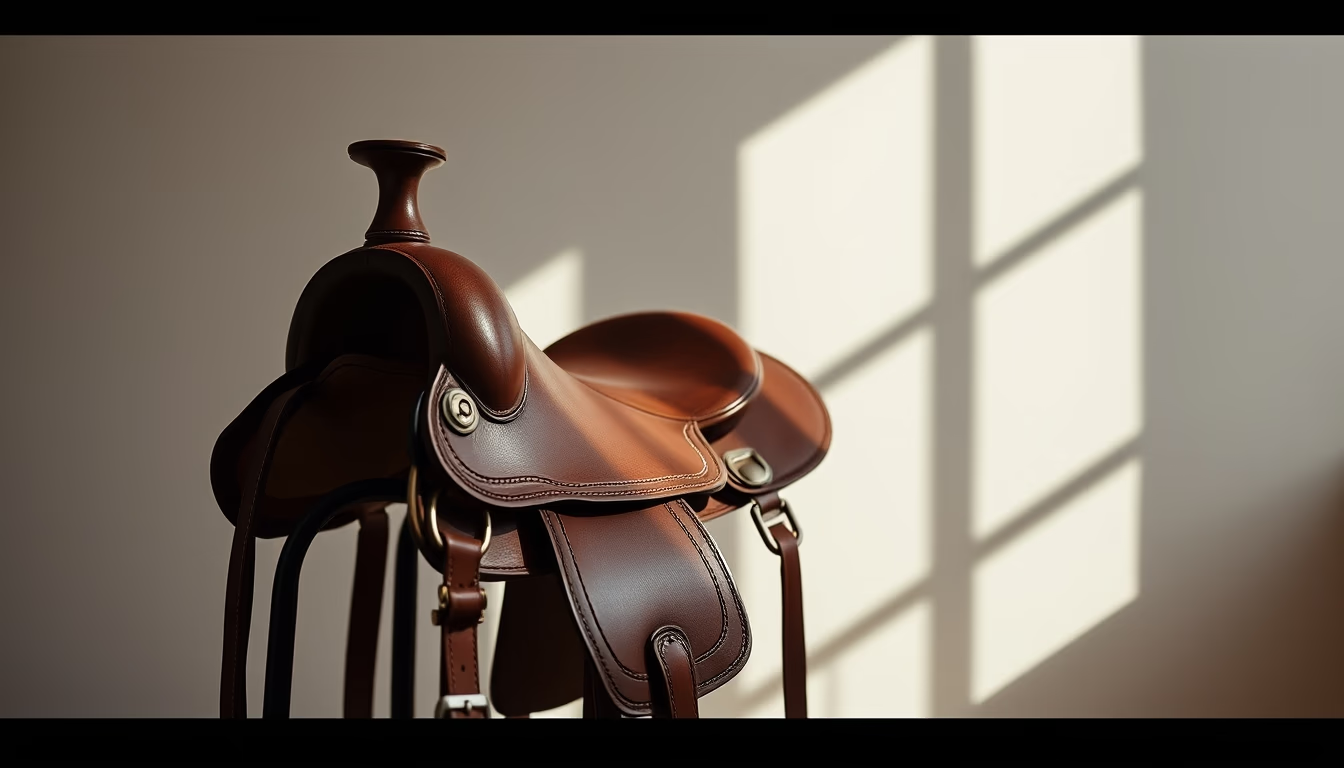
The English dressage saddle blends tradition and technique to maximize contact and communication between rider and horse.
About this subject
The English saddle is the standard equipment in equestrian disciplines such as show jumping, dressage, and eventing. Unlike the Western saddle, which is deeper and heavier, the English saddle is lightweight and designed to allow greater freedom of movement for the horse and closer contact for the rider. In dressage specifically, the saddle is built with a deeper, straighter seat that helps the rider maintain an upright posture and subtle rein contact.
The history of the English saddle dates back to 18th century Europe, with adaptations for hunting and military riding. Over time, distinct saddle designs emerged for specific disciplines. The dressage saddle, for example, features a longer, straighter flap to accommodate the rider's leg in the correct position, along with subtle but functional knee rolls. The craftsmanship still involves high-quality leather and a frame made of wood or synthetic materials.
The long exposure photographic technique captures the fluid motion of horse and rider, resulting in images where moving parts are blurred while the background remains sharp. This is particularly interesting for dressage, where precision of movement is highly valued. Long exposure can convey the grace and continuity of movements such as piaffe or passage, offering an artistic perspective beyond technical competition.
Interestingly, the dressage saddle has no horn or pommel, as it would interfere with hand position and communication with the horse. The straight seat is designed to help the rider balance during collected and extended gaits.
Frequently Asked Questions
What is the difference between an English dressage saddle and a jumping saddle?
A dressage saddle has a straighter seat and longer flap to accommodate the rider's extended leg, whereas a jumping saddle has a more forward-inclined seat and shorter flap for greater leg mobility over jumps.
How is long exposure used in equestrian photography?
Long exposure creates motion blur in moving parts of horse and rider, highlighting the fluidity of movement. It is used to convey dynamism and artistry, especially in gallops or dressage movements like piaffe.
Why doesn't the English saddle have a horn like the Western saddle?
In dressage and other English disciplines, a horn would interfere with hand position and subtle rein communication. The saddle is designed for direct contact and balance without obstructions.
Direct URL
https://pub-c7d6a6ea828543ac903a74a341ccb2e1.r2.dev/imagens/english-saddle-dressage-long-exposure-fresh7.avifHow to credit
Include a visible link back to UtilizAí. Copy one of the snippets below:
<a href="https://xn--utiliza-eza.com/en/midia/imagens/english-saddle-dressage-long-exposure-fresh7">English saddle dressage</a> by <a href="https://xn--utiliza-eza.com">UtilizAí</a>, licensed under <a href="https://creativecommons.org/licenses/by/4.0/">CC BY 4.0</a>.
[English saddle dressage](https://xn--utiliza-eza.com/en/midia/imagens/english-saddle-dressage-long-exposure-fresh7) by [UtilizAí](https://xn--utiliza-eza.com), CC BY 4.0
License: CC-BY-4.0