Emerald rough green
1344×768 · AVIF · CC BY 4.0
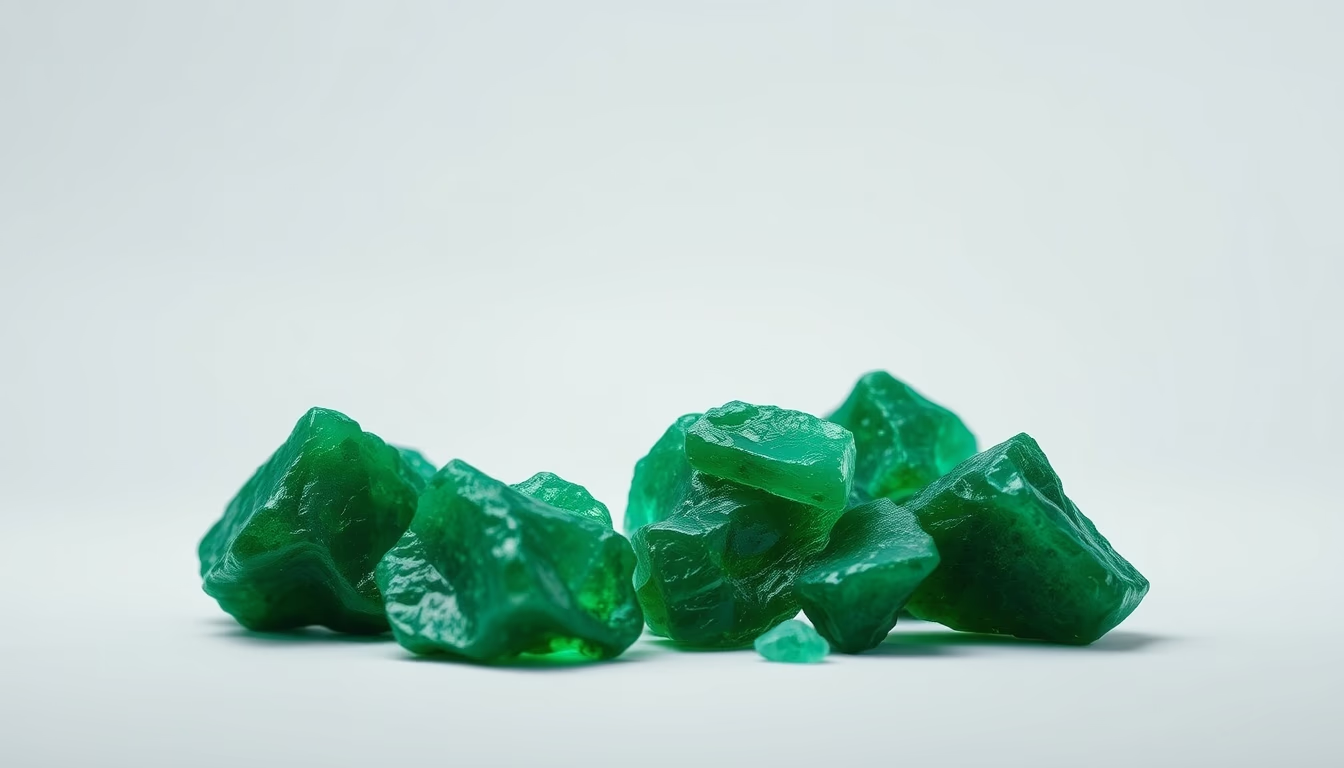
Rough emerald, a beryl crystal with intense green color, is one of the most valuable and coveted gemstones in the world.
About this subject
Emeralds are a variety of the mineral beryl (Be3Al2(SiO3)6), whose characteristic green color is derived from traces of chromium and sometimes vanadium. In their rough form, hexagonal crystals may exhibit fractures, fluid inclusions, and associated minerals, known as 'jardin' (garden), which are natural hallmarks used to authenticate the gem. Emerald formation occurs in specific geological settings, such as hydrothermal veins and metamorphic rocks, under high pressure and temperature.
The world's main emerald deposits are in Colombia (Muzo, Chivor, and Coscuez mines), accounting for about 70% of global gem-quality production. Brazil is also a major producer, notably from Belmont (Minas Gerais), Piteiras, and Capoeirana mines. Other significant sources include Zambia (Kagem mine), Zimbabwe, Pakistan, and Afghanistan. Each deposit imparts unique characteristics to the stones, such as hue and inclusion types.
Historically, emeralds were treasured by ancient civilizations like the Incas and Aztecs, who considered them sacred. In Brazil, the discovery of deposits in the 20th century boosted mining and gem trade. Extraction of rough emeralds employs artisanal and industrial methods, and cutting aims to enhance color while minimizing inclusions. The largest rough emerald ever found weighed over 300 kg, discovered in 1999 in Bahia, Brazil.
In the market, emeralds are graded by color (hue, saturation, and tone), transparency, and inclusion amount. Heat and oil treatments are common to improve appearance but reduce value due to artificiality. Rough emeralds are highly valued by collectors and jewelry designers seeking unique pieces with natural forms. Their hardness of 7.5, 8 on the Mohs scale makes them suitable for jewelry, though care is needed to avoid impacts.
Frequently Asked Questions
What is the difference between rough and cut emerald?
Rough emerald is the natural crystal extracted from the mine, unaltered in form or surface. Cut emerald undergoes faceting and polishing to maximize brilliance, color, and clarity, losing weight but gaining aesthetic value.
Which are the main emerald-producing countries?
Colombia leads the world's gem-quality emerald production, followed by Brazil and Zambia. Other producers include Zimbabwe, Pakistan, Afghanistan, and Madagascar.
How to identify a real emerald?
Real emeralds show natural inclusions (jardin), hardness of 7.5, 8, and green color with blue or yellow nuances. Gemological tests such as microscopy and refractometry confirm authenticity.
Direct URL
https://pub-c7d6a6ea828543ac903a74a341ccb2e1.r2.dev/imagens/emerald-rough-green-studio-still-life-p1.avifHow to credit
Include a visible link back to UtilizAí. Copy one of the snippets below:
<a href="https://xn--utiliza-eza.com/en/midia/imagens/emerald-rough-green-studio-still-life-p1">Emerald rough green</a> by <a href="https://xn--utiliza-eza.com">UtilizAí</a>, licensed under <a href="https://creativecommons.org/licenses/by/4.0/">CC BY 4.0</a>.
[Emerald rough green](https://xn--utiliza-eza.com/en/midia/imagens/emerald-rough-green-studio-still-life-p1) by [UtilizAí](https://xn--utiliza-eza.com), CC BY 4.0
License: CC-BY-4.0