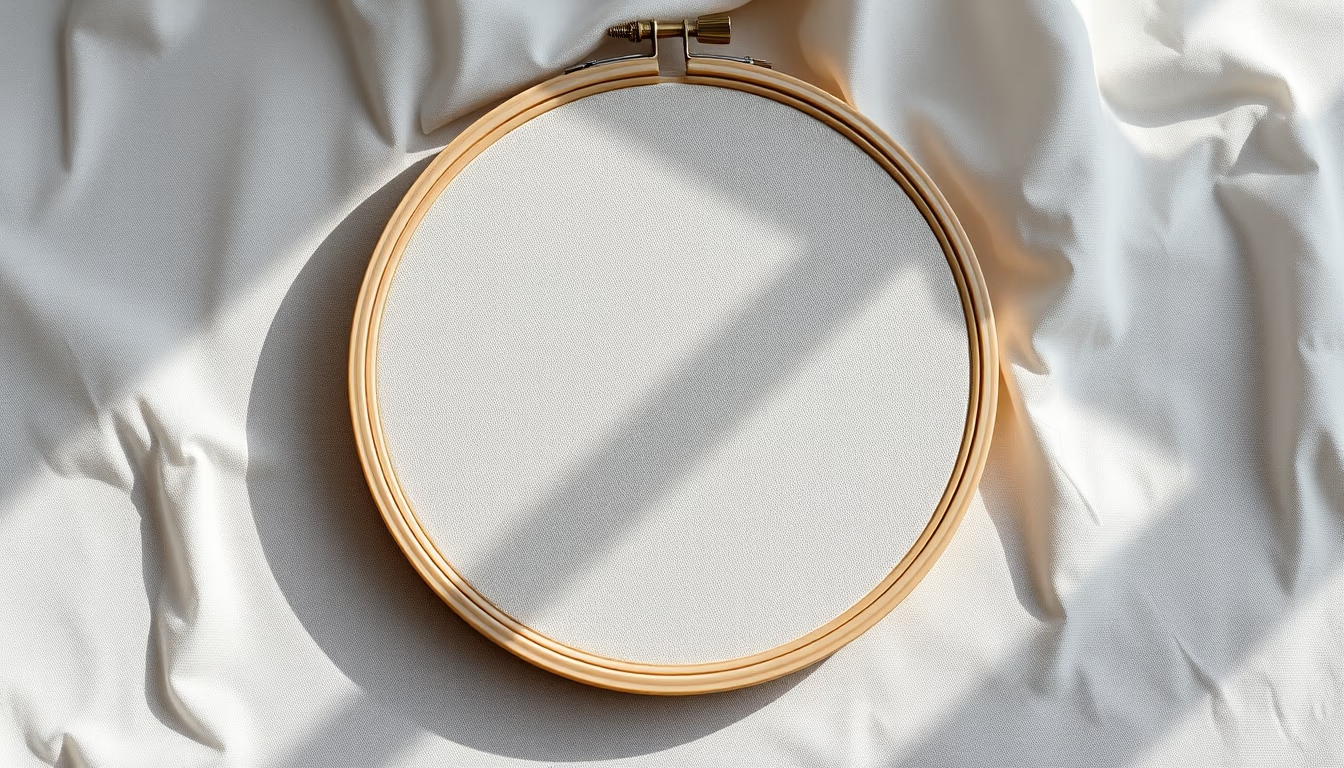
Embroidery hoop pattern
1344×768 · AVIF · CC BY 4.0

Embroidery hoop with minimalist pattern: the art of turning threads into geometric and subtle compositions, a trend in 2026.
About this subject
The embroidery hoop is a classic tool that has gained new life with minimalist design. Originally used to stretch fabric and facilitate sewing, it has become a support for contemporary artistic expression. Minimalist patterns, which favor geometric shapes, straight lines, and negative space, contrast with traditional floral or figurative embroidery. This aesthetic dialogues with movements like Brazilian modernism and Scandinavian design, which value simplicity and functionality.
In Brazil, hand embroidery has deep roots in popular culture, especially in the Northeast, where cross-stitch and filé embroidery are traditions passed down through generations. Minimalism, on the other hand, emerges as an urban and sophisticated reinterpretation, adopted by artisans and designers seeking to integrate handcraft into contemporary decor. Neutral colors and abstract shapes allow the piece to adapt to different environments, from rustic to minimalist.
Technically, the wooden hoop (usually made of pine or birch) keeps the fabric taut, while fine-point needles and cotton or polyester threads create the stitches. Minimalist patterns require precision and planning, often using stitches like backstitch or satin stitch to fill areas. In 2026, the slow craft movement, driven by the search for manual hobbies and sustainability, highlights minimalist embroidery, with tutorials and kits sold globally.
Interesting fact: the hoop is not just functional; its circular frame is often kept as part of the final artwork, turning into a decorative piece. This practice became popular on social media, where artisans display compositions that mix minimalism with techniques like punch needle or freehand embroidery.
Frequently Asked Questions
What basic materials are needed to start minimalist embroidery?
You'll need a wooden hoop (15-20 cm in diameter), cotton fabric (like linen or denim), embroidery needles (size 5 to 7), mercerized cotton thread in neutral colors, scissors, and a pencil to transfer the pattern.
Is minimalist embroidery easier than traditional embroidery?
Not necessarily. Although patterns are simple, precision is crucial to keep straight lines and uniform spacing. The backstitch and satin stitch require practice, but the result is elegant.
How does minimalist embroidery fit into the slow craft trend?
Slow craft values manual processes, pauses, and creativity. Minimalist embroidery, with its clean aesthetic and repetitive stitches, is a form of active meditation, and it results in sustainable pieces that last for years.
Direct URL
https://pub-c7d6a6ea828543ac903a74a341ccb2e1.r2.dev/imagens/embroidery-hoop-pattern-minimalist-composition-p4.avifHow to credit
Include a visible link back to UtilizAí. Copy one of the snippets below:
<a href="https://xn--utiliza-eza.com/en/midia/imagens/embroidery-hoop-pattern-minimalist-composition-p4">Embroidery hoop pattern</a> by <a href="https://xn--utiliza-eza.com">UtilizAí</a>, licensed under <a href="https://creativecommons.org/licenses/by/4.0/">CC BY 4.0</a>.
[Embroidery hoop pattern](https://xn--utiliza-eza.com/en/midia/imagens/embroidery-hoop-pattern-minimalist-composition-p4) by [UtilizAí](https://xn--utiliza-eza.com), CC BY 4.0
License: CC-BY-4.0