Egyptian hieroglyphs detail
1344×768 · AVIF · CC BY 4.0
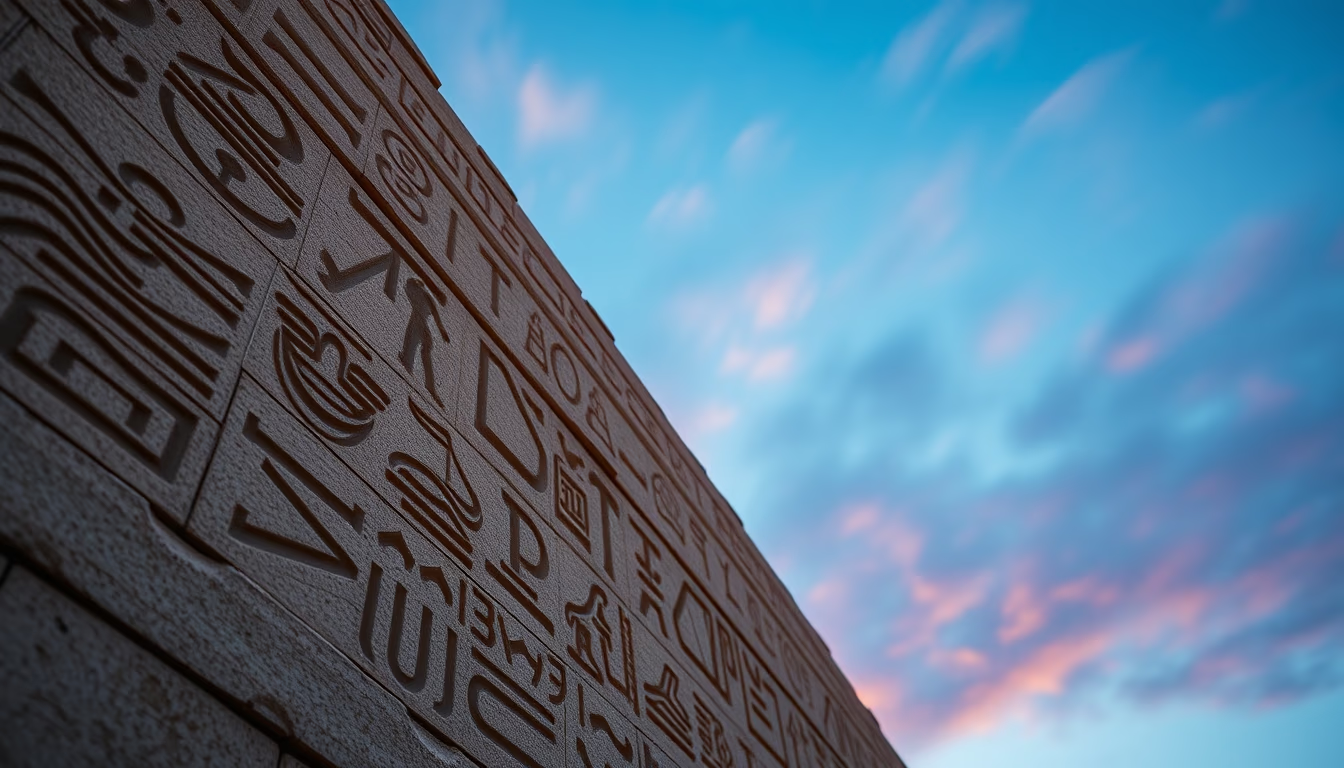
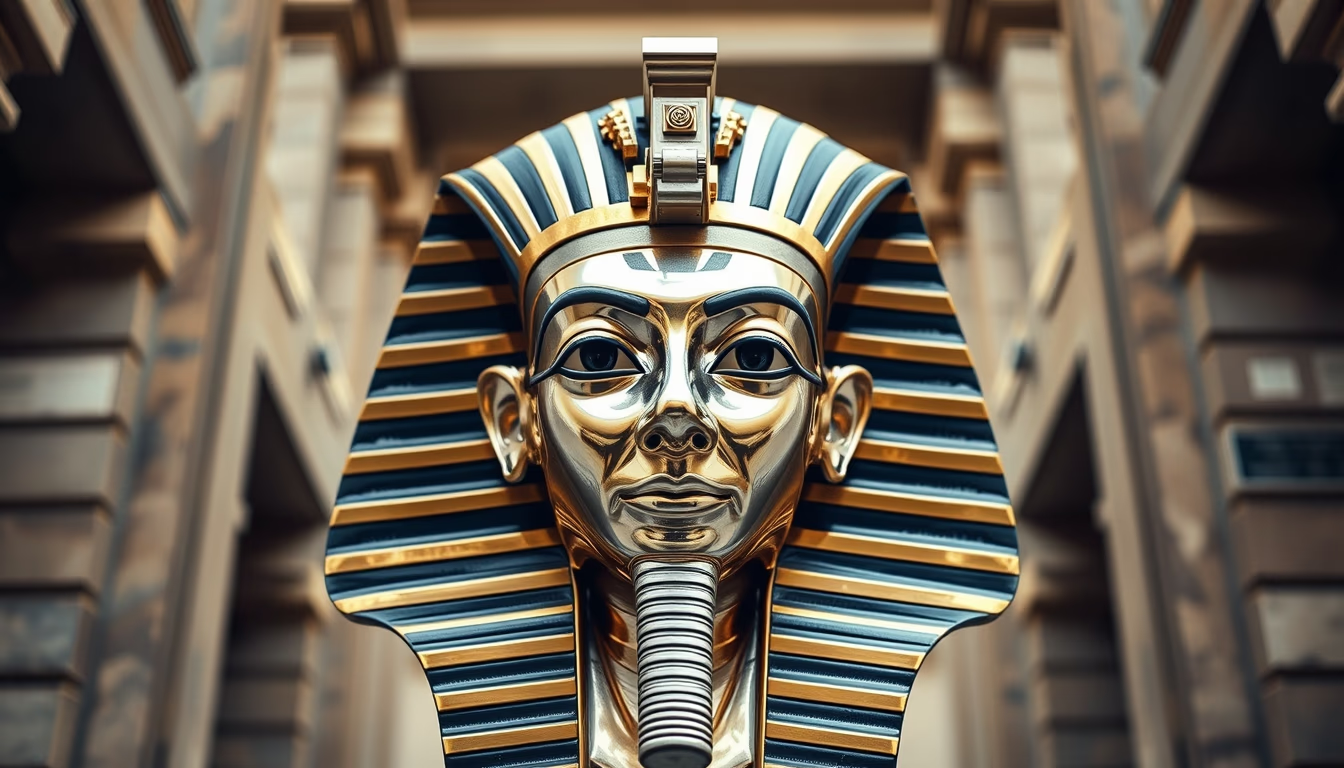
Egyptian hieroglyphs combine pictographic and phonetic writing, recording life, religion, and history of Ancient Egypt for over 3,000 years.
About this subject
Egyptian hieroglyphs are one of the world's oldest writing systems, emerging around 3200 BCE. Initially used for monumental inscriptions on temples and tombs, they combine logograms (symbols representing words or morphemes) and phonograms (symbols representing sounds). The script was considered sacred, known as 'medu netjer' (words of the gods), and its knowledge was restricted to scribes and priests.
The decipherment of hieroglyphs was a milestone in Egyptology. The Rosetta Stone, discovered in 1799, contained the same text in Ancient Greek, Demotic, and hieroglyphs, enabling Jean-François Champollion in 1822 to identify the phonetic values of the signs. He established that hieroglyphs were not merely symbolic but also represented sounds, unlocking the reading of thousands of inscriptions.
There are three main types of hieroglyphs: logograms (representing a whole word), phonograms (representing one or more consonant sounds), and determinatives (silent symbols indicating the semantic category of a word). The script could be written right to left, left to right, or top to bottom, with the direction indicated by the orientation of human and animal figures.
Today, hieroglyphs are essential for studying Egyptian civilization. About 700 signs are known, but only a subset was used in each period. Hieroglyphic writing influenced other cultures and continues to fascinate, being the focus of research and exhibitions in museums worldwide.
Frequently Asked Questions
How were Egyptian hieroglyphs deciphered?
The decipherment was made possible by the Rosetta Stone, which contained the same text in Greek, Demotic, and hieroglyphs. Jean-François Champollion compared royal names and discovered the phonetic value of signs, publishing the system in 1822.
Do hieroglyphs represent only symbols or also sounds?
Hieroglyphs include logograms (whole words) and phonograms (consonant sounds). Most signs have phonetic value, and determinatives add context without being read aloud.
What is the cultural significance of hieroglyphs?
They were considered the sacred writing of the gods, used mainly in religious and funerary contexts. Knowledge was restricted to scribes, who held high status in Egyptian society.
Direct URL
https://pub-c7d6a6ea828543ac903a74a341ccb2e1.r2.dev/imagens/egyptian-hieroglyphs-detail-long-exposure-p7.avifHow to credit
Include a visible link back to UtilizAí. Copy one of the snippets below:
<a href="https://xn--utiliza-eza.com/en/midia/imagens/egyptian-hieroglyphs-detail-long-exposure-p7">Egyptian hieroglyphs detail</a> by <a href="https://xn--utiliza-eza.com">UtilizAí</a>, licensed under <a href="https://creativecommons.org/licenses/by/4.0/">CC BY 4.0</a>.
[Egyptian hieroglyphs detail](https://xn--utiliza-eza.com/en/midia/imagens/egyptian-hieroglyphs-detail-long-exposure-p7) by [UtilizAí](https://xn--utiliza-eza.com), CC BY 4.0
License: CC-BY-4.0