Eclipse solar diamond ring
1344×768 · AVIF · CC BY 4.0
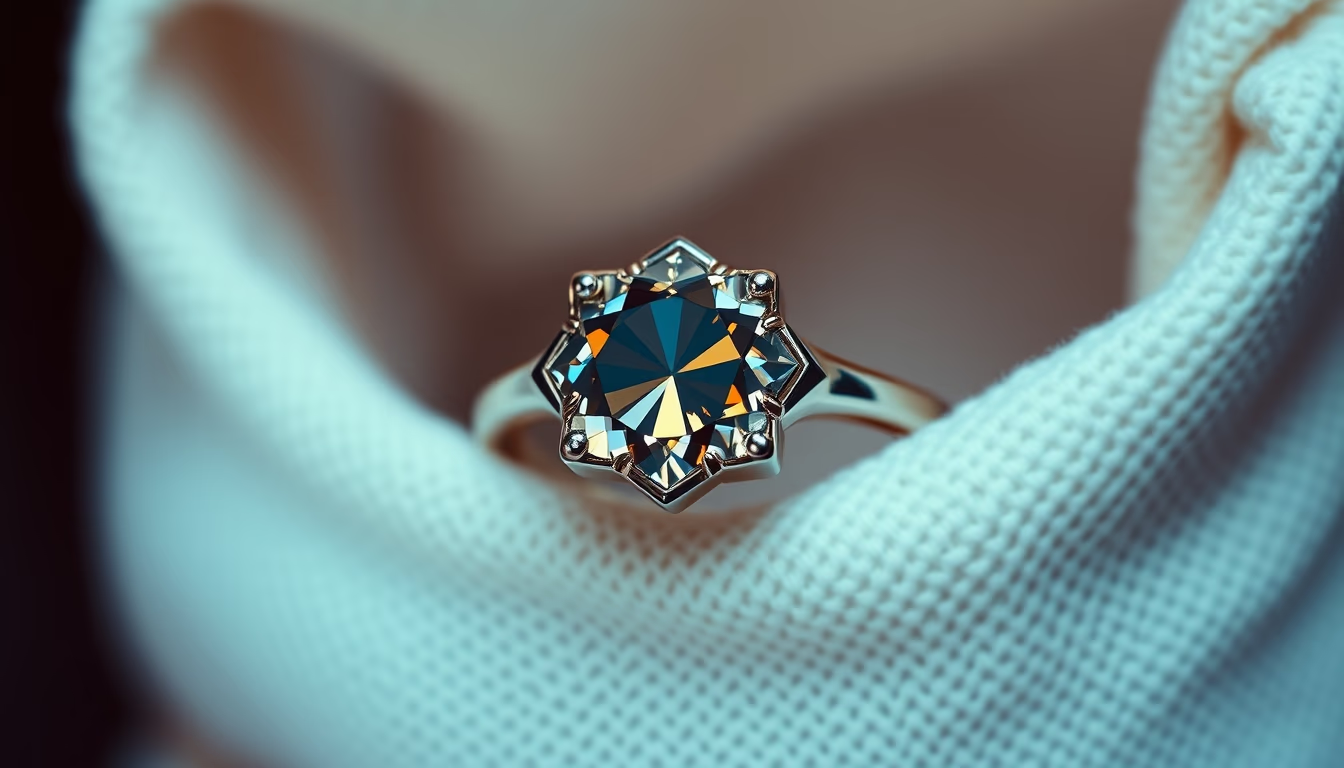
The diamond ring effect is an optical phenomenon that occurs seconds before and after totality of a solar eclipse, when the last sunlight shines through the Moon's valleys.
About this subject
The diamond ring effect is one of the most striking moments of a total solar eclipse. It occurs when the Moon almost completely covers the solar disk, but the last sunlight passes through valleys or depressions on the lunar limb, creating a bright point that resembles a diamond on a ring. The ring is formed by the solar chromosphere, a thin, reddish layer that surrounds the Sun. This phenomenon lasts only a few seconds and is eagerly awaited by observers and astrophotographers.
During the 2017 eclipse in the United States, the diamond ring effect was photographed by millions of people. In Brazil, the total solar eclipse of 1994 was visible in parts of the North and Northeast, and the next total eclipse visible in Brazil will be on August 12, 2045 in the North region. The effect can also be seen during annular eclipses, but with less intensity. The term "diamond ring" was popularized by astronomers such as Edward Maunder in the late 19th century.
A verifiable curiosity is that the duration of the effect depends on lunar topography. Because the Moon has mountains and valleys, the point of light can vary in brightness and shape. In some eclipses, the effect can be seen as a series of bright points, known as "Baily's beads," which precede the diamond ring. This name comes from astronomer Francis Baily, who described the phenomenon in 1836.
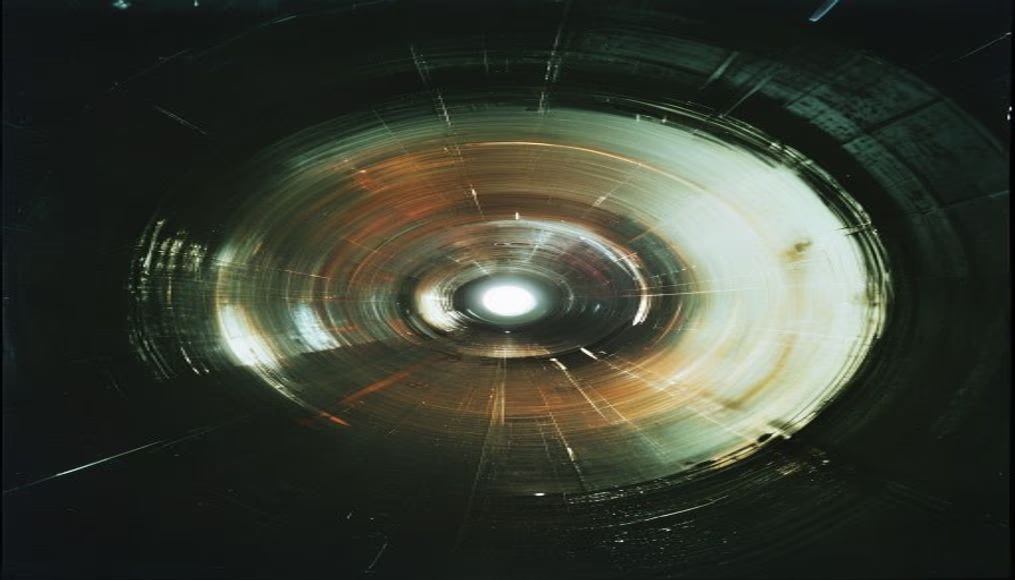
The image captured with a low-fidelity disposable camera, like those used in lo-fi photography, adds a nostalgic and grainy aesthetic to the record. This intentionally imperfect style contrasts with the precision of the astronomical phenomenon, recalling how eclipses were recorded before the digital age. The disposable camera, with its simple lens, can capture the intense brightness of the diamond in a unique way, with flare and chromatic aberrations.
Frequently Asked Questions
What causes the diamond ring effect?
It is caused by the last sunlight passing through the valleys of the Moon during a total solar eclipse. The light forms a bright point resembling a diamond, while the solar chromosphere creates the ring.
How long does the diamond ring effect last?
Only a few seconds, just before and just after totality. The exact duration depends on lunar topography and the observer's location.
Is it safe to look directly at the eclipse during the diamond ring effect?
No. Even though the effect is beautiful, sunlight can still cause permanent retinal damage. Proper solar filters or indirect viewing methods must be used.
Direct URL
https://pub-c7d6a6ea828543ac903a74a341ccb2e1.r2.dev/imagens/eclipse-solar-diamond-ring-lo-fi-disposable-camera-p6.avifHow to credit
Include a visible link back to UtilizAí. Copy one of the snippets below:
<a href="https://xn--utiliza-eza.com/en/midia/imagens/eclipse-solar-diamond-ring-lo-fi-disposable-camera-p6">Eclipse solar diamond ring</a> by <a href="https://xn--utiliza-eza.com">UtilizAí</a>, licensed under <a href="https://creativecommons.org/licenses/by/4.0/">CC BY 4.0</a>.
[Eclipse solar diamond ring](https://xn--utiliza-eza.com/en/midia/imagens/eclipse-solar-diamond-ring-lo-fi-disposable-camera-p6) by [UtilizAí](https://xn--utiliza-eza.com), CC BY 4.0
License: CC-BY-4.0