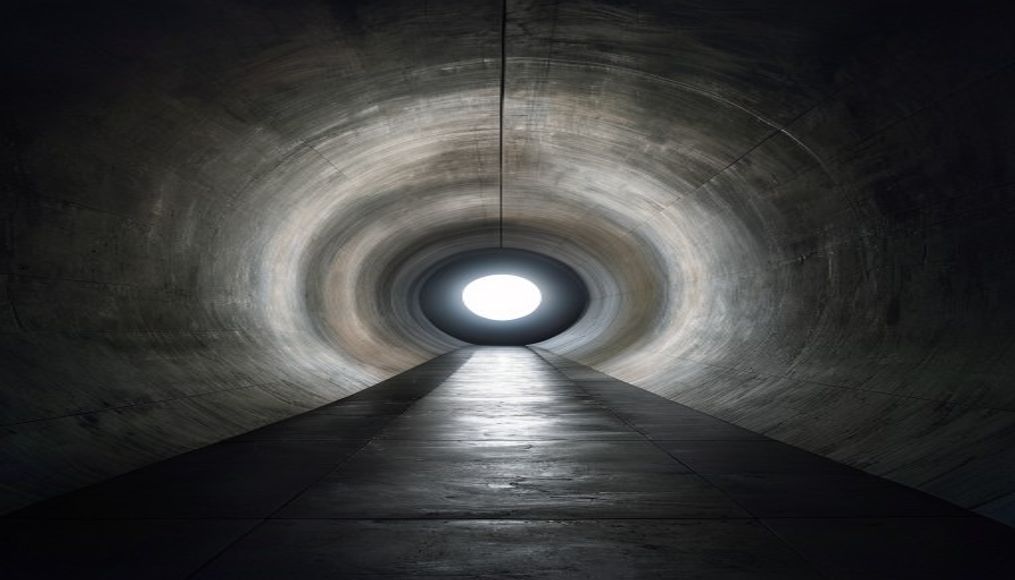
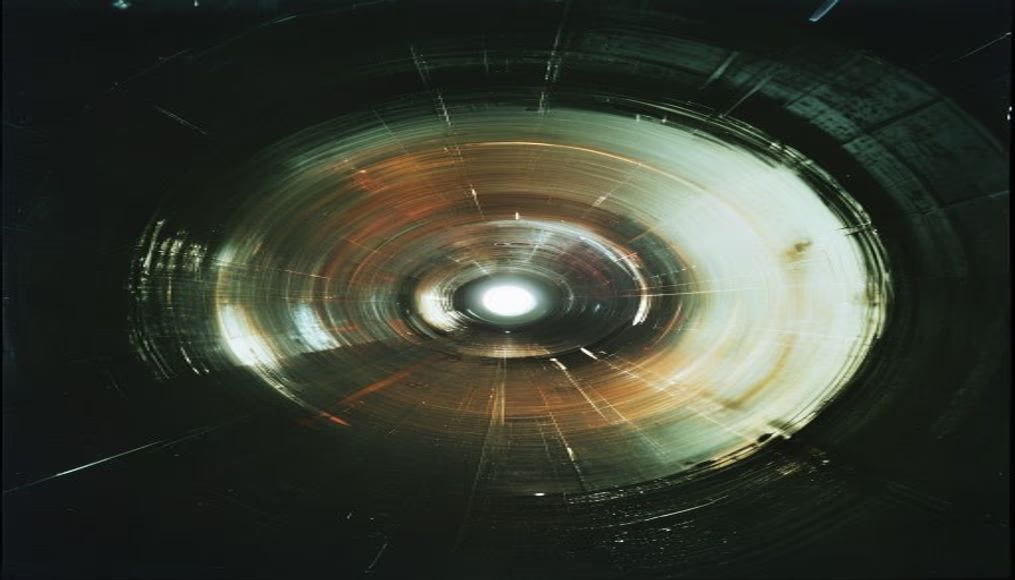
Eclipse solar diamond ring
1344×768 · AVIF · CC BY 4.0

The diamond ring effect during a total solar eclipse is one of the most stunning sky phenomena, when the Sun turns into a brilliant ring of light.
About this subject
The diamond ring effect occurs during the final moments of totality in a total solar eclipse, when the Moon completely covers the solar disk, leaving only the solar corona visible. At that instant, a bright point of sunlight bursts through a valley on the lunar limb, creating the illusion of a ring with a gemstone set in it. This phenomenon lasts only a few seconds and is one of the most anticipated moments for observers and astrophotographers. The name comes from its visual resemblance to a diamond ring against a dark background.
The effect was first described by English astronomers in the 19th century, but became popular with eclipse expeditions worldwide. During the total eclipse of 1919, Arthur Eddington's team used this phenomenon to confirm Einstein's general theory of relativity by measuring the deflection of starlight near the Sun. In Brazil, total eclipses are rare; the last one occurred in 1991 and the next will be in 2045 in the northern region. Even so, Brazilians travel abroad to witness the event, such as the 2017 eclipse in the United States.
Culturally, the diamond ring effect has fascinated ancient civilizations, who interpreted eclipses as a dragon devouring the Sun. Today, it is a symbol of cosmic beauty and the precision of celestial mechanics. Amateur astronomers and scientists study the solar corona during these seconds to understand the Sun's magnetic activity. Photographing the diamond ring requires specialized equipment and precise planning, as correct exposure is critical to capture both intense brightness and the faint corona.
Safety is paramount: never look directly at the Sun without proper filters, even during the eclipse. The only exception is the brief seconds of totality. The diamond ring effect is a reminder of the cosmic dance between Earth, Moon, and Sun, and each total eclipse offers a unique chance to observe it.
Frequently Asked Questions
What is the diamond ring effect in a solar eclipse?
It is a phenomenon that occurs at the beginning and end of totality in a total solar eclipse, when a bright point of the Sun appears at the Moon's edge, forming a ring of light with a prominent jewel.
Why is the diamond ring effect rarely seen?
It only occurs during total solar eclipses, which happen on average every 18 months somewhere on Earth, but a specific location may wait centuries for one.
What is the scientific significance of this phenomenon?
The effect helped confirm Einstein's general theory of relativity in 1919, and today it allows scientists to study the solar corona, revealing information about the Sun's magnetic activity.
Direct URL
https://pub-c7d6a6ea828543ac903a74a341ccb2e1.r2.dev/imagens/eclipse-solar-diamond-ring-film-grain-authentic-p5.avifHow to credit
Include a visible link back to UtilizAí. Copy one of the snippets below:
<a href="https://xn--utiliza-eza.com/en/midia/imagens/eclipse-solar-diamond-ring-film-grain-authentic-p5">Eclipse solar diamond ring</a> by <a href="https://xn--utiliza-eza.com">UtilizAí</a>, licensed under <a href="https://creativecommons.org/licenses/by/4.0/">CC BY 4.0</a>.
[Eclipse solar diamond ring](https://xn--utiliza-eza.com/en/midia/imagens/eclipse-solar-diamond-ring-film-grain-authentic-p5) by [UtilizAí](https://xn--utiliza-eza.com), CC BY 4.0
License: CC-BY-4.0