Diving regulator detail
1344×768 · AVIF · CC BY 4.0
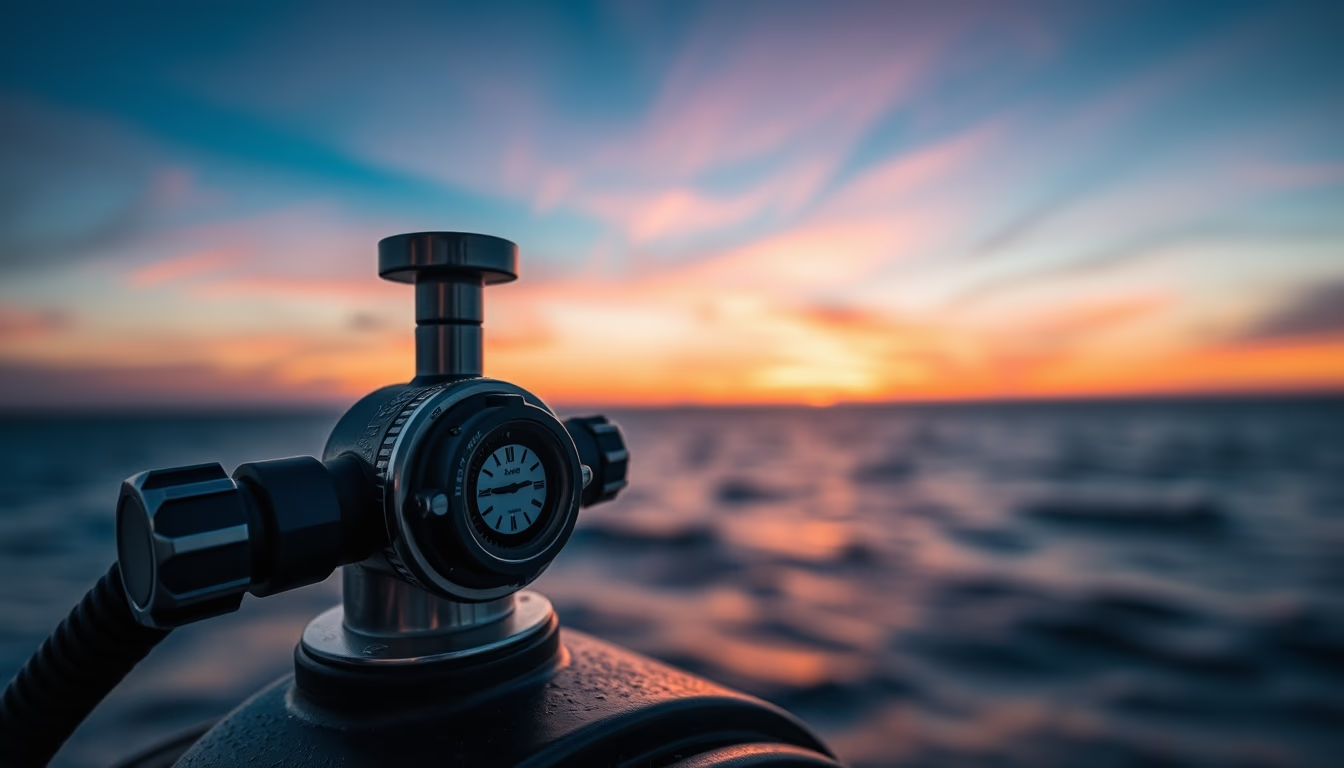
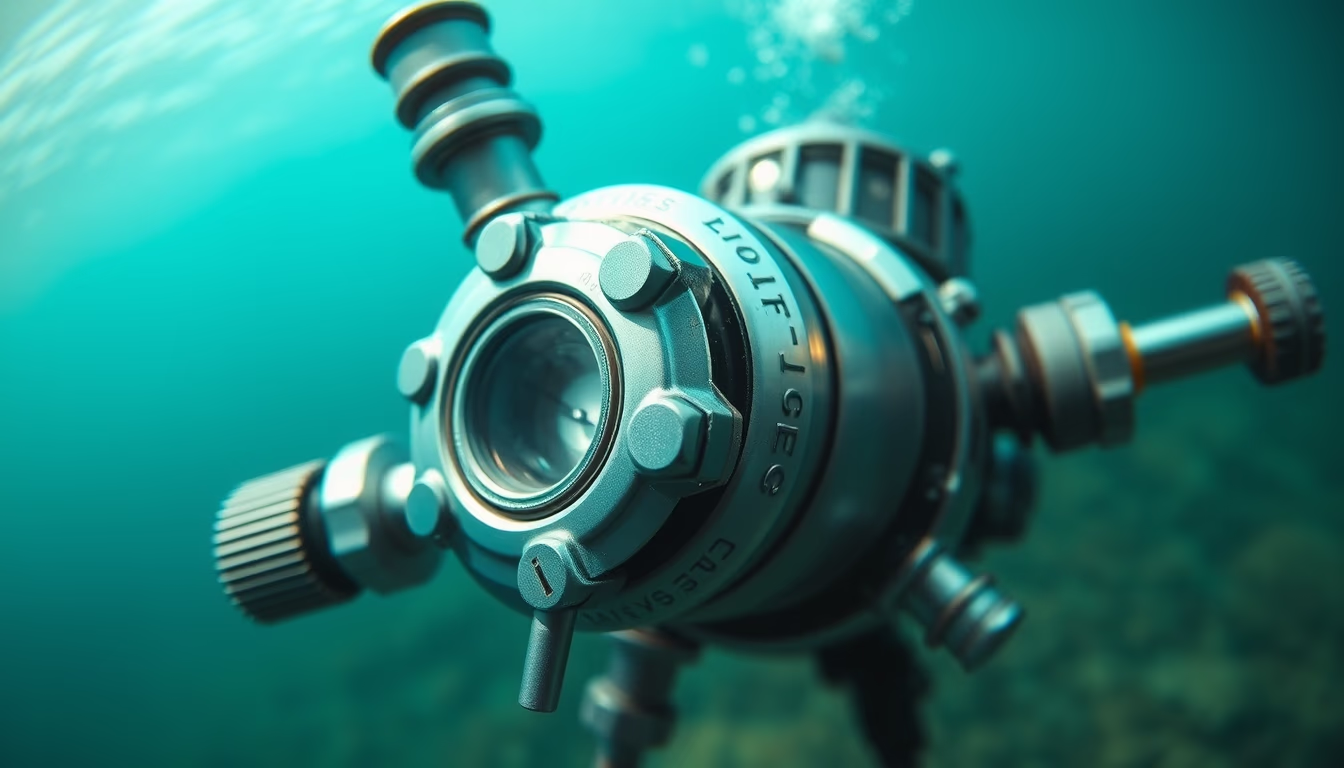
Close-up of a diving regulator, an essential component for breathing underwater, showcasing precision engineering and durability.
About this subject
A diving regulator is a device that reduces the high pressure of air in a scuba cylinder (around 200 bar) to ambient pressure, allowing a diver to breathe comfortably. It consists of two main stages: the first stage, attached to the cylinder, reduces pressure to an intermediate level (about 8-10 bar above ambient); the second stage, held in the diver's mouth, further reduces it to exactly ambient pressure, delivering air only when the diver inhales.
The first practical scuba regulator was invented by Jacques-Yves Cousteau and Émile Gagnan in 1943, known as the “Aqua-Lung,” which revolutionized autonomous diving. Since then, regulators have evolved significantly, incorporating materials like titanium and engineering polymers to resist saltwater corrosion and wear from frequent use. Modern models feature balanced systems that maintain constant airflow regardless of depth or cylinder pressure.
An important detail is the purge button on the second stage, which allows clearing water from the chamber or releasing air in an emergency. Hoses are typically made of rubber or polyurethane, with varying lengths for different equipment configurations. Regular maintenance, such as replacing O-rings and rinsing after each dive, is critical for safety and proper function. Regulator failure can lead to serious accidents, including air starvation or first-stage freezing in cold water.
Beyond recreational diving, regulators are used in rescue operations, commercial diving, and even in space suits for breathing in hostile environments. The technology has also inspired breathing systems for firefighters and use in toxic atmospheres. In the image, the focus on detail and the long exposure may emphasize water movement or bubbles, but the core is the mechanical reliability of the equipment.
Frequently Asked Questions
How many stages does a diving regulator have?
A typical diving regulator has two stages: the first stage reduces cylinder pressure to an intermediate pressure, and the second stage delivers air at ambient pressure.
Why is regulator maintenance important?
Regular maintenance prevents mechanical failure, corrosion, and leaks. Rinse the regulator with fresh water after each dive and have it serviced periodically by a certified technician.
What causes regulator freezing in cold water?
Freezing occurs when the expansion of air in the first stage causes extreme cooling, forming ice. This can lock the valve and stop airflow. Cold-water regulators use specific materials and designs to prevent this.
Direct URL
https://pub-c7d6a6ea828543ac903a74a341ccb2e1.r2.dev/imagens/diving-regulator-detail-long-exposure-fresh16.avifHow to credit
Include a visible link back to UtilizAí. Copy one of the snippets below:
<a href="https://xn--utiliza-eza.com/en/midia/imagens/diving-regulator-detail-long-exposure-fresh16">Diving regulator detail</a> by <a href="https://xn--utiliza-eza.com">UtilizAí</a>, licensed under <a href="https://creativecommons.org/licenses/by/4.0/">CC BY 4.0</a>.
[Diving regulator detail](https://xn--utiliza-eza.com/en/midia/imagens/diving-regulator-detail-long-exposure-fresh16) by [UtilizAí](https://xn--utiliza-eza.com), CC BY 4.0
License: CC-BY-4.0