Diving regulator detail
1344×768 · AVIF · CC BY 4.0
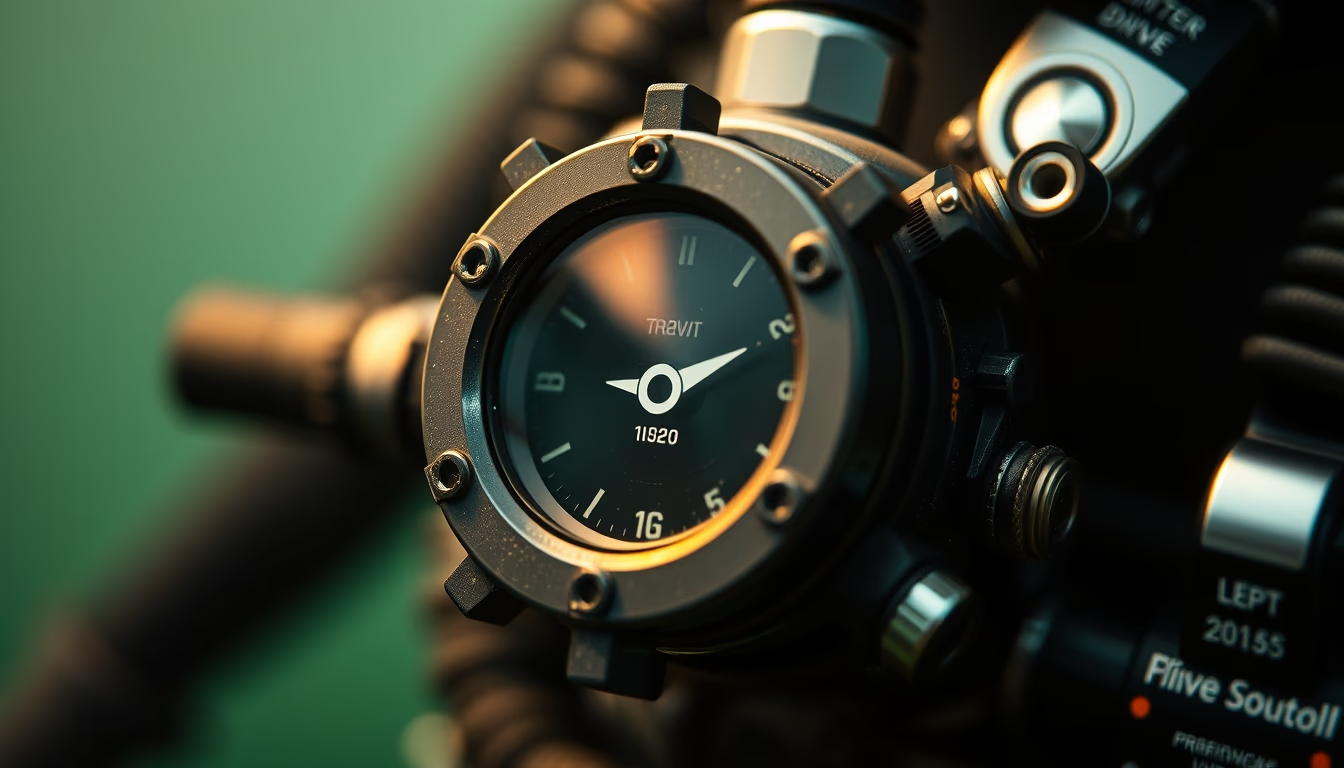
Close-up of a scuba diving regulator, the critical device that reduces high-pressure tank air to breathable ambient pressure.
About this subject
The diving regulator is the core component of SCUBA (Self-Contained Underwater Breathing Apparatus) gear. Its primary job is to reduce the high pressure of compressed air in the tank (typically 200, 300 bar) to ambient water pressure, allowing the diver to breathe naturally at any depth. The system operates in two stages: the first stage attaches to the tank valve and drops pressure to an intermediate level (about 8, 10 bar above ambient); the second stage, held in the mouth, delivers air on demand with each inhalation.
Originally invented by Jacques-Yves Cousteau and Émile Gagnan in 1943, modern regulators have evolved with advanced materials and engineering. Current models use chrome-plated brass, stainless steel, and high-strength polymers to resist corrosion and impacts. Adjustments like breathing resistance and flow sensitivity can be tuned for different diving profiles, from recreational to technical diving with special gas mixtures.
Regular maintenance is essential: O-rings, diaphragms, and overpressure valves must be inspected annually by certified technicians. A malfunction can result in air supply failure, a life-threatening situation. Many regulators also include redundant systems, such as the octopus (secondary second stage) for emergency sharing.
Interestingly, the term "regulator" also applies to high-pressure equipment in other fields (like oxygen therapy), but scuba versions are specifically designed for underwater environments, with protection against water ingress and debris. This detailed close-up highlights the threaded connections, purge button, and streamlined housing, features that combine functionality with underwater safety.
Frequently Asked Questions
What is the difference between the first and second stage of a diving regulator?
The first stage reduces cylinder pressure to an intermediate level (8, 10 bar above ambient) and distributes air to hoses. The second stage, at the mouthpiece, releases air only when the diver inhales, providing on-demand flow and minimizing waste.
How often should I service my scuba regulator?
Most manufacturers recommend an annual service by a certified technician. Scuba cylinders also require hydrostatic testing every 5 years, following safety standards.
What does it mean for a regulator to be balanced or unbalanced?
A balanced regulator automatically adjusts first-stage pressure to compensate for changing tank pressure, maintaining consistent breathing performance. An unbalanced regulator may have variable breathing resistance as the tank empties. Balanced models are more expensive but offer greater stability.
Direct URL
https://pub-c7d6a6ea828543ac903a74a341ccb2e1.r2.dev/imagens/diving-regulator-detail-lo-fi-disposable-camera-fresh14.avifHow to credit
Include a visible link back to UtilizAí. Copy one of the snippets below:
<a href="https://xn--utiliza-eza.com/en/midia/imagens/diving-regulator-detail-lo-fi-disposable-camera-fresh14">Diving regulator detail</a> by <a href="https://xn--utiliza-eza.com">UtilizAí</a>, licensed under <a href="https://creativecommons.org/licenses/by/4.0/">CC BY 4.0</a>.
[Diving regulator detail](https://xn--utiliza-eza.com/en/midia/imagens/diving-regulator-detail-lo-fi-disposable-camera-fresh14) by [UtilizAí](https://xn--utiliza-eza.com), CC BY 4.0
License: CC-BY-4.0