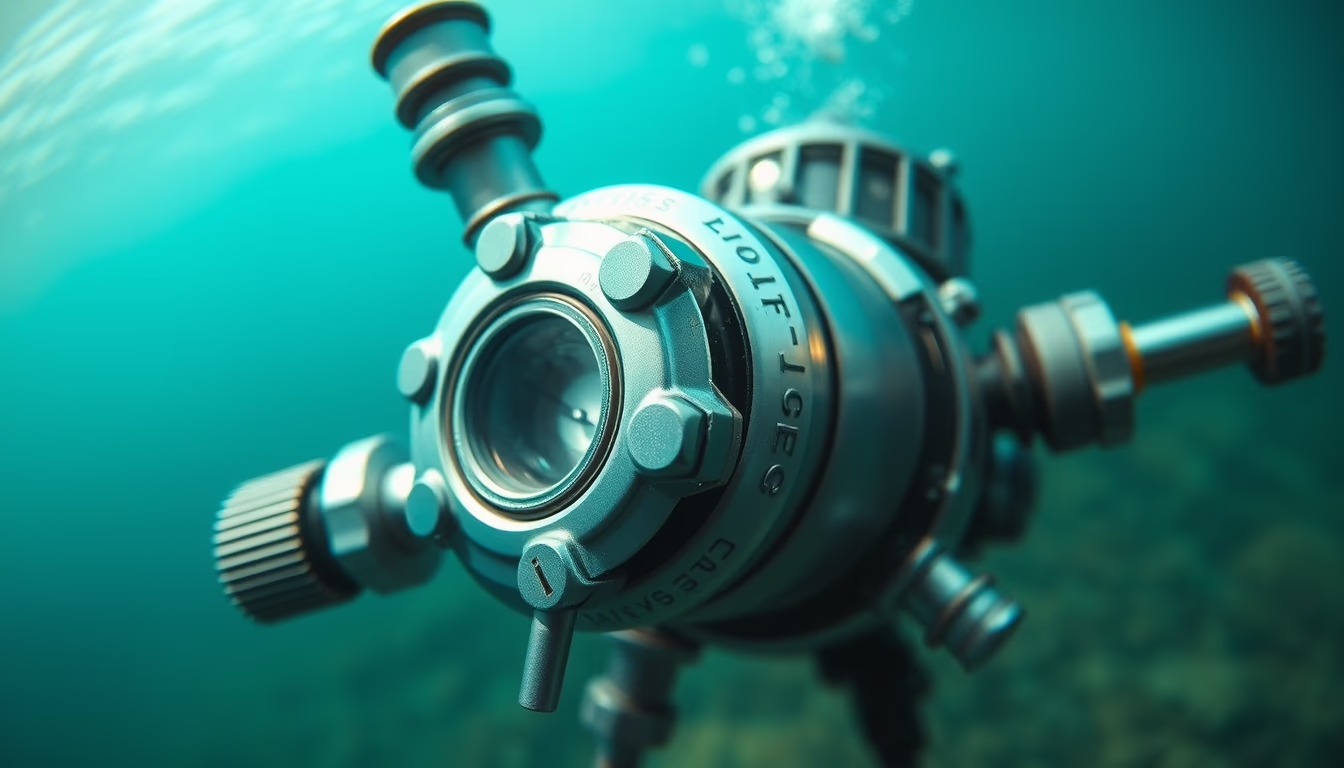
Diving regulator detail
1344×768 · AVIF · CC BY 4.0
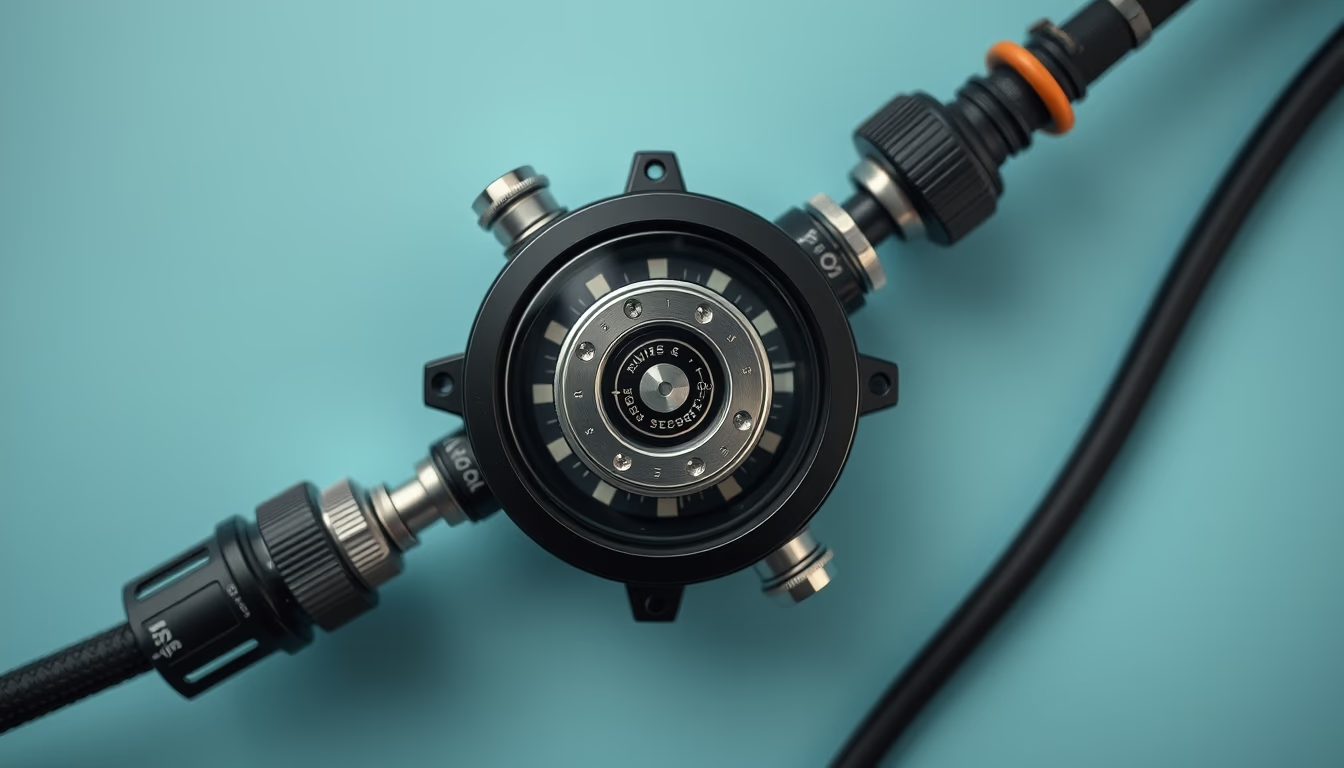
Detail of a diving regulator, essential equipment that reduces high-pressure air from the tank to ambient pressure, enabling underwater breathing.
About this subject
A diving regulator is one of the most critical pieces of equipment for diver safety. Its primary function is to reduce the high pressure of compressed air stored in the tank (typically 200-300 bar) to ambient pressure, allowing natural breathing. Invented by Jacques Cousteau and Émile Gagnan in 1943, the first model, called the Aqua-Lung, revolutionized autonomous diving. The system consists of two stages: the first stage attaches to the tank valve and reduces pressure to an intermediate pressure (about 8-10 bar above ambient); the second stage, held in the diver's mouth, further reduces it to ambient pressure at the exact moment of inhalation. There are two main types: piston regulators, which are simpler and more robust, and diaphragm regulators, which offer better performance in cold or particle-laden water. Modern regulators incorporate balanced valves to ensure constant airflow regardless of depth. Regular maintenance is crucial because exposure to saltwater and possible contaminants can cause corrosion and failure. Parts like the mouthpiece and seals must be periodically inspected. Besides the main second stage, many regulators have a backup second stage (octopus) for emergencies, usually colored yellow or orange for easy identification. The choice of regulator depends on the type of diving: for cold water, models with anti-freeze protection are recommended; for recreational diving, piston regulators are common due to durability.
Frequently Asked Questions
What is the function of the first stage in a diving regulator?
The first stage reduces the high pressure from the tank (200-300 bar) to an intermediate pressure (about 8-10 bar above ambient), attaching directly to the tank valve.
Why are there piston and diaphragm regulators?
Piston regulators are simpler and more durable, ideal for warm water. Diaphragm regulators are more efficient in cold or silty water because the diaphragm isolates the internal mechanism from water.
How do I know when to service my regulator?
Service should be performed annually or after 100 dives, per manufacturer recommendations. Signs like hard breathing, inconsistent airflow, or leaks indicate immediate need for inspection.
Direct URL
https://pub-c7d6a6ea828543ac903a74a341ccb2e1.r2.dev/imagens/diving-regulator-detail-isometric-flat-lay-fresh17.avifHow to credit
Include a visible link back to UtilizAí. Copy one of the snippets below:
<a href="https://xn--utiliza-eza.com/en/midia/imagens/diving-regulator-detail-isometric-flat-lay-fresh17">Diving regulator detail</a> by <a href="https://xn--utiliza-eza.com">UtilizAí</a>, licensed under <a href="https://creativecommons.org/licenses/by/4.0/">CC BY 4.0</a>.
[Diving regulator detail](https://xn--utiliza-eza.com/en/midia/imagens/diving-regulator-detail-isometric-flat-lay-fresh17) by [UtilizAí](https://xn--utiliza-eza.com), CC BY 4.0
License: CC-BY-4.0